
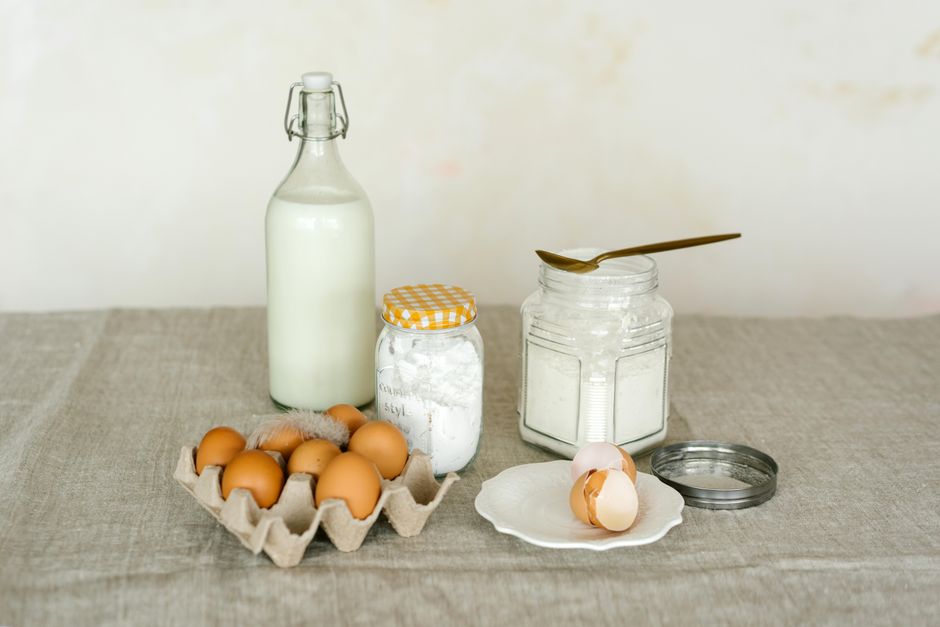
Powdered eggs are simply whole eggs that have been pasteurized and dried until almost all the water is gone. To prepare them for cooking or baking, whisk the powder with cold or room-temperature water using about 1 tablespoon of powder to 2 tablespoons of water for each large egg you are replacing. Add the powder to the water, not the other way around, then let it sit for a minute or two and whisk again until it looks smooth and lump-free.
That basic ratio is the whole trick. Everything else is small adjustments for texture, lumps, and the recipe you are making.
How Do You Actually Mix Powdered Eggs?
You mix them by adding water to the powder in a bowl and whisking until the mixture is even. The order matters more than most people expect. If you dump powder into a cup of water all at once, it tends to clump and float. If you add water to the powder a little at a time while stirring, you get a smoother paste with far fewer lumps.
Use a fork or a small whisk. A blender is overkill for one or two eggs and can whip in extra air. Let the mixture rest for about one to two minutes after the first stir. The powder absorbs water during that pause, and a second quick whisk usually smooths out anything that looked grainy.
Temperature is worth a note. Cold water dissolves more slowly than room-temperature water. Warm water works faster. Hot water is a problem. Pouring near-boiling water onto egg powder can cook the proteins on contact and leave you with small cooked bits in your mixture. If you are adding reconstituted eggs to a hot pan or a hot batter, that is fine. Just do not reconstitute them with scalding water.
One more thing people get wrong: reconstituted eggs are not the same as fresh eggs straight from the shell. They behave a little differently in the pan and in a batter. That difference is manageable, but it is real.
What Is the Correct Powder-to-Water Ratio?
The standard ratio is 1 tablespoon of egg powder to 2 tablespoons of water for each large egg. This is the ratio most manufacturers print on the label, and it is the one to start with.
Here is what that looks like for common recipe amounts:
- 1 large egg = 1 tbsp powder + 2 tbsp water
- 2 large eggs = 2 tbsp powder + 4 tbsp water
- 3 large eggs = 3 tbsp powder + 6 tbsp water
- 4 large eggs = 4 tbsp powder + 8 tbsp water
Two tablespoons of water is about 30 milliliters. One tablespoon of powder is roughly 5 to 7 grams, depending on the brand and how tightly it is packed. Because brands differ, check the label on your container first. If the label says something different from the ratio above, follow the label.
If the mixture looks too thick after resting, add water a teaspoon at a time. If it looks watery, add powder a half teaspoon at a time. Small corrections beat big ones.
How To Prepare Powdered Eggs For Cooking Or Baking in Different Recipes
The same reconstitution method works for both, but how you use the mixture changes with the recipe.
For baking, most recipes want you to reconstitute the eggs first and then add them to the batter at the point where the recipe calls for eggs. This is the simplest approach and it works for muffins, pancakes, quick breads, and most cakes. The result is close to fresh eggs, though some bakers notice a slightly denser crumb. That is a texture difference, not a safety issue.
For cooking, such as scrambled eggs or an omelet, you reconstitute the same way and then cook as usual. Powdered eggs scramble a little differently than fresh ones. They tend to set faster and can look slightly grainy if you cook them over high heat. Lower heat and slower stirring give a better texture.
There is another approach some bakers use: adding the dry powder directly to the dry ingredients and adding the matching amount of water to the wet ingredients. This can work in recipes with enough liquid, but it is less predictable. If you are new to powdered eggs, reconstitute first. Once you know how the powder behaves, you can experiment.




Why Do Powdered Eggs Sometimes Turn Out Lumpy?
Lumps come from adding water too fast or not stirring enough at the start. Egg powder is hygroscopic, meaning it pulls moisture from the air and tends to clump if it has been open for a while. Those clumps are stubborn once they form.
A few things help:
- Stir the dry powder with a fork before adding any water to break up existing clumps
- Add water in two or three small pours, stirring between each
- Let the mixture rest one to two minutes, then whisk again
- Store the powder in an airtight container so it does not absorb moisture between uses
If you still have lumps after all that, pour the mixture through a fine mesh strainer. This is faster than fighting the lumps with a whisk.
How Does Reconstituted Powdered Egg Compare to a Fresh Egg?
Nutritionally, they are close. The drying process removes water, not protein or fat. A reconstituted egg delivers roughly the same protein and fat as a fresh large egg, though some brands add small amounts of anti-caking agents or carbohydrates to improve how the powder flows and dissolves.
The bigger differences are in behavior. Fresh egg whites have a structure that whips into foam for meringues and angel food cake. Powdered egg whites, sold separately from whole egg powder, can also whip, but whole powdered egg cannot. The yolk fat prevents it. If a recipe depends on whipped egg whites for lift, whole powdered eggs are not a substitute.
Flavor is close but not identical. Some people notice a slight sulfur note in powdered eggs, especially in plain scrambled eggs. In baked goods, that note is usually undetectable.
There is one practical advantage worth knowing. Powdered eggs are pasteurized during manufacturing, which means they are treated to reduce the risk of Salmonella. That makes them a safer option than raw shell eggs in recipes that call for uncooked or lightly cooked eggs, such as some homemade dressings and spreads. This does not mean the powder is sterile, and it should still be handled and stored properly.
How Should You Store Powdered Eggs After Opening?
Keep the powder dry and sealed. Moisture is the main enemy, not heat alone.
An airtight container in a cool, dark place works for the short term. For longer storage, the refrigerator or freezer extends shelf life, but only if the container is truly sealed. If moisture gets in, the powder clumps and can spoil.
Unopened powdered eggs typically keep for a long time, often a year or more depending on the brand and packaging. Once opened, follow the manufacturer’s storage instructions on the label. Those instructions exist for a reason, and they vary by product.
One caution: do not store powdered eggs in the same container or on the same shelf as raw meat or anything that could leak. Cross-contamination risk applies to dry goods too.
Frequently Asked Questions
How much water do I add to powdered eggs?
Use about 2 tablespoons of water for every 1 tablespoon of powder, which replaces one large egg. Check your brand’s label, since ratios can vary slightly between products.
Can I use powdered eggs in place of fresh eggs in any recipe?
Yes for most baking and cooking where eggs act as a binder, moisture source, or leavening support. No for recipes that depend on whipped egg whites for structure, such as meringues.
Do powdered eggs need to be cooked?
They are pasteurized during manufacturing, so they are safer than raw shell eggs in uncooked recipes. Even so, they should be stored and handled like any other food ingredient.
Why are my powdered eggs lumpy?
Usually because water was added too quickly or the powder had absorbed moisture in storage. Stir the dry powder first, add water gradually, and let it rest before whisking again.
