
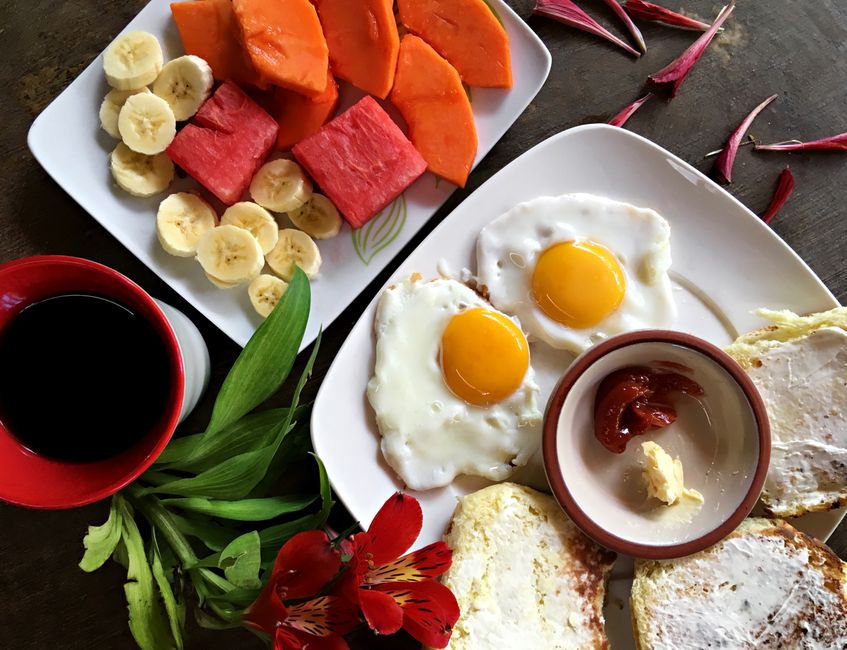
Eggs with runny yolks are one of the most common breakfast foods in America, and one of the most common sources of food safety questions. The short answer: sunny side up eggs are safe to eat only if they reach an internal temperature of 160°F (71°C), which firms both the white and the yolk. If the yolk is still runny, the egg has not reached that temperature, and it carries a small but real risk of Salmonella infection. That risk is higher for certain groups of people.
This is not a reason to panic. It is a reason to understand what you are actually eating and who is most affected by the choice.
Why Are Sunny Side Up Eggs Considered Risky?
Salmonella bacteria can live inside a hen’s reproductive tract and end up inside a perfectly clean-looking egg before the shell even forms. This is different from contamination on the outside of the shell, which is what most people picture when they think about egg safety.
Because the bacteria can be present in the yolk itself, cooking only the white is not enough. The egg has to be cooked through to kill what may be inside. Sunny side up eggs are cooked only on one side, over low heat, until the white sets. The yolk stays liquid.
The Centers for Disease Control and Prevention estimates that Salmonella causes about 1.35 million infections, 26,500 hospitalizations, and 420 deaths in the United States each year. Eggs and egg dishes are among the foods frequently linked to outbreaks, though poultry meat, sprouts, and unpasteurized dairy also contribute.
The key point: the bacteria are not visible, smellable, or tasteable. A farm-fresh egg from a local source is not automatically safer than a supermarket egg. Salmonella can be present in both.
Does Cooking Kill Salmonella in Eggs?
Yes. Heat kills Salmonella, and the temperature threshold is well established. The FDA and USDA both cite 160°F (71°C) as the internal temperature at which eggs are considered safely cooked.
At that temperature, both the white and the yolk are firm. A runny yolk means the egg did not reach 160°F. A fully liquid yolk typically sits well below that.
This is the part many people miss: salmonella risk is not just about the white being cooked. It is about the entire egg reaching temperature. An egg with a set white and a runny yolk has not met the standard.
Restaurants that serve sunny side up eggs are generally required by state and local health codes to use pasteurized eggs or to warn customers about the risk. Pasteurized eggs are heated in the shell to a temperature that kills bacteria without cooking the egg. They are sold in some grocery stores and are the safer choice for anyone who wants a runny yolk.
Who Should Avoid Sunny Side Up Eggs?
Some people face a much higher risk of serious illness from Salmonella and should not eat undercooked eggs at all. This is not a matter of preference. It is a well-established public health recommendation from the CDC and FDA.
- Pregnant women — Salmonella infection can cause severe illness in the mother and, in rare cases, can lead to miscarriage or stillbirth
- Infants and young children — their immune systems are still developing
- Adults over 65 — immune function declines with age
- People with weakened immune systems — including those undergoing cancer treatment, organ transplant recipients, and people with HIV/AIDS or other conditions that suppress immunity
For these groups, the recommendation is to eat only eggs cooked until both white and yolk are firm, or to use pasteurized eggs. This guidance applies to foods made with raw eggs too, such as homemade mayonnaise, Caesar dressing, and some raw cookie dough.
For healthy adults outside these groups, the risk of serious illness from a runny egg is low, but it is not zero. Most healthy people who get Salmonella recover without treatment, though the illness can still be unpleasant for several days.





How Common Is Salmonella in Eggs Today?
It is much less common than it was a few decades ago, but it has not been eliminated.
The FDA and egg producers have worked together since the 1990s to reduce Salmonella in eggs through vaccination of hens, testing, refrigeration requirements, and sanitation. These measures have reduced the rate of contamination significantly.
Still, the CDC continues to report egg-associated Salmonella outbreaks. The exact rate of contamination in any given carton is not something a consumer can know. There is no reliable way to tell by looking, smelling, or tasting whether an egg contains Salmonella.
Refrigeration matters here. In the United States, eggs are washed and refrigerated, which removes the protective cuticle on the shell and makes refrigeration necessary. In many European countries, eggs are not washed and are stored at room temperature. Both systems have different tradeoffs, but in the US, keeping eggs refrigerated is important for safety.
How Can You Make Sunny Side Up Eggs Safer?
If you want a runny yolk, there are ways to reduce risk without giving up the dish.
- Use pasteurized eggs — these are heated in the shell to kill bacteria while keeping the egg raw enough to cook as usual
- Cook the egg until the white is fully set and opaque, with no translucent or slimy parts
- Use a food thermometer to check that the thickest part of the egg reaches 160°F (71°C) if you want to be certain
- Refrigerate eggs at 40°F (4°C) or below until you are ready to cook them
- Wash your hands, utensils, and surfaces after handling raw eggs
- Avoid cross-contamination — do not let raw egg touch foods that will not be cooked
Some people believe that cooking eggs over easy or sunny side up with a lid on the pan will kill bacteria through steam. Steam can help set the white, but it does not reliably bring the yolk to 160°F. The yolk is the part that matters most for temperature.
Another common belief is that adding salt, lemon juice, or vinegar to raw eggs kills Salmonella. There is no reliable evidence that these methods make raw eggs safe.
What About Pasteurized Eggs?
Pasteurized shell eggs are real eggs that have been heated in a controlled way to kill Salmonella while keeping the egg raw enough to use in recipes. They look and taste like regular eggs. They can be used for sunny side up eggs, homemade mayonnaise, and other dishes that call for raw or lightly cooked eggs.
They are more expensive and not available everywhere. But for anyone in a high-risk group who wants a runny yolk, they are the safest option.
Pasteurized liquid eggs in cartons are also available. These are typically pasteurized and can be used in cooked dishes, though they are not suitable for sunny side up eggs because they are already blended.
Does the Risk Change With Freshness or Source?
No. A fresh egg from a farmers market is not automatically safer than a supermarket egg. Salmonella can be present in eggs from any source, including backyard flocks.
In fact, backyard flocks have been linked to Salmonella outbreaks in recent years. The CDC has reported outbreaks tied to contact with live poultry, including chicks and ducklings, and to eggs from backyard flocks. Handling birds and their environments can spread bacteria to hands and then to food.
The age of the egg also does not reliably predict risk. Salmonella does not multiply significantly inside the egg when it is properly refrigerated, but it can survive for the shelf life of the egg.
What matters is temperature, not freshness or source.
Frequently Asked Questions
Are sunny side up eggs safe to eat?
They are safe only if the egg reaches 160°F (71°C), which firms both the white and the yolk. If the yolk is runny, the egg has not reached that temperature and carries a small risk of Salmonella.
Can you get Salmonella from sunny side up eggs?
Yes, it is possible. Salmonella can be present inside the yolk, and a runny yolk means the egg was not cooked to a temperature that kills the bacteria.
Are pasteurized eggs safe for sunny side up?
Yes. Pasteurized shell eggs have been heated to kill Salmonella while keeping the egg raw enough to cook as usual, making them the safer choice for a runny yolk.
Who should not eat runny eggs?
Pregnant women, infants and young children, adults over 65, and people with weakened immune systems should avoid undercooked eggs. The CDC and FDA recommend they eat only eggs cooked until both white and yolk are firm.
