
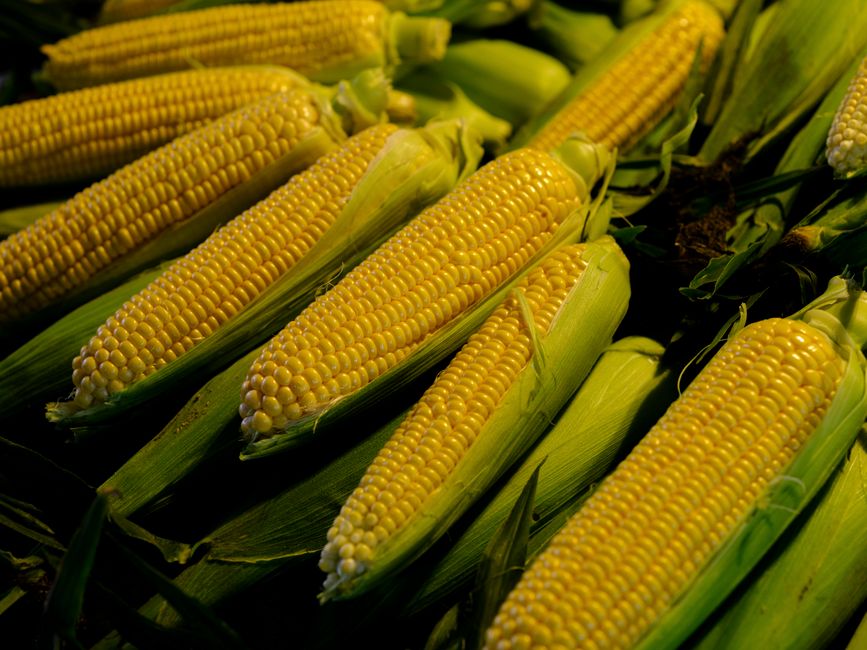
Making corn mash for bourbon at home comes down to four things: corn, water, heat, and time. You cook cracked corn to gelatinize its starch, cool it to around 150°F (about 65°C), add malted grain so enzymes can convert that starch into sugar, then let yeast ferment the result into a low-alcohol liquid. What you have at that point is not bourbon — it is a fermentable wash, and everything that turns it into a legal, safe finished spirit happens after distillation and aging.
That distinction matters more than most home guides admit. Fermenting grain and distilling alcohol are two different activities with different rules in the United States. This article covers the mash itself — the process, the chemistry, the equipment, and the safety issues — plus the legal reality that catches a lot of first-timers off guard.
What Is Corn Mash, and How Is It Different From Bourbon?
Corn mash is the sugary liquid you get after cooking grain and converting its starch to sugar. It is an intermediate product. Bourbon is what you get after that liquid is fermented, distilled, and aged in new charred oak barrels.
The federal rules for what can legally be called bourbon are specific. It must be made from a grain mash that is at least 51 percent corn by weight, distilled to no more than 160 proof, entered into the barrel at no more than 125 proof, and aged in a new charred oak container. There is no minimum aging requirement to use the word “bourbon” on a label, though “straight bourbon” requires at least two years.
So the mash is step one of a much longer chain. A well-made mash is necessary for good bourbon. It is nowhere near sufficient.
How To Make Corn Mash For Bourbon At Home: The Basic Process
The core sequence is cook, cool, convert, ferment. Each step has a reason behind it, and skipping or rushing one usually shows up later as a stuck fermentation or a poor yield.
Step 1: Gelatinize the corn. Corn starch is locked inside a tight granular structure. Dry cracked corn will not ferment on its own because yeast cannot access the starch. Heating corn in water to near boiling breaks that structure apart — a process called gelatinization — and makes the starch available to enzymes. This typically means bringing water to a boil, adding cracked corn slowly while stirring to avoid scorching, and holding it hot for a sustained period until the mixture thickens into a porridge-like consistency.
Step 2: Cool to conversion temperature. Enzymes are proteins, and heat destroys them. Once the corn is cooked, the mash must be cooled to roughly 145–155°F (about 63–68°C) before malted grain is added. Add malt to boiling mash and you denature the enzymes before they do any work.
Step 3: Add malted grain. Malted barley contains enzymes — primarily alpha-amylase and beta-amylase — that cut long starch chains into fermentable sugars. The malt also contributes flavor. This stage is called the mash conversion or saccharification rest, and it usually takes about an hour at a stable temperature.
Step 4: Cool and pitch yeast. Yeast cannot survive at conversion temperatures. The mash must be cooled further, typically to somewhere in the 70s°F, before yeast is added. Pitching yeast into hot mash kills it.
Step 5: Ferment. Fermentation takes days, not hours. During that time, yeast converts sugar to ethanol and carbon dioxide. When it is done, you have a wash that is typically in the range of 8–12 percent alcohol by volume for a grain mash, though the exact figure depends on your grain bill and process.
Why Corn Needs Cooked but Malted Barley Does Not
This is one of the most useful things to understand about mashing, and it explains why recipes combine the two grains rather than using corn alone.
Malted barley has already been through a controlled germination and drying process. During germination, the grain produces enzymes that convert its own starch into sugar to fuel the growing plant. When the maltster dries the grain, those enzymes are preserved but the conversion is halted. Add malted barley to warm water and the enzymes pick up where they left off.
Corn has no such head start. It contains starch and essentially no active enzymes of its own. It must be cooked to open up the starch, and it needs enzymes from somewhere else — usually malted barley, sometimes malted rye or wheat, or in commercial settings, purified enzyme preparations.
This is also why a mash that is 100 percent corn will not ferment well. Something has to supply the enzymes.



What Equipment Do You Actually Need?
A basic grain mash requires less equipment than most people expect, but it does require the right vessels and a way to control temperature.
- A large pot or converted keg for cooking — corn mash scorches easily, so a thick-bottomed pot and constant stirring matter
- A mash tun or insulated vessel to hold temperature during conversion
- A long spoon or mash paddle
- A thermometer accurate in the 140–160°F range
- A fermenter with an airlock
- Sanitizer for anything that touches the mash after boiling
Temperature control is the piece home setups most often get wrong. A mash that drifts too cool during conversion converts slowly and incompletely. One that runs too hot destroys the enzymes.
Is Home Distilling Legal in the United States?
No. Distilling alcohol at home without a license is a federal offense in the United States, and it has been since the prohibition era. This applies even in small amounts, even for personal use, and even in states that have legalized home brewing of beer and wine.
Home brewing beer and winemaking were legalized federally in 1978, and states may also permit home fermentation. Distillation was not included in that change. Some states have passed laws permitting home distilling, but a state law does not override federal law, and federal enforcement remains a possibility.
There is also a real safety dimension here. Distilling produces flammable alcohol vapor and can generate methanol, a toxic alcohol that causes severe illness and death. Methanol is not created by distillation — it is present in fermented washes in small amounts and can concentrate in the wrong part of a distillation run. Commercial distillers manage this with equipment and process controls that home setups generally lack.
If your interest is the mash itself — the grain, the enzymes, the fermentation — that part can be done legally as a brewing process. The step after it cannot, without a license.
Common Mistakes That Ruin a Corn Mash
Most failed mashes fail for one of a handful of reasons.
Scorching. Corn porridge is thick and settles. Without steady stirring and even heat, it burns on the bottom, which ruins the flavor and can stop fermentation.
Adding malt too early. If the mash is still near boiling when malt goes in, the enzymes are destroyed instantly. You will end up with starch and no sugar.
Pitching yeast too hot. Yeast dies above roughly 100°F. Waiting for the mash to cool is not optional.
Poor sanitation after the boil. Before the boil, the mash is not sterile but it is also not vulnerable in the same way. After cooling, it is an ideal environment for unwanted microbes. Anything that touches it needs to be clean.
Expecting a fast result. Grain mashes ferment more slowly than sugar washes and often take a week or more to finish. Rushing the fermentation produces off-flavors.
Does the Type of Corn Matter?
It does, and this is where the gap between home mashing and commercial bourbon is widest.
Most large bourbon distilleries use specific corn varieties, and many use corn that has been processed in particular ways. Some use heirloom corn varieties that contribute distinct flavor compounds. Others blend corn with rye, wheat, or malted barley in ratios that define the final spirit’s character.
For a home mash, the practical answer is simpler. Cracked corn from a feed store or brewing supplier will work. What matters most is that the corn is clean, free of mold, and not treated with anything you would not want in a fermenter. Feed corn is sometimes treated with preservatives or anti-fungal agents, and those are not something you want in a mash.
The grain bill — the ratio of corn to other grains — will shape the flavor more than the specific corn variety will at the home scale.
Frequently Asked Questions
Can you make bourbon mash without malted barley?
Yes, but you need enzymes from somewhere. Corn contains almost no active enzymes, so a mash made only from corn will not convert its starch to sugar. Commercial distillers sometimes use purified enzyme preparations instead of malted grain.
How long does corn mash take to ferment?
Grain mashes typically ferment for about a week, though the exact time depends on temperature, yeast health, and sugar content. Cooler fermentations run slower, and a stuck fermentation can take considerably longer or fail entirely.
Is it legal to make corn mash at home?
Fermenting grain into a wash is generally treated like home brewing and is legal in many states. Distilling that wash into spirits without a federal license is illegal in the United States, regardless of state law.
What temperature do you add malt to corn mash?
Malted grain is added once the cooked corn has cooled to roughly 145–155°F (about 63–68°C). Hotter than that and the enzymes are destroyed before they can convert starch to sugar.
