
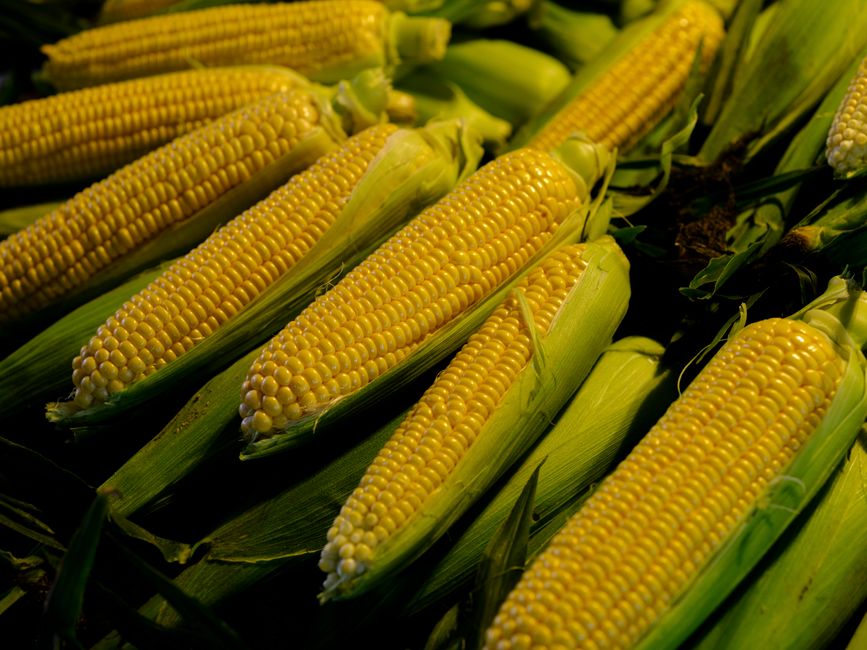
You chew a kernel of corn. You swallow it. Later, you see it again — mostly unchanged. This is not your imagination. Corn does not break down fully in your digestive system. The reason is simple: corn has a tough outer shell made of cellulose, and humans lack the enzyme needed to digest cellulose. What passes through you is the outer coating. The inside of the kernel does get digested. That yellow shell is the part your body cannot break down.
What Makes Corn So Hard to Digest?
The outer layer of a corn kernel is made of cellulose. Cellulose is a type of fiber. Fiber is good for you. But humans do not produce an enzyme called cellulase. Without cellulase, your body cannot break cellulose into smaller pieces. So the outer shell passes through your stomach and small intestine mostly intact.
Ruminant animals like cows have bacteria in their stomachs that produce cellulase. Humans do not. This is why cows can digest grass and humans cannot. Corn is not grass, but its outer shell is similar in structure. The inside of the kernel — the starchy part — breaks down easily. Your body absorbs the starch, sugars, and some protein. The yellow hull is what survives the trip.
Some people notice corn in their stool more than others. This depends on how well you chew. Chewing breaks the outer shell mechanically. The more you chew, the more surface area your digestive enzymes can reach. But even with thorough chewing, some fragments of the hull will pass through undigested. This is normal and not a sign of poor health.
Does Seeing Corn in Your Stool Mean Something Is Wrong?
Seeing undigested corn in your stool is normal. It does not mean you have a digestive disorder. The CDC and gastroenterologists confirm that visible food particles are common, especially with high-fiber foods. Corn, seeds, nuts, and leafy greens all show up from time to time.
However, if you see undigested corn along with other symptoms — chronic diarrhea, unexplained weight loss, abdominal pain, or blood in stool — that is different. Those symptoms warrant a visit to a doctor. Conditions like irritable bowel syndrome, Crohn’s disease, or celiac disease can affect how well you absorb nutrients. But corn alone is not a sign of these conditions.
Some people worry that undigested corn means they are not getting any nutrition from it. This is not accurate. The starchy interior of the kernel is digested and absorbed. You get carbohydrates, some protein, B vitamins, and minerals like magnesium and phosphorus. The fiber in the outer shell also provides benefits even if it does not break down. Fiber helps regulate bowel movements and feeds gut bacteria.
Why Cant We Digest Corn but Can Digest Other Grains?
This is a fair question. Wheat, rice, and oats are also grains. They digest more completely than corn. The difference is in the structure of the seed coat. Corn has a thicker, more resistant outer hull. This hull is made of a complex cellulose matrix that is harder for human digestion to penetrate.
Wheat and rice have outer layers that are more susceptible to cooking and chewing. Cooking breaks down some of the starch and softens the fiber. With corn, cooking softens the interior but does little to the cellulose hull. Popcorn is a good example. The hull of a popcorn kernel is what gets stuck in your teeth. That same hull resists digestion.
There is also a difference in how the grains are processed. White rice has the bran removed. Oats are steamed and flattened. Wheat is ground into flour. Corn is often eaten whole. When you eat whole corn, you eat the hull. When you eat corn flour or cornmeal, the hull is ground up, making it more digestible. This is why corn tortillas and cornbread do not cause the same visible undigested pieces.





What Does Research on Corn Digestion Show?
Research published in the Journal of Agricultural and Food Chemistry has examined how corn fiber behaves in the human digestive tract. The studies confirm that the cellulose in corn hulls resists breakdown by human enzymes. The same research shows that the starch inside the kernel is rapidly digested in the small intestine.
A study from the University of Minnesota examined the digestibility of different corn varieties. They found that the amount of resistant starch and insoluble fiber varies by corn type. Sweet corn, which is what most people eat, has a thinner hull than field corn. But even sweet corn hulls pass through largely intact.
The National Institutes of Health reports that insoluble fiber from corn and other sources plays a role in gut health. It adds bulk to stool and helps prevent constipation. The fact that you cannot digest the hull does not make corn useless. It makes it a source of insoluble fiber, which is beneficial for regular bowel movements.
Comparison of Corn Digestibility vs. Other Common Foods
| Food | Outer Layer | Digestibility | Fiber Type |
|---|---|---|---|
| Sweet corn | Cellulose hull | Low (hull passes through) | Insoluble |
| White rice | Bran removed | High | Low |
| Oatmeal | Steamed and flattened | High | Soluble |
| Popcorn | Cellulose hull | Low (hull passes through) | Insoluble |
| Whole wheat | Bran (arabinoxylan) | Moderate | Insoluble |
How to Get More Nutrition from Corn
If you want to absorb more from the corn you eat, there are practical steps. Chew thoroughly. The mechanical breakdown of the hull is your only tool. Your teeth are more effective at breaking cellulose than your stomach acid. Chewing each mouthful 20 to 30 times is a reasonable goal.
Cooking methods also matter. Boiling corn softens the interior but does not break the hull. Grilling or roasting can char the hull, making it more brittle and easier to break when chewed. Some people find that canned corn is softer because the processing partially breaks down the hull. Creamed corn has the hulls removed or ground, making it more digestible.
Ground corn products are the most digestible. Cornmeal, polenta, corn tortillas, and cornbread all have the hull ground into the product. This makes the nutrients more available. If you enjoy corn but want to reduce the visible pieces in your stool, switch to ground corn products for some meals.
Some people report that soaking corn in lime water — a process called nixtamalization — improves digestibility. This is a traditional method used to make masa for tortillas. Nixtamalization breaks down the hull and releases niacin, a B vitamin that is otherwise bound up in the corn. This process is why corn tortillas are more nutritious than whole corn kernels.
Common Misconceptions About Corn Digestion
One common myth is that corn has no nutritional value because it passes through undigested. This is false. As explained, the starchy interior is digested. You get calories, carbohydrates, and some protein. The fiber has its own benefits. Corn is not empty calories.
Another myth is that seeing corn in your stool means you have a “leaky gut” or poor digestion. This is not supported by evidence. Visible corn is normal. A 2016 review in Gastroenterology & Hepatology noted that undigested food particles are common and not a sign of disease unless accompanied by other symptoms.
Some people believe that genetically modified corn is harder to digest than non-GMO corn. There is no clinical evidence for this. The cellulose structure of corn hulls is similar regardless of genetic modification. The digestibility difference between corn varieties is more about the thickness of the hull than genetic modification.
A final misconception is that cooking corn destroys the indigestible hull. Cooking softens the hull but does not break down cellulose. The hull remains intact. This is why even cooked corn appears in stool. The only way to break down the hull is through mechanical grinding or fermentation by bacteria — which is what happens in the gut of ruminant animals, not humans.
Frequently Asked Questions
Is it normal to see undigested corn in your stool?
Yes, it is normal. The outer hull of corn is made of cellulose, which humans cannot digest, so it passes through the digestive system intact.
Does corn have any nutritional value if it comes out undigested?
Yes, the starchy inside of the kernel is digested and provides carbohydrates, protein, and B vitamins, even though the outer hull passes through.
Can chewing more help digest corn better?
Chewing thoroughly breaks the hull mechanically, which helps expose more of the kernel to digestive enzymes, but some hull fragments will still pass through.
Does cooking corn make it more digestible?
Cooking softens the interior starch but does not break down the cellulose hull, so the outer shell remains largely undigested regardless of cooking method.
