
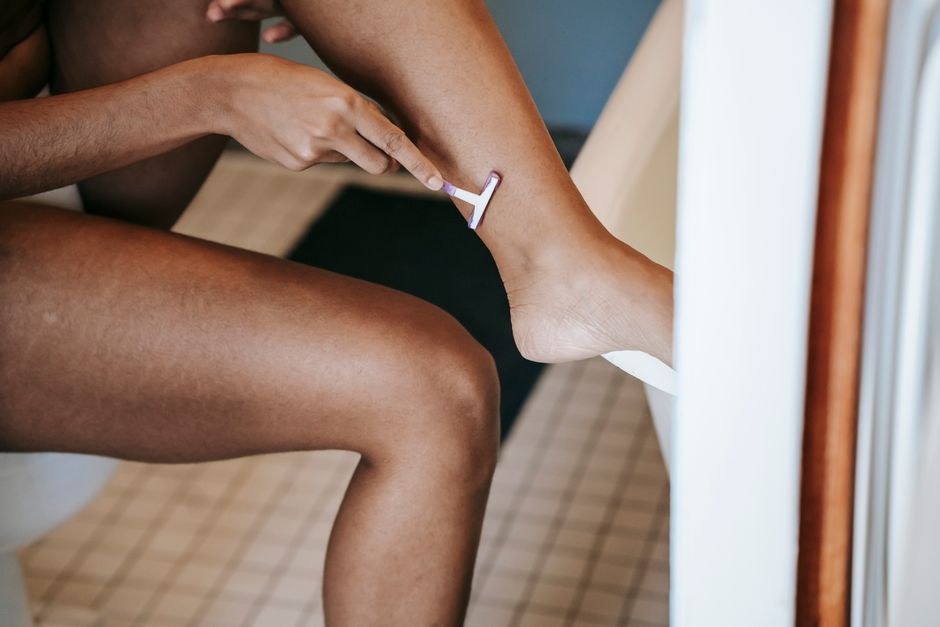
An ingrown hair happens when a strand curls back into the skin or grows sideways instead of out through the follicle opening. The safest way to make one come out is to leave the follicle alone, apply warm compresses several times a day to soften the skin and reduce swelling, and let the hair work its way to the surface on its own. If a loop of hair is clearly visible at the surface, you can gently lift it with a clean, sterile needle or tweezers — but never dig into the skin or pluck the hair out. Most ingrown hairs clear up within one to two weeks without any intervention.
What Actually Causes an Ingrown Hair?
Hair grows from a follicle, a small pocket beneath the skin’s surface. When the hair exits the follicle and reaches the surface normally, it grows outward. An ingrown hair occurs when the sharp tip of the hair turns back and re-enters the skin, or when dead skin cells block the follicle opening so the hair cannot break through.
The result is a small inflammatory reaction. The body treats the trapped hair as a foreign object, sending immune cells to the area. That is why an ingrown hair looks like a small red bump, sometimes with a white or dark center. It can itch, feel tender, or look like a pimple.
Certain hair types are more prone to this. Curly and coarse hair is more likely to curve back into the skin. This is why ingrown hairs are common in the beard area, on the back of the neck, in the armpits, and in the pubic region. Shaving, waxing, and tweezing can all trigger them because these methods cut or pull hair in ways that leave a sharp edge or disrupt the follicle.
Tight clothing that rubs against the skin can push hair back into the follicle. So can friction from exercise or sitting for long periods.
How To Make An Ingrown Hair Come Out Safely
The core principle is simple: create conditions that let the hair surface on its own, and avoid anything that pushes it deeper or introduces bacteria.
Start with warm compresses. Soak a clean washcloth in warm — not hot — water and hold it against the area for 10 to 15 minutes. Do this three to four times a day. The warmth increases blood flow to the area and softens the skin, which can help the hair break through. This is the single most reliable home approach.
Keep the area clean with mild soap and water. Do not scrub. Exfoliating aggressively over an active ingrown hair will irritate the skin further and can push bacteria into the follicle.
If after several days you can clearly see a loop of hair at or just below the surface, you may gently lift it. Here is how to do that safely:
- Wash your hands and the area with soap and water.
- Sterilize a needle or tweezers by wiping them with rubbing alcohol.
- Use the needle to gently tease the hair loose from the skin — do not pierce the skin itself.
- Lift the hair with tweezers but do not pull it out. Leaving the hair in place prevents the follicle from collapsing and creating a new ingrown hair.
- Clean the area again afterward.
If you cannot see the hair at the surface, stop. Digging into the skin is the most common way people turn a minor ingrown hair into an infection.
What Should You Not Do to an Ingrown Hair?
Do not squeeze it like a pimple. The structure of an ingrown hair is different from a pore blocked by oil and bacteria. Squeezing pushes the hair deeper and can rupture the follicle wall, spreading inflammation and bacteria into surrounding tissue.
Do not pluck the hair. Removing it entirely can leave the follicle to heal in a way that produces another ingrown hair in the same spot. It also creates an open wound that is vulnerable to infection.
Do not use harsh chemical exfoliants, strong acids, or abrasive scrubs on the area. These damage the skin barrier and increase the risk of irritation and infection.
Do not shave or wax over an active ingrown hair. This can cut the skin, introduce bacteria, and make the problem worse.
A common mistake is treating an ingrown hair with acne products containing benzoyl peroxide or salicylic acid. These can reduce surface bacteria, but they do not address the underlying trapped hair. For some people they help with inflammation; for others they cause additional irritation. The evidence for their use specifically on ingrown hairs is limited.



When Does an Ingrown Hair Need Medical Attention?
Most ingrown hairs resolve on their own. Seek medical care if you notice any of the following:
- Spreading redness or warmth around the bump
- Increasing pain or swelling
- Pus that drains or a boil-like lump
- Fever or chills
- The bump gets larger instead of smaller after several days
- Ingrown hairs that keep coming back in the same area
These signs may indicate a bacterial infection in the follicle, which can require prescription antibiotics. In some cases, a doctor may need to drain a pus-filled pocket. Do not try to drain it yourself.
There is also a condition called pseudofolliculitis barbae, which is a chronic inflammatory response to ingrown hairs, most common in people with tightly curled hair who shave. It can cause dark raised bumps and scarring. This condition often needs ongoing management and sometimes prescription treatments. If you have recurring ingrown hairs with dark bumps and scarring, a dermatologist can help.
Rarely, what looks like an ingrown hair could be something else — a cyst, a skin infection, or another skin condition. If a bump does not improve within two weeks or changes in appearance, have a doctor look at it.
How Can You Prevent Ingrown Hairs?
Prevention focuses on how you remove hair and how you care for your skin between removals.
If you shave, use a sharp single-blade razor. Shave in the direction the hair grows, not against it. Wet the skin and use shaving cream or gel. Rinse the razor after each stroke. Do not pull the skin tight while shaving — this can cause the hair to snap back below the surface.
Consider alternatives to close shaving. Electric razors that leave a slight stubble are less likely to cause ingrown hairs than a close blade shave. Chemical depilatories break down hair at the surface and may cause fewer ingrown hairs for some people, though they can irritate sensitive skin. Laser hair removal and electrolysis damage the follicle itself and are the most effective long-term options for people who get chronic ingrown hairs. These are medical procedures and should be done by a qualified professional.
Exfoliate gently between hair removal sessions. A soft washcloth or a mild exfoliating product used once or twice a week can help remove dead skin cells that block follicles. Do not overdo it.
Moisturize the skin regularly. Dry, flaky skin is more likely to trap hairs.
Wear loose-fitting clothing, especially in areas prone to ingrown hairs. Friction from tight clothes pushes hair back into the skin.
Do Home Remedies for Ingrown Hairs Actually Work?
Warm compresses are the most reliable home measure. They are widely recommended by clinicians and have a clear physiological basis: heat increases local blood flow and softens tissue, which can help the hair surface.
Some people use tea tree oil or other natural antiseptics on ingrown hairs. Tea tree oil has antimicrobial properties in laboratory studies, but there is no strong clinical evidence that it resolves ingrown hairs faster than warm compresses alone. It can also cause skin irritation or allergic reactions in some people. If you try it, dilute it and test on a small area first.
Apple cider vinegar, baking soda pastes, and similar remedies circulate widely online. No clinical evidence supports these for ingrown hair treatment. Some can irritate or damage the skin.
The honest position: warm compresses, gentle cleansing, and patience handle most ingrown hairs. Anything beyond that has limited or no evidence for this specific use.
How Long Does an Ingrown Hair Take To Heal?
Most ingrown hairs improve within a few days and resolve within one to two weeks. The redness and bump typically fade as the hair surfaces or the inflammation subsides.
If the hair does not surface and the bump persists beyond two weeks, or if it gets worse at any point, see a doctor. Chronic ingrown hairs that recur in the same area may need professional treatment to break the cycle.
Dark marks left behind after an ingrown hair heals are called post-inflammatory hyperpigmentation. These fade over time but can take months. Sun protection helps prevent them from darkening. No topical product has been proven to speed this process dramatically, though some ingredients used in skin care may help over time.
Frequently Asked Questions
Can I pop an ingrown hair like a pimple?
No. Popping or squeezing an ingrown hair pushes the hair deeper and can rupture the follicle, spreading bacteria and inflammation. This significantly raises the risk of infection and scarring.
Should I pluck an ingrown hair out?
No. Plucking removes the hair entirely and can cause another ingrown hair to form in the same follicle. If a hair loop is visible at the surface, you can gently lift it with a sterile needle, but leave the hair in place.
How long does an ingrown hair last?
Most ingrown hairs resolve within one to two weeks with warm compresses and gentle care. If a bump persists beyond two weeks or gets worse, see a doctor.
When should I see a doctor for an ingrown hair?
See a doctor if you have spreading redness, increasing pain, pus, fever, or a bump that keeps getting larger. These signs may indicate an infection that needs prescription treatment.
