
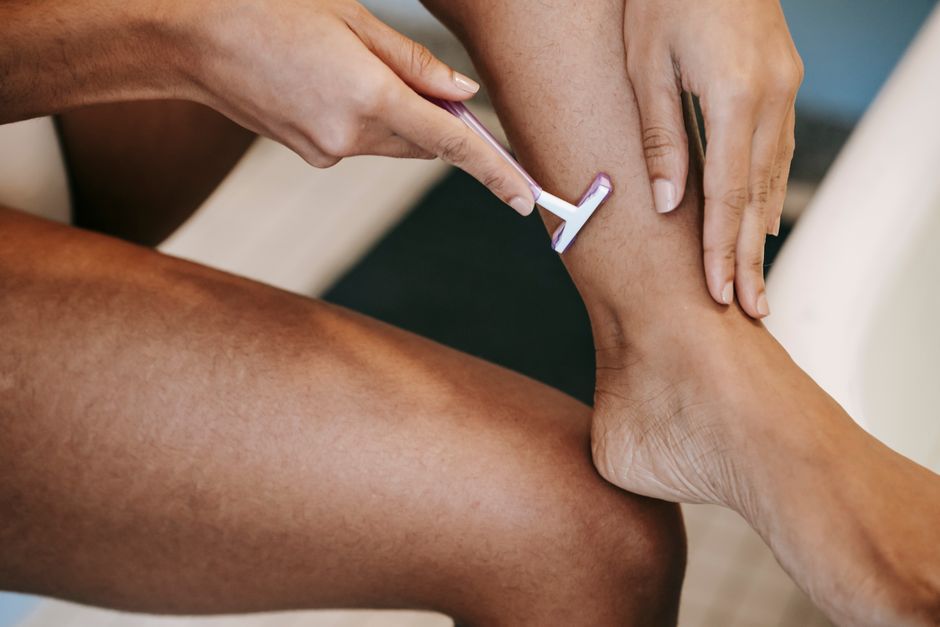
An ingrown hair happens when a hair curls back or grows sideways into the skin instead of rising out of the follicle. The result is a small, often itchy or tender bump that can look like a pimple. Most ingrown hairs clear up on their own within a few days to a couple of weeks, and simple steps like stopping shaving in that area and applying a warm compress can help. When they become infected, cause lasting dark marks, or keep coming back, a doctor can remove the hair or treat the problem directly.
How To Get Rid Of Ingrown Hair: Causes And Treatment
An ingrown hair is a hair that has grown back into the skin or grown sideways along the surface instead of pushing up and out of the follicle. The skin responds the way it responds to any minor foreign object: it becomes red, swollen, and sometimes filled with pus.
This is common in areas where hair is shaved, waxed, or plucked, especially where the hair is coarse and curly. The face, neck, armpits, pubic area, and legs are the usual spots. People with tightly curled hair are more prone to a related condition called pseudofolliculitis barbae, which causes ongoing irritation in shaved areas.
Treatment depends on whether the bump is simply inflamed or actually infected. Most uninfected ingrown hairs need little more than time and a break from hair removal. Infected ones may need medical care.
What Causes Ingrown Hairs?
Ingrown hairs form for two main reasons. In one, a hair that has been cut or pulled curls back and re-enters the skin nearby. In the other, dead skin blocks the follicle opening, so the new hair cannot break through and grows sideways under the surface.
Several things make this more likely:
- Shaving, especially close shaving or shaving against the direction of hair growth
- Waxing, plucking, or tweezing, which can leave a sharp hair tip behind
- Coarse or tightly curled hair, which bends back into the skin more easily
- Dead skin buildup that plugs the follicle
- Friction from tight clothing, which pushes hair back into the skin
- Hormonal shifts that change hair growth, such as during puberty
Some people are simply more prone to ingrown hairs than others, and that tendency often runs in families. It is not a hygiene problem. Clean skin gets ingrown hairs too.
What Does An Ingrown Hair Look Like?
An ingrown hair usually appears as a small, raised bump that may be red, white, or darker than the surrounding skin. It can look a lot like a pimple or a small boil. You may see a hair trapped inside the bump or a loop of hair just under the surface.
Common signs include:
- A tender or itchy bump in an area you remove hair
- Redness or swelling around the bump
- Pus inside the bump if it becomes infected
- Darkened skin or a scar left behind after it heals
Ingrown hairs can look similar to other skin problems, including acne, folliculitis (inflamed hair follicles), and in some cases skin infections or other conditions. If a bump keeps growing, spreads, or does not improve, that is a reason to have a doctor look at it rather than assume it is an ingrown hair.





How Do You Get Rid Of An Ingrown Hair At Home?
Most ingrown hairs improve without medical treatment. The goal at home is to reduce irritation and let the hair work its way out or be released.
Steps that are commonly recommended:
- Stop shaving, waxing, or plucking the area until it heals
- Apply a warm compress to the area for a few minutes several times a day to soften the skin and ease swelling
- Wash the area gently with a mild cleanser and warm water
- Use a soft washcloth to gently exfoliate the surface, which can help free a trapped hair
- Avoid squeezing or digging at the bump with fingers or tools
Warm compresses and gentle cleansing are widely used and low risk. The evidence that they speed healing is based on general wound and skin care principles rather than large trials specific to ingrown hairs, but they are unlikely to cause harm and often help comfort.
If you can clearly see a loop of hair at the surface, some clinicians suggest gently freeing it with a clean, sterilized needle or tweezers. This should be done carefully. Picking and digging can push bacteria deeper and turn a minor bump into an infection.
When Should You See A Doctor?
See a doctor if an ingrown hair becomes infected or does not improve with home care. Signs that need medical attention include spreading redness, increasing pain, warmth, a growing boil, or pus that drains on its own.
You should also get checked if:
- The bump gets larger or more painful instead of better
- You develop fever or feel unwell
- Ingrown hairs keep coming back in the same area
- You have dark, raised scars or lasting dark marks
- A bump does not heal after a few weeks
An infected ingrown hair may need a prescription antibiotic cream or, in some cases, oral antibiotics. A doctor can also drain a boil safely or remove the trapped hair. This matters because an untreated infection in a hair follicle can spread. In rare cases, infections in the beard or nose area can become serious, so worsening symptoms are not something to wait out.
How Can You Prevent Ingrown Hairs?
Prevention focuses on how you remove hair and how you care for the skin around it. Changing your hair removal method is often the single most effective step.
Ways to lower the risk:
- Shave in the direction the hair grows, not against it
- Use a sharp blade and replace it regularly
- Wet the skin and use shaving gel or cream to reduce friction
- Shave less often, or take breaks from shaving
- Try a different method, such as trimming with clippers, which leaves hair longer and less likely to curl back
- Consider laser hair removal or electrolysis for stubborn, recurring areas
- Gently exfoliate to reduce dead skin buildup that can block follicles
Laser hair removal and electrolysis reduce hair growth over time, which can prevent ingrown hairs by removing the source. These are the approaches with the strongest rationale for people who get recurring ingrown hairs, though results vary and multiple sessions are usually needed.
One clarification worth knowing: exfoliating harder does not work better. Rough scrubbing irritates the skin and can make inflammation worse. Gentle and regular beats aggressive.
Do Ingrown Hairs Go Away On Their Own?
Most do. A single ingrown hair typically resolves within days to a couple of weeks as the skin sheds the trapped hair or the hair grows out. The bump may flatten and fade, though a dark mark can linger for weeks or months, especially on darker skin tones.
What does not reliably go away on its own is the tendency to get them. If you keep shaving the same way, new ingrown hairs will keep forming. That is why prevention matters as much as treatment.
Scarring is the main reason not to ignore recurring ingrown hairs. Repeated inflammation can leave permanent dark spots or raised scars, and those are harder to treat than the ingrown hair itself.
Frequently Asked Questions
How long does an ingrown hair take to go away?
Most ingrown hairs clear up within a few days to a couple of weeks. If one is still there after a few weeks or is getting worse, see a doctor.
Should I pop an ingrown hair like a pimple?
No, popping or squeezing an ingrown hair can push bacteria deeper and cause infection or scarring. Use a warm compress instead and let it heal.
How do you get rid of ingrown hairs fast?
Stop hair removal in the area, apply warm compresses, and keep the skin clean to ease swelling and help the hair release. There is no proven way to make one disappear overnight.
Can ingrown hairs become infected?
Yes, an ingrown hair can become infected, causing pus, spreading redness, and pain. Signs of infection need medical care, since some follicle infections can spread if untreated.
