
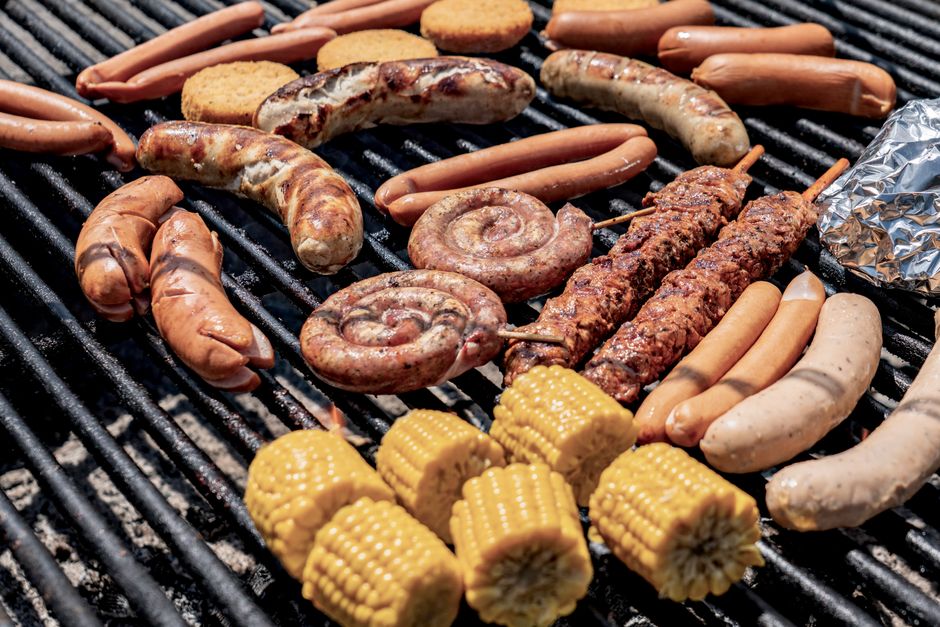
You can tell a sausage is cooked by checking its internal temperature with a food thermometer. Fresh sausages need to reach 160°F, while poultry sausages need 165°F. If you do not have a thermometer, you can use visual cues like firm texture and clear juices, but those signs are less reliable than a temperature reading.
Most people overcook sausages because they rely on color alone. Pink pork is not automatically undercooked, and brown pork is not automatically safe. The only way to know for certain is to measure the heat inside the meat.
How To Know When Sausages Are Cooked Using a Meat Thermometer
A digital instant-read thermometer is the most reliable tool for this job. Insert the probe into the center of the sausage, avoiding the casing and any bone if present. Wait for the reading to stabilize, which usually takes a few seconds on a digital model.
The target temperature depends on what is in the sausage:
- Beef, pork, or lamb sausages: 160°F
- Chicken or turkey sausages: 165°F
- Pre-cooked sausages (like hot dogs or some smoked links): 165°F if reheating, though they are already safe to eat cold
Check more than one sausage. Pans and grills have hot spots. A sausage near the edge of the pan may cook faster than one in the center. If you are cooking a batch, test two or three from different spots.
One detail that trips people up: the temperature can rise a few degrees after you pull the sausage off the heat. This is called carryover cooking. If your thermometer reads 158°F, it will likely reach 160°F as it rests. But do not count on carryover to make up a large gap. If you read 145°F, put it back on the heat.
What Are the Visual Signs a Sausage Is Done?
Visual cues can help, but they are not as trustworthy as a thermometer. The most common signs people look for are firmness, juice clarity, and color.
A cooked sausage feels firm when you press it with tongs or a spatula. Raw sausage feels soft and squishy. This change happens because the proteins in the meat coagulate as they heat, which firms up the texture. But firmness is subjective. A sausage that sat in the fridge overnight may feel firmer than one at room temperature, even before cooking.
Clear juices are another sign. When you pierce a cooked sausage, the liquid that runs out should be clear or slightly yellow. Pink or bloody juices suggest it is not done. However, some sausages are made with additives or spices that tint the juices, so this sign is not foolproof.
Color is the least reliable cue. Ground meat can stay pink even when fully cooked, especially if it contains nitrates or certain spices. The USDA has stated that color is not a reliable indicator of doneness in ground meat and poultry. A brown sausage is not guaranteed safe, and a pink one is not guaranteed raw.
Why Is Temperature More Reliable Than Time or Color?
Temperature measures the actual conditions that kill harmful bacteria. Time and color do not.
Bacteria like Salmonella and E. coli are killed at specific temperatures. For poultry, 165°F instantly kills Salmonella. For pork and beef, 160°F does the same for the bacteria commonly found in those meats. These temperatures are established by the USDA and are based on decades of food safety research.
Color changes are caused by myoglobin, a protein in muscle tissue. Myoglobin can stay pink even after the meat reaches a safe temperature. This is why some cooked pork sausages look pink inside. It is also why some ground beef looks brown before it is fully cooked, especially if it has been exposed to air or certain packaging gases.
Time is also unreliable. A thin sausage cooks faster than a thick one. A frozen sausage takes longer than a thawed one. A sausage in a crowded pan cooks slower than one with space around it. Temperature cuts through all these variables.



How Do Cooking Methods Affect Sausage Doneness?
Different cooking methods heat sausages at different rates. Knowing how each method works helps you avoid undercooking or drying out the meat.
Pan-frying: This is one of the fastest methods. Use medium heat and turn the sausages every few minutes. High heat can burn the casing before the inside cooks. A typical fresh sausage takes about 10 to 12 minutes in a pan, but thickness matters more than time. Always check with a thermometer.
Grilling: Grills create hot spots. Move sausages around to avoid burning. Indirect heat is often better for thicker sausages. A grill lid traps heat and can speed up cooking, but it also increases the risk of flare-ups from dripping fat. Check temperature after about 8 to 10 minutes, then every few minutes after that.
Baking: Oven baking is gentler. Place sausages on a rack over a baking sheet so fat can drip away. A 350°F oven usually takes 20 to 25 minutes for fresh sausages, but again, thickness is the real variable. Start checking at 15 minutes.
Boiling or simmering: Some people boil sausages before grilling or frying. This can help them cook evenly, but it can also wash away flavor. If you boil, keep the water at a gentle simmer, not a rolling boil, which can split the casing. Boiling does not guarantee doneness. You still need to check the internal temperature.
Microwaving: Microwaves heat unevenly. If you microwave a sausage, check it in multiple spots. The ends may cook faster than the center. Let it rest for a minute before checking, as heat continues to distribute.
What About Pre-Cooked Sausages?
Pre-cooked sausages, such as hot dogs, some smoked sausages, and many deli-style links, are fully cooked at the factory. They are safe to eat cold. But if you are reheating them, you still want them hot all the way through.
The USDA recommends reheating pre-cooked sausages to 165°F. This is not because they are unsafe at lower temperatures, but because reheating to this temperature ensures any bacteria introduced after packaging are killed. It also makes the texture more appealing.
If you are using pre-cooked sausage in a dish like jambalaya or a casserole, it is safe as soon as the dish is hot. You do not need to cook it separately first.
Common Mistakes That Lead to Undercooked Sausages
Even careful cooks run into problems. Here are the mistakes that most often lead to undercooked sausage.
Cooking from frozen. A frozen sausage takes much longer to reach a safe internal temperature. The outside can look done while the inside is still icy. Thaw sausages in the refrigerator overnight before cooking, or add extra time and check the temperature carefully.
Crowding the pan. When sausages touch each other, they steam instead of browning. The heat cannot circulate. This slows cooking and makes it harder to judge doneness. Leave space between each sausage.
Using high heat. High heat browns the outside fast but can leave the inside raw. Medium heat is better for most sausages. If the casing starts to split or burn, turn the heat down.
Trusting the color. As mentioned earlier, color is not a reliable sign. A sausage can look brown on the outside and still be pink and undercooked in the center. Always use a thermometer.
Not checking multiple sausages. One sausage may be done while another is not. Check at least two from each batch.
What Should You Do If a Sausage Is Not Cooked Enough?
If your thermometer reads below the target temperature, put the sausage back on the heat. Continue cooking and check again in a few minutes. Do not rely on carryover cooking to bridge a large gap.
If you have already bitten into a sausage and it is pink or cool in the center, do not eat the rest. Return it to the pan, oven, or grill and cook until it reaches the right temperature.
If you have already eaten an undercooked sausage, watch for symptoms of foodborne illness. These can include nausea, vomiting, diarrhea, and fever. Symptoms usually appear within hours to days, depending on the bacteria involved. Most people recover without treatment, but severe or lasting symptoms warrant a call to a doctor.
People with weakened immune systems, pregnant women, young children, and older adults are at higher risk for serious illness from undercooked meat. If you fall into one of these groups, be especially careful with sausage doneness.
Does Resting a Sausage Matter?
Resting meat after cooking allows juices to redistribute. For sausages, a short rest of 2 to 3 minutes is enough. This makes them juicier and easier to handle. During this rest, the internal temperature may rise slightly, which can help a sausage that is just shy of the target.
But do not rest a sausage for too long. Sausages are small, and they cool quickly. If you rest them for more than 5 minutes, they may drop below a comfortable eating temperature.
Frequently Asked Questions
What temperature should sausages be cooked to?
Fresh beef, pork, and lamb sausages should reach 160°F. Chicken and turkey sausages should reach 165°F. These temperatures are established by the USDA for food safety.
Can sausages be pink in the middle and still be safe?
Yes. Ground meat can stay pink even when fully cooked, especially if it contains nitrates or certain spices. Color is not a reliable indicator of doneness. Use a thermometer instead.
How long do sausages take to cook?
Cooking time varies by thickness and method. Pan-frying usually takes 10 to 12 minutes, grilling 8 to 12 minutes, and baking 20 to 25 minutes at 350°F. Always check the internal temperature rather than relying on time alone.
Are pre-cooked sausages safe to eat cold?
Yes. Pre-cooked sausages like hot dogs and some smoked links are fully cooked at the factory and safe to eat cold. If you reheat them, the USDA recommends reaching 165°F.
