
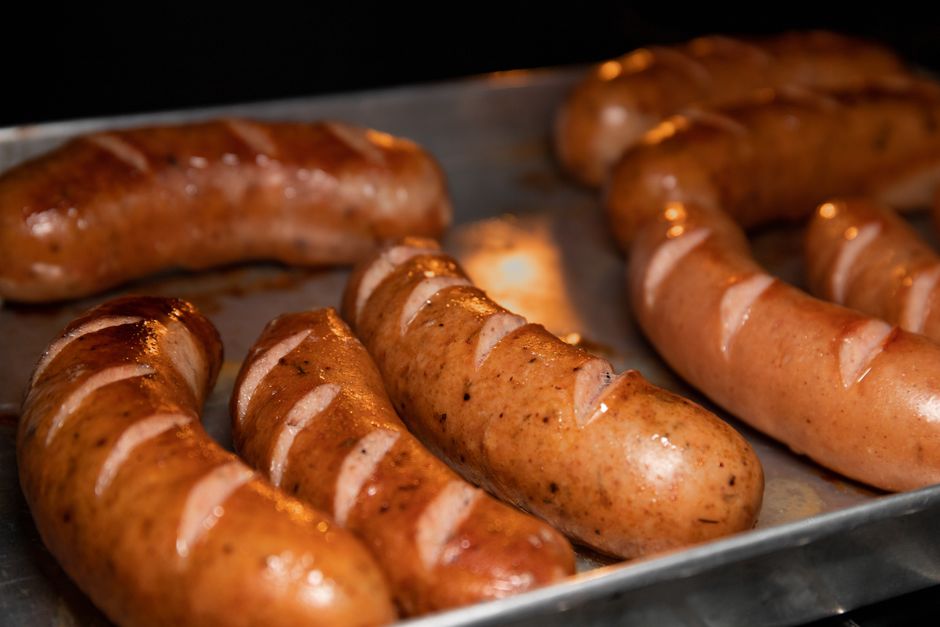
You have probably pulled sausages out of a pan and wondered if they are safe to eat. The short answer is that a properly cooked sausage reaches an internal temperature of 160°F for pork and beef or 165°F for poultry. Using a food thermometer inserted into the thickest part is the only reliable method. Color, texture, and time are not trustworthy on their own. This guide explains exactly what to look for and what the evidence actually says.
What Is the Only Reliable Way to Know If Sausages Are Cooked?
A food thermometer is the only tool that gives you a real answer. The United States Department of Agriculture (USDA) states that color and texture are not accurate indicators of doneness. Sausages can look brown on the outside and still be raw in the center.
Insert the thermometer into the thickest end of the sausage. Avoid touching the pan or any bone if present. Wait three seconds for the reading to stabilize. For pork and beef sausages, 160°F is the target. For chicken or turkey sausages, 165°F is the minimum.
This is not a suggestion from a cooking blog. This is the standard set by food safety agencies. If you do not own a thermometer, you are guessing. Most people guess wrong.
Can You Tell If Sausages Are Cooked by Looking at Them?
Many people rely on the color of the sausage to decide if it is done. This is a common mistake. Research from the USDA has shown that some sausages remain pink even when fully cooked, especially if they contain nitrates or are made from certain meats.
Similarly, sausages can turn brown on the outside from browning reactions that have nothing to do with internal doneness. A dark crust does not mean the center is safe. The same goes for juices running clear — that rule applies to whole cuts of meat like chicken breasts, not ground or emulsified meats like sausages.
Color is a visual cue that feels reliable but is not. The only way color helps is if you see raw, translucent pink meat inside. That is a clear sign of undercooking. But the absence of that look does not confirm safety.
How Long Should You Cook Sausages for Safety?
Cooking time depends on the type of sausage, its thickness, and the cooking method. There is no single time that works for all sausages. A thin breakfast sausage might cook in 8 to 10 minutes in a pan. A thick bratwurst can take 15 to 20 minutes on a grill.
The USDA recommends cooking sausages to the safe internal temperature regardless of time. Time is a rough guide, not a guarantee. Factors like starting temperature (frozen versus thawed), pan heat, and sausage diameter all change the actual cooking time.
If you are using a pan, cook over medium heat and turn the sausages every few minutes. If you are grilling, indirect heat works better to avoid burning the outside before the inside is done. But again, the thermometer is the only final check.





What Does the Research Say About Sausage Doneness Indicators?
A study published in the Journal of Food Protection examined whether visual cues could reliably predict doneness in sausages. The researchers found that color was a poor predictor. Some sausages that reached safe internal temperatures still had pink areas. Others that looked fully brown were still undercooked inside.
The same study confirmed that texture is also unreliable. A sausage can feel firm when undercooked if it has a high fat content. It can feel soft when fully cooked if it is a lean poultry sausage.
This is why food safety agencies worldwide, including the USDA and the Food Standards Agency in the UK, all recommend using a thermometer. They do not recommend relying on time, color, or feel. The evidence is clear that these methods fail too often to be trusted.
How To Know If Sausages Are Cooked Without a Thermometer
If you do not have a thermometer, you are in a tougher spot. There is no perfect substitute. But you can reduce risk by using multiple checks together.
First, cut into the thickest sausage in the batch. Look at the center. Raw sausage meat looks translucent and soft. Cooked sausage meat looks opaque and firm throughout. If any part looks shiny, pink, or jelly-like, it is not done.
Second, check the texture. A fully cooked sausage should feel firm when pressed. If it feels squishy or gives too easily, it likely needs more time. This is not as reliable as temperature, but it adds useful information.
Third, use a timer as a baseline, not a final answer. Most sausages need at least 10 minutes of cooking over medium heat. Thicker sausages need more. But always cut one open to check before serving.
This approach is not perfect. It is the best you can do without a thermometer. But a thermometer costs under ten dollars and removes all doubt. It is worth buying one.
Common Cooking Mistakes That Leave Sausages Undercooked
One of the most common mistakes is cooking sausages over high heat. This browns the outside quickly while the inside stays raw. The sausage looks done but is not. Medium heat gives the inside time to cook before the outside burns.
Another mistake is overcrowding the pan. When sausages are packed tightly, they steam instead of sear. Steaming can cook them, but it takes longer and the outside never browns properly. This makes it harder to judge doneness by appearance.
Cutting sausages before they are fully cooked also causes problems. If you slice them open too early, juices run out and the sausage dries out. It is better to cook them whole and check with a thermometer at the end.
Frozen sausages are another challenge. They take about 50% longer to cook than thawed ones. Cooking them from frozen increases the chance of a burnt outside and raw center. Thaw them in the fridge overnight if possible.
| Cooking Method | Approximate Time | Best Practice |
|---|---|---|
| Pan frying | 10-15 minutes | Medium heat, turn often |
| Grilling | 12-18 minutes | Indirect heat, cover |
| Oven baking | 20-25 minutes at 375°F | Flip halfway |
| Boiling | 8-10 minutes | Then sear for color |
- Always use a food thermometer for the final check.
- Cook over medium heat, not high heat.
- Do not crowd the pan.
- Thaw frozen sausages before cooking.
- Cut one open only if you have no thermometer.
What About Pre-Cooked or Smoked Sausages?
Pre-cooked sausages like hot dogs, kielbasa, or some smoked links are already safe to eat straight from the package. They do not need to reach a specific internal temperature for safety. You are only heating them for texture and flavor.
That said, heating them to at least 140°F is recommended for the best eating experience. The USDA notes that reheating to 165°F is ideal for leftovers or if you are serving vulnerable people like young children, older adults, or pregnant women.
Raw sausages are the ones that need careful cooking. Always check the package. If it says “cooked” or “smoked,” you are just warming it up. If it says “fresh” or “raw,” you need to hit the temperature targets.
Frequently Asked Questions
Can sausages be slightly pink and still be safe to eat?
Yes, some fully cooked sausages can remain pink due to ingredients like nitrates. A food thermometer is the only reliable way to confirm safety.
What temperature should sausages be cooked to?
Pork and beef sausages need to reach 160°F. Chicken and turkey sausages need to reach 165°F.
Is it safe to eat sausage that is brown on the outside?
Not necessarily. The outside can brown before the inside is fully cooked. Always check internal temperature or cut one open to verify.
How long do sausages take to cook in a pan?
Most sausages take 10 to 15 minutes over medium heat, but thickness and starting temperature change the time. Use a thermometer for accuracy.
