
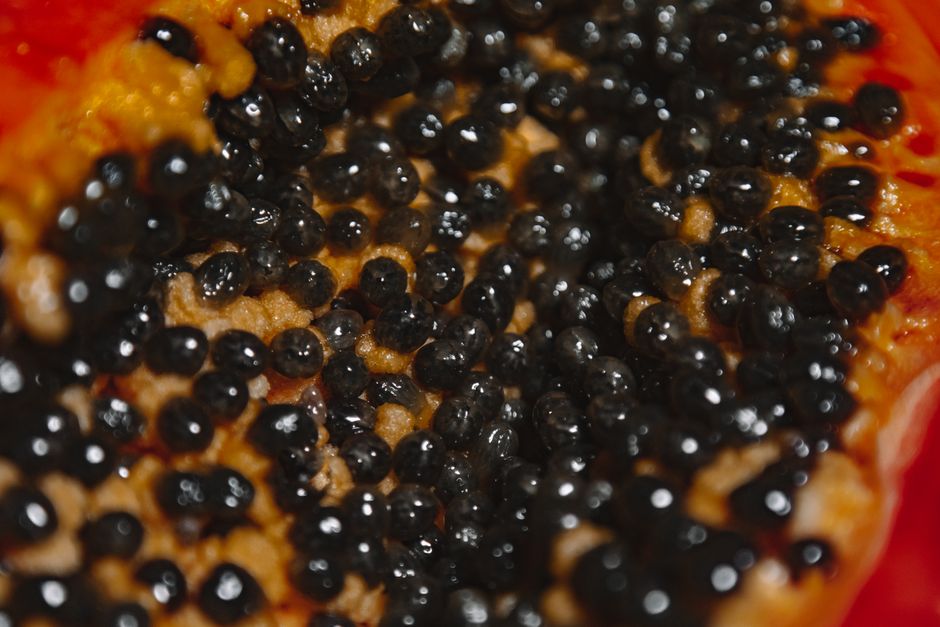
Papaya seeds are edible, and people eat them raw, dried, or ground into a powder. The most common way is to scoop them out with the fruit’s flesh, rinse off the slippery gel, and swallow a small spoonful with water or mix them into a smoothie. They taste sharp and peppery, a bit like mustard or cress, and they are usually eaten in small amounts rather than by the handful.
That is the short answer. The longer answer involves how much is reasonable, what the evidence actually supports, and where the health claims around papaya seeds run well ahead of the science.
What Do Papaya Seeds Taste Like and What Is In Them?
Raw papaya seeds have a pungent, peppery bite with a slight bitterness. The flavor comes largely from compounds in the same family as those found in mustard, radish, and watercress. That is why a small amount can add a spicy note to a salad dressing or a salsa, while a large amount quickly becomes unpleasant.
Nutritionally, papaya seeds are not a major source of vitamins or minerals the way the fruit’s orange flesh is. The flesh is well known for vitamin C and beta-carotene. The seeds contain far less of both. What the seeds do contain is a group of sulfur-based compounds, plus small amounts of fat, fiber, and protein.
The seeds also contain a compound called papain, though in lower concentration than the fruit’s flesh and leaves. Papain is a protein-digesting enzyme. Its presence in seeds is real, but it does not automatically translate into a health benefit when you eat them.
One point worth clearing up: papaya seeds are not a concentrated multivitamin. Treating them as a nutritional supplement oversells what is actually in them.
How To Eat Papaya Seeds: Practical Ways People Use Them
The simplest method is to eat them fresh, straight from a ripe papaya. Cut the fruit in half, scoop out the seeds with a spoon, and separate them from the gel. The gel is slippery and slightly sweet, and most people rinse it off under running water in a fine strainer.
From there, a few common approaches:
- Swallowed whole with water. A small spoonful, taken like a pill. This avoids the bitter taste.
- Chewed raw. Some people chew a few seeds at a time. The pepperiness is strongest this way.
- Dried and ground. Spread the rinsed seeds on a tray, let them dry, then grind them into a powder. The powder goes into smoothies, yogurt, or spice blends.
- Blended into drinks. A small amount tossed into a blender with fruit masks the flavor almost entirely.
- Used as a spice. Ground seeds can stand in for black pepper in some recipes, though the flavor is not identical.
How much is reasonable? There is no official recommended serving. Traditional use and general practice tend to keep portions small, often described in terms of a teaspoon rather than a cup. Because no regulatory body has set a standard serving, the honest position is that no established dose exists. Start small and pay attention to how your body responds.
If you are pregnant, breastfeeding, or giving food to a young child, the situation is different. No clinical guidelines currently exist for papaya seeds in these groups, and that absence of guidance is itself a reason for caution rather than a green light.
Are Papaya Seeds Safe To Eat?
For most healthy adults, eating small amounts of papaya seeds as part of a meal is not known to cause harm. That is the cautious version of the answer, and it is the accurate one.
The seeds contain compounds that, in concentrated or extracted forms, can have biological effects. One of these is a compound called benzyl isothiocyanate. In laboratory studies, this compound has shown activity against various cells, including some cancer cell lines. That is a laboratory finding. It does not mean eating papaya seeds treats or prevents cancer in people. No human trials have confirmed that.
There is also a traditional use of papaya seeds as a deworming remedy in some parts of the world. Some small studies have looked at papaya seed preparations for intestinal parasites, but the evidence is limited and the preparations used are not the same as a spoonful from a fresh fruit. This is not a substitute for medical treatment of a parasitic infection.
Large amounts of raw seeds can cause stomach upset, nausea, or a burning sensation. The seeds also contain small amounts of a compound called carpaine, which in high doses has been linked to heart effects in animal studies. The amounts in normal food use are far below those studied levels, but it is one more reason not to eat them in bulk.
People with a known allergy to papaya, or to related plants like mustard and radish, should be cautious, since the seeds share some of the same compounds.




Do Papaya Seeds Actually Kill Parasites or Help Digestion?
The parasite claim is the one most often repeated online, and it deserves a direct answer. The evidence is limited and mixed. Some small human studies have examined papaya seed extracts for intestinal worms, and results have not been consistent enough to support a general recommendation. What those studies used was a prepared extract, not raw seeds eaten with breakfast.
Treating a suspected parasite infection with papaya seeds instead of seeing a doctor is a genuine risk. Intestinal parasites can cause serious illness, and effective prescription treatments exist. Self-treating with a food is not the same as treating with a proven drug.
The digestion claim rests on the presence of papain, a protein-digesting enzyme. In theory, an enzyme that breaks down protein could help with digestion. In practice, the enzyme is largely broken down in the stomach before it reaches the intestine, and the amount in seeds is small. Whether eating papaya seeds meaningfully aids digestion in humans has not been established.
There is a broader pattern here worth naming. A compound showing activity in a lab dish is a starting point for research, not a finished health claim. Many substances look promising in cells and then fail in human trials. Papaya seeds are in that early category. The marketing has run ahead of the evidence.
How Do You Store and Prepare Papaya Seeds?
Fresh seeds do not keep long. Left in the gel at room temperature, they start to ferment within a day or two. If you are not eating them right away, rinse off the gel and either refrigerate them in a covered container or dry them.
Dried seeds store much longer. Spread them in a single layer in a warm, dry spot out of direct sun, or use a food dehydrator on a low setting. Once fully dry, they can be kept in an airtight jar in a cool, dark place. Grinding them into powder shortens their shelf life, so grind only what you plan to use in the near term.
If you freeze them, pat them dry first. Excess moisture turns them mushy when thawed.
For preparation, the main thing to remember is that a little goes a long way. The flavor is strong, and the seeds are not something most people want to eat by the spoonful straight. Mixing a small amount into something with other flavors is the practical approach.
Who Should Avoid Papaya Seeds?
Some groups should simply skip them. Pregnant women are the clearest example. Papaya seeds contain compounds that have been studied for effects on fertility and uterine activity in animals, and unripe papaya in particular has traditionally been avoided during pregnancy. Given the lack of human safety data, avoiding the seeds during pregnancy is the sensible position.
Breastfeeding women face the same gap. No clinical guidelines exist for papaya seed use while nursing, and there is no reliable information on whether compounds in the seeds pass into breast milk or affect an infant.
Young children are another group without guidance. Papaya seeds are not a food with established safety data for infants or toddlers, and the strong flavor and potential for stomach upset make them a poor choice for young kids.
People with a papaya allergy, or an allergy to related plants, should avoid them. Anyone with a heart condition or taking heart-related medication should be cautious, given the presence of carpaine in the seeds, though the amounts in food use are very small.
Anyone with a diagnosed digestive condition, a suspected parasite infection, or a chronic illness should talk to a clinician before adding papaya seeds to their routine. That is not a hedge. It is the honest limit of what is known.
Frequently Asked Questions
Can you eat papaya seeds raw?
Yes, papaya seeds can be eaten raw. Most people eat them in small amounts because the raw flavor is peppery and bitter.
How many papaya seeds should you eat a day?
There is no official recommended amount, and no regulatory body has set a daily serving. Traditional use tends to keep portions small, often described in teaspoons rather than larger measures.
Do papaya seeds really kill parasites?
The evidence is limited and mixed, and no human trials have confirmed that eating raw seeds treats a parasite infection. Suspected infections should be evaluated and treated by a doctor.
Are papaya seeds safe during pregnancy?
Papaya seeds are best avoided during pregnancy. No clinical guidelines exist for their use in pregnancy, and animal studies have raised questions about effects on fertility and uterine activity.
Papaya seeds are a real food with a real flavor, and they can be eaten in small amounts without much fuss. What they are not is a proven remedy for parasites, cancer, or anything else the internet claims. If you want to try them, rinse off the gel, start with a small amount, and treat them as a seasoning rather than a supplement. If you are pregnant, nursing, or managing a health condition, the honest answer is that we do not know enough, and that uncertainty should guide your choice.
