
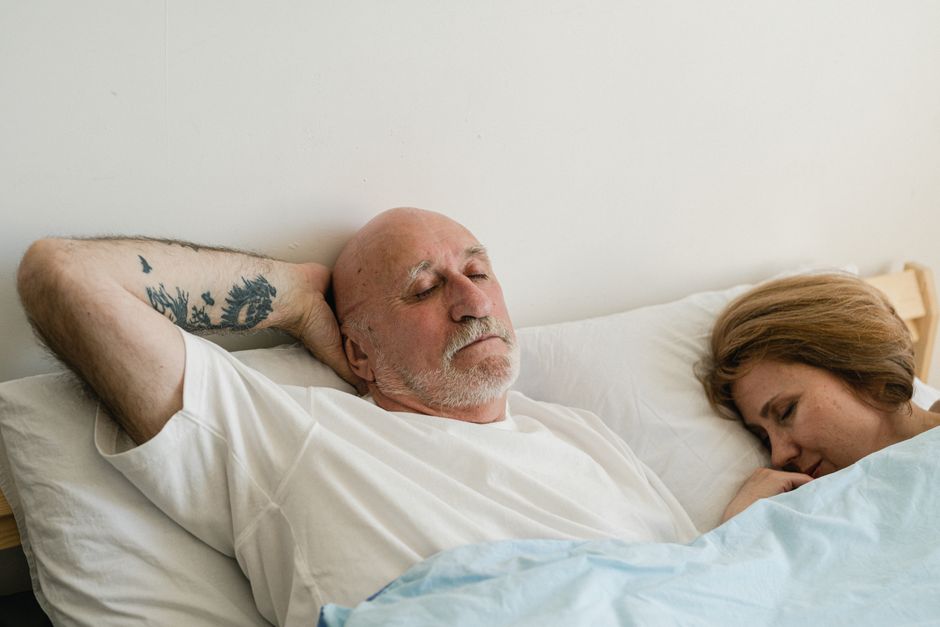
A home sleep apnea test is a portable device you use overnight in your own bed to check for obstructive sleep apnea. You pick up or receive the device, follow setup instructions that usually take 10 to 20 minutes, sleep with sensors attached, and return the equipment the next morning. A sleep physician then reviews the recording and gives you results, typically within one to two weeks.
What Is a Home Sleep Apnea Test and Who Is It For?
A home sleep apnea test, sometimes called an HSAT or home sleep study, is a simplified version of an in-lab sleep study. It records a small set of signals while you sleep: breathing effort, airflow, blood oxygen level, and usually body position or heart rate. It does not record brain waves, so it cannot measure how long you actually slept or detect every type of sleep disorder.
That limitation matters. The test is designed for one specific job — confirming obstructive sleep apnea in adults who are likely to have it. It is not a general sleep test.
Clinicians generally consider a home test appropriate when an adult has symptoms that point toward moderate to severe obstructive sleep apnea and has no other major medical conditions that would confuse the results. Typical signs include loud snoring, witnessed pauses in breathing during sleep, waking gasping, and daytime sleepiness.
It is usually not the right first choice if you have significant heart failure, chronic lung disease, a neuromuscular condition, or a suspected central sleep apnea. It is also not validated for children. For those situations, an in-lab study remains the standard because it captures more information.
What Happens During the Test Step by Step?
The exact process depends on the device, but most home sleep apnea tests follow a similar routine. Here is what to expect from start to finish.
- Pickup or delivery: You collect the device from a clinic or sleep center, or it arrives by mail. Staff usually show you how to use it or provide written and video instructions.
- Setup before bed: You attach a breathing sensor under your nose or at your nostrils, place a belt or band around your chest or abdomen, and put a small pulse oximeter on your finger to measure oxygen. Setup generally takes 10 to 20 minutes the first time.
- Sleeping with it on: You sleep in your own bed as usual. The device runs on its own overnight.
- Removing it in the morning: You take off the sensors, turn off or charge the device if instructed, and pack it up.
- Returning it: You bring it back to the clinic or ship it as directed.
Some devices are simpler than others. A few use only a fingertip oxygen monitor and a nasal cannula. Others add more sensors. More sensors can mean more data, but also more chances for a lead to come loose during the night.
How Do You Set Up the Device at Home?
Setup is the part people worry about most, and it is usually easier than expected. The key is to follow the specific instructions for your device, because designs vary.
A few practical points apply to almost every home test:
- Place sensors on clean, dry skin. Oils or lotion can weaken the contact.
- Route wires so they will not pull tight when you roll over.
- Test that the device is powered on and recording before you fall asleep.
- Keep the instruction sheet nearby in case something comes loose in the night.
If a sensor falls off during the night, do not panic. You can usually reattach it. The recording may still have enough usable data. If the whole test fails, the clinic will typically ask you to repeat it.
What Does a Home Sleep Apnea Test Measure?
The test focuses on a small number of signals that together indicate whether your breathing is being interrupted during sleep.
The main measurement is the apnea-hypopnea index, or AHI. This is the average number of times per hour that your breathing either stops completely (apnea) or becomes shallow enough to reduce airflow (hypopnea).
Clinicians commonly group results like this:
| AHI (events per hour) | Category |
|---|---|
| Under 5 | Normal range |
| 5 to 14 | Mild |
| 15 to 29 | Moderate |
| 30 or higher | Severe |
These cutoffs are widely used in clinical practice, though the exact numbers alone do not tell the whole story. How sleepy you feel during the day, your oxygen levels, and your other health conditions all shape what the results mean for you.
The device also measures blood oxygen saturation. Repeated drops in oxygen during the night are a sign that breathing is being interrupted. Normal oxygen saturation while awake is generally 95% or higher, and drops during sleep are one of the signals the test looks for.
How Accurate Is a Home Sleep Apnea Test?
For diagnosing moderate to severe obstructive sleep apnea in the right patient, home tests perform reasonably well compared with in-lab studies. Research generally shows good agreement between the two in adults who are likely to have the condition.
The accuracy drops in certain situations. Because a home test cannot tell whether you were actually asleep, it can underestimate how often breathing events occur. If you slept poorly or only a few hours, the results may not reflect a typical night.
Home tests also tend to miss mild sleep apnea more often than in-lab studies. And they cannot reliably detect central sleep apnea, where the brain stops signaling the muscles that control breathing. That is a different problem from the blockage that causes obstructive sleep apnea.
This is why the test is not a stand-alone answer. It is one piece of information that a clinician interprets alongside your symptoms and history.
What Do the Results Mean and What Happens Next?
After you return the device, a sleep physician reviews the recording. Results usually come back within one to two weeks, though timing varies by clinic.
If the test shows obstructive sleep apnea, the next step depends on how severe it is and how much it affects you. Options a clinician may discuss include:
- Positive airway pressure therapy: A machine that delivers air through a mask to keep the airway open. This is the most studied treatment for moderate to severe obstructive sleep apnea.
- Oral appliances: A device worn in the mouth that repositions the jaw or tongue. These are sometimes used for mild to moderate cases.
- Positional changes: For some people, apnea is worse when sleeping on the back, and avoiding that position may help.
- Weight management: Excess weight is a well-established risk factor, and weight loss can reduce apnea severity in some people.
- Surgery: Considered in selected cases when other options do not work.
If the test is negative but your symptoms continue, that does not always mean nothing is wrong. A negative home test in someone with strong symptoms is often a reason to do an in-lab study instead. The home test may simply have missed something it was not built to catch.
What Should You Do the Night of the Test?
The goal is to make the night as normal as possible, so the recording reflects your usual sleep. A few things help.
Avoid alcohol and sedatives that evening unless your clinician says otherwise, since both can change your breathing during sleep and affect the results. Keep your usual bedtime. If you normally sleep with a partner or pets, that is fine.
Do not try to sleep in an unusual position just because of the equipment. Sleep the way you normally do. The test is meant to capture your real pattern, not an idealized one.
If you wake in the night and notice a sensor has come off, reattach it if you can. If you cannot, note the time so the clinician can interpret the gaps.
What Are the Limitations to Keep in Mind?
A home sleep apnea test is convenient, but it is not a full picture of your sleep. It cannot measure sleep stages, detect restless legs syndrome, or diagnose narcolepsy. It says nothing about how many times you woke up or how fragmented your sleep was.
It is also a single-night snapshot. Sleep varies from night to night, so one recording may not capture your worst or your typical night.
None of this makes the test useless. For the right person, it is a practical, lower-cost way to confirm obstructive sleep apnea without spending a night in a lab. The important thing is to treat it as one tool, not a final verdict, and to follow up with a clinician who can put the results in context.
Frequently Asked Questions
How long does a home sleep apnea test take?
The test itself covers one night of sleep, usually six to eight hours. Setup takes about 10 to 20 minutes, and results typically come back within one to two weeks.
Can I sleep on my side during a home sleep apnea test?
Yes. You should sleep in whatever position is normal for you so the recording reflects your usual breathing. Changing position on purpose can distort the results.
What happens if my home sleep apnea test is negative?
A negative result does not always rule out sleep apnea, especially if your symptoms are strong. Your clinician may recommend an in-lab sleep study to get a clearer picture.
Is a home sleep apnea test as good as a lab study?
For moderate to severe obstructive sleep apnea in the right adult patient, home tests perform reasonably well. They are less reliable for mild cases and cannot detect some other sleep disorders that a lab study can.
