
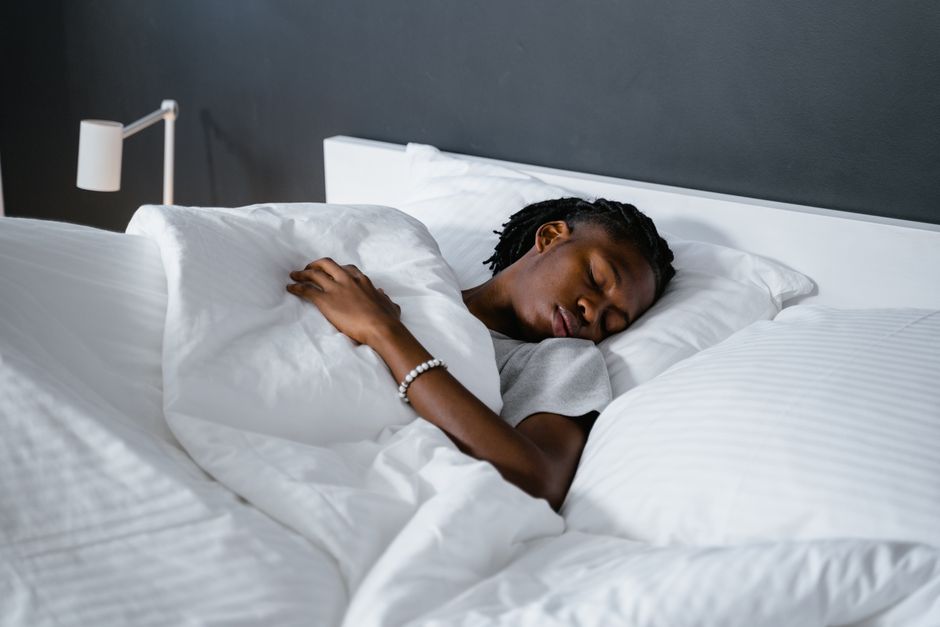
Sleep is not a switch you flip. It is a biological process your body has to be ready for, and most people who struggle at night are fighting their own physiology without knowing it. The core facts are simple: your brain needs darkness and a consistent schedule to release melatonin, your body temperature needs to drop slightly, and your nervous system needs to shift out of alert mode. Get those three things right and sleep usually improves. Skip them and no supplement will fix it.
How To Sleep Better At Night Naturally: What Actually Controls Sleep
Two systems run your sleep. The first is your circadian rhythm, a roughly 24-hour internal clock that tells your brain when to be awake and when to be asleep. The second is sleep pressure, a buildup of a chemical called adenosine that accumulates the longer you stay awake.
These two systems work together. When they line up, you fall asleep easily and stay asleep. When they are out of sync, you lie in bed tired but wired. That feeling has a name in sleep medicine: it is not insomnia yet, it is a mismatch between your clock and your sleep drive.
Light is the strongest signal your clock uses. Specialized cells in the retina detect light and send signals to a small region of the brain called the suprachiasmatic nucleus, which coordinates your daily rhythms. Bright light in the morning tells your brain it is daytime. Darkness in the evening tells it to prepare for sleep.
Melatonin is the hormone that carries that message. It is not a sedative. It does not knock you out. It signals to your body that night has arrived. That distinction matters, because it explains why melatonin supplements do not work like sleeping pills.
Why Is My Sleep Schedule So Important?
Your circadian clock is not set by willpower. It is set by timing. Going to bed and waking up at wildly different times each day keeps your clock guessing, and a confused clock produces poor sleep.
This is why shift workers have higher rates of sleep problems than the general population. Their schedules fight their biology directly. Research on shift work consistently shows disrupted circadian timing, though the effects vary widely depending on the specific shift pattern.
For most people, the practical fix is boring but effective: pick a wake time and hold it, even on weekends. Your wake time anchors your clock more than your bedtime does. Once your wake time is stable, your body starts producing sleep pressure at a predictable point in the evening.
A gap of an hour or two on weekends is generally not a problem for most people. Sleeping until noon every Saturday is. That is the equivalent of flying two time zones west and back every week.
Does Light Really Affect Sleep That Much?
Yes. Light exposure is one of the most powerful levers you have, and most people get it backwards. They get too little light in the morning and too much at night.
Morning light matters. Getting outside within an hour or so of waking helps set your clock for the day ahead. Outdoor light is far stronger than indoor light even on a cloudy day, so a short walk outside does more than sitting near a window.
Evening light matters in the opposite direction. Bright light after dark, especially blue-wavelength light from screens, can delay melatonin release and push your internal clock later. The effect is real but often overstated in popular coverage. The bigger issue for most people is not the screen itself but what the screen is doing: keeping them engaged, alert, and up an hour past their intended bedtime.
If you want a practical rule, dim your environment in the last hour before bed. Use lamps instead of overhead lights. Lower screen brightness. This is not about perfection. It is about not sending your brain a strong daytime signal when you want it to wind down.



What Role Does Body Temperature Play?
Your core body temperature follows a daily curve, and sleep onset tends to happen as that temperature is falling. This is well established in sleep physiology. A warm bath or shower one to two hours before bed can help, not because heat makes you sleepy, but because the rapid cooling afterward mimics the natural temperature drop that precedes sleep.
Your bedroom temperature matters too. Most sleep guidance suggests a cooler room, though the ideal temperature varies by person and there is no single number that applies to everyone. What is consistent is that a hot, stuffy room makes sleep harder for most people.
This is also why exercise timing can matter. A hard workout raises core temperature for a while afterward. Some people sleep fine after evening exercise. Others find it delays sleep. The evidence here is mixed, so the honest answer is to test it for yourself rather than assume one way is correct.
Can Food and Drinks Help or Hurt Sleep?
Caffeine is the clearest example. It blocks adenosine, the chemical that builds sleep pressure. That is how it keeps you awake. The problem is timing. Caffeine has a half-life of roughly five to six hours in most adults, meaning a significant portion is still in your system many hours after your last cup.
Individual variation is large. Genetics, medications, and liver function all affect how fast you clear caffeine. Some people can drink coffee at 4 p.m. and sleep fine. Others cannot drink it after noon. There is no universal cutoff, but if you are struggling with sleep, moving your last caffeine earlier is one of the simplest things to test.
Alcohol is more complicated than most people realize. It can make you fall asleep faster, which is why it feels helpful. But it disrupts sleep architecture later in the night, particularly REM sleep, and tends to cause awakenings in the second half of the night. This is well documented in sleep research. A drink before bed is not a sleep aid, even when it feels like one.
Large meals close to bedtime can cause discomfort that interferes with sleep, especially for people with reflux. There is no strong evidence that specific foods reliably improve sleep in healthy adults, despite frequent marketing claims. Some studies suggest certain nutrients are involved in sleep regulation, but no food has been shown to reliably treat insomnia.
What About Melatonin and Other Supplements?
Melatonin is the most commonly used sleep supplement, and it is also one of the most misunderstood. It is a timing signal, not a sedative. It can help shift your circadian rhythm, which is why it is sometimes used for jet lag and for people with delayed sleep patterns. It is not a strong treatment for general insomnia.
Dosing is not standardized in the United States because melatonin is sold as a supplement rather than a regulated drug. Products vary widely in actual content compared to what the label states. If you are considering it, that variability is worth knowing about. For specific populations, including children and pregnant women, no established clinical guidelines exist for melatonin dosing, and it should not be given without medical guidance.
Other supplements marketed for sleep, including valerian, magnesium, and various herbal blends, have limited and mixed evidence. Some small studies suggest possible effects. None have the kind of large, consistent trial data that would support calling them effective treatments for insomnia. That is the honest position, regardless of what the packaging says.
When Should You Talk to a Doctor About Sleep?
Occasional bad nights are normal. Persistent problems are not, and they often have identifiable causes that a doctor can help with.
Talk to a clinician if you snore heavily, wake gasping, or feel exhausted despite spending enough time in bed. These can be signs of sleep apnea, a condition where breathing repeatedly stops during sleep. It is common and often undiagnosed, and it does not improve with better sleep habits alone.
Also seek help if insomnia lasts for weeks or months, if you feel a strong urge to move your legs at night, or if sleep problems are affecting your mood, work, or safety. Cognitive behavioral therapy for insomnia is considered the first-line treatment for chronic insomnia in clinical guidelines, ahead of medication. That is worth knowing, because many people assume pills are the only option.
Which Habits Actually Make a Difference?
Most sleep advice works the same way: it reduces friction between your behavior and your biology. The habits below are the ones with the most consistent support.
- Keep a consistent wake time, including most weekends.
- Get outdoor light within an hour of waking.
- Dim lights and reduce screens in the last hour before bed.
- Move your last caffeine earlier in the day.
- Avoid alcohol as a sleep aid.
- Keep your bedroom cool, dark, and quiet.
- Use your bed mainly for sleep, so your brain associates it with sleeping.
- If you cannot sleep after about 20 minutes, get up and do something calm until you feel drowsy.
None of these are dramatic. That is the point. Sleep responds to consistency more than intensity, and small changes held over time tend to beat aggressive fixes that fall apart after a week.
Frequently Asked Questions
How long does it take to fix your sleep naturally?
Most people notice changes within one to two weeks of holding a consistent wake time and adjusting light exposure. Full adjustment of your circadian rhythm typically takes longer, often several weeks.
Is melatonin safe to take every night?
Short-term use is generally considered low risk for most healthy adults, but long-term safety data are limited. Because supplement content varies and dosing is not standardized, talk to a doctor before using it regularly.
Does blue light from phones really ruin sleep?
Blue light can delay melatonin release, but the bigger effect for most people is staying engaged and awake past their intended bedtime. Reducing screen brightness and setting a cutoff time helps more than any specific filter.
Can you catch up on sleep on weekends?
Some recovery is possible, but consistently sleeping much later on weekends shifts your circadian clock and can make Monday harder. Keeping weekend wake times within about an hour or two of your weekday time works better.
