
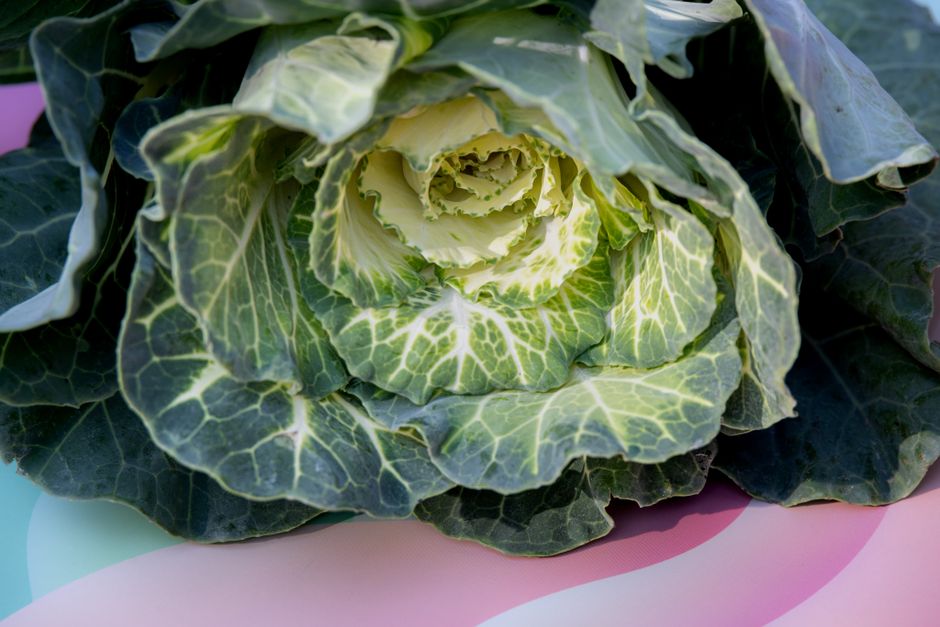
To core a cabbage, cut the head in half through the stem end, then cut each half into wedges. Angle your knife to cut out the tough triangular core from each wedge. This method removes the hard stem without wasting too much cabbage. It works for green, red, napa, and savoy varieties.
What Is the Easiest Way to Core a Cabbage?
The wedge method is the most common and practical approach. Start by placing the cabbage on a cutting board with the stem end facing down. Use a sharp chef’s knife to cut straight through the center, from top to bottom, splitting the head in half.
Turn each half cut-side down and cut it into quarters or smaller wedges depending on your recipe. You will see the solid white core running through the center of each wedge. Slide your knife at a 45-degree angle along the edge of the core and slice it out in one triangular piece. This leaves you with clean cabbage sections that separate easily into leaves.
Some cooks prefer to cut the core out before chopping the cabbage at all. Place the whole cabbage stem-side up and cut a cone-shaped piece around the stem. This works but requires more precision and often wastes more cabbage than the wedge method.
Does the Method Change for Different Types of Cabbage?
Green and red cabbage have dense, tight heads and hard cores. The wedge method works best for both. Red cabbage stains more easily, so use a nonporous cutting board or one you do not mind discoloring.
Napa cabbage has a looser, oblong head with tender leaves. Its core is smaller and softer. You can often just cut the head lengthwise and slice out the core in one long strip. Some people skip coring napa entirely and just chop the whole head, since the core is edible and not very tough.
Savoy cabbage has crinkly leaves and a looser head than green cabbage. The core is still firm but smaller. The wedge method works, but you may find the leaves separate more easily by hand after cutting out the core.
Brussels sprouts are miniature cabbages with their own small core. Trim the stem end and peel off outer leaves. The core is edible when cooked but can be tough if left whole in large sprouts.
What Tools Make Coring a Cabbage Easier?
A sharp chef’s knife is the best tool for coring cabbage. Dull knives slip more easily and require more force, which increases the chance of cutting yourself. A knife with an 8-inch blade gives you enough length to cut through a large head in one motion.
A vegetable peeler can remove the outer leaves if they are wilted or dirty. This is not necessary for coring but helps prep the cabbage before cutting.
There are also specialty cabbage corers and wedgers available. These tools have a curved blade or a central spike that removes the core in one motion. They work but are not necessary for most home cooks. The wedge method with a chef’s knife is faster and gives you more control over the size of your cabbage pieces.
| Tool | Best For | Not Ideal For |
|---|---|---|
| Chef’s knife (8-inch) | All cabbage types, precise cuts | Very small or very large heads |
| Paring knife | Small cabbages, detail work | Large dense heads |
| Vegetable peeler | Removing outer leaves | Cutting through the core |
| Cabbage corer tool | Quick coring, repetitive prep | Storage space, cost |





How To Core a Cabbage Without Wasting Food
The core itself is edible. It is just tougher and less sweet than the leaves. Many people throw it away because they think it is inedible or too hard to chew. That is not true.
Thinly slice the core and add it to stir-fries, soups, or coleslaw. It has a mild cabbage flavor and a crunchy texture that works well in cooked dishes. You can also pickle the core slices separately for a tangy snack.
Another way to reduce waste is to core the cabbage after shredding it. Cut the head into quarters, then slice each quarter into thin strips. Stop slicing when you reach the solid core and discard only the small remaining piece. This method wastes almost nothing.
Some people report that the core contains more fiber and nutrients than the leaves. There is no strong evidence for this claim. The core and leaves have similar nutritional profiles, with slightly more fiber in the core due to its denser structure. Eat it if you like the texture. Skip it if you do not.
What Are Common Mistakes When Coring Cabbage?
The most common mistake is using a dull knife. A dull blade crushes the cabbage instead of slicing through it. This makes the core harder to remove and increases the risk of the knife slipping. Sharpen your knife before starting.
Another mistake is cutting the cabbage into wedges that are too large. A wedge that is too thick makes it hard to see the core and angle your cut correctly. Aim for wedges about 2 inches wide at the outer edge.
Some people try to core the cabbage by cutting straight down through the stem end with the head still whole. This often leaves part of the core behind or removes too much cabbage. The wedge method gives you better control and consistency.
Not removing the outer leaves is also a common error. Outer leaves are often wilted, dirty, or tough. Peel them off before coring to get clean cabbage pieces.
- Always use a sharp knife. Dull knives cause accidents.
- Cut the cabbage into manageable wedges. Smaller wedges are easier to core.
- Remove outer leaves before coring. They are not worth keeping.
- Angle your knife along the core, not straight through it. This removes the core cleanly.
- Do not throw away the core. Slice it thin and cook it or pickle it.
Does How To Core a Cabbage Affect Cooking Results?
Yes, it does. Leaving the core in cabbage when cooking can lead to uneven textures. The core takes longer to soften than the leaves. In soups or stir-fries, the leaves may be tender while the core pieces remain hard and crunchy.
For coleslaw, uncored cabbage gives you hard chunks of core mixed with soft shredded leaves. This ruins the texture of the salad. Removing the core ensures every bite has the same consistency.
For stuffed cabbage leaves, you need to remove the core to separate the leaves without tearing them. Cut the core out first, then blanch the whole head in boiling water. The leaves peel off easily one by one.
For fermented cabbage like sauerkraut or kimchi, the core can be included or removed. Some recipes call for removing it because the core ferments more slowly than the leaves. Other recipes include thinly sliced core for extra crunch. Follow your specific recipe.
Can You Core a Cabbage Without a Knife?
You can core a cabbage by hand for certain uses. For stuffed cabbage leaves, some cooks remove the core by hitting the stem end against the counter. This loosens the core and makes it easier to pull out with your fingers. It works but is not as precise as using a knife.
For shredded cabbage, you can skip coring entirely. Cut the head into quarters and shred each quarter on a mandoline or with a box grater. Stop when you reach the solid core. The core stays intact and you discard only a small piece.
A cabbage corer tool is another knife-free option. These tools have a sharp circular blade that you twist into the stem end. They remove the core in one piece. They are useful if you core cabbage frequently but are not worth buying for occasional use.
There is no safe way to core a cabbage with just your bare hands. Do not try to twist or pull the core out without a tool. You will likely tear the leaves and possibly hurt your hands.
Common Misconceptions About Coring Cabbage
Some people believe you must core cabbage before boiling it. This is not true. You can boil whole cabbage wedges with the core still attached. The core will soften during cooking, though it may remain slightly firmer than the leaves. For soups and stews, this is usually fine.
Another misconception is that the core is poisonous or contains harmful compounds. This is false. The core is safe to eat. It contains the same compounds as the leaves, including glucosinolates, which are being studied for their potential health effects. There is no evidence that the core is dangerous in normal amounts.
Some people think you need a special tool to core cabbage properly. As discussed above, a sharp chef’s knife is all you need. Specialty tools are convenient but not required.
A final misconception is that all cabbages core the same way. As covered earlier, napa and savoy cabbages have different structures and require slightly different techniques. One method does not fit all varieties.
Frequently Asked Questions
Do I need to core cabbage before shredding it?
Not necessarily. You can shred the cabbage in quarters and stop when you reach the core. This wastes very little cabbage and is faster than coring first.
Can I eat the cabbage core raw?
Yes, you can eat it raw. Slice it very thin or grate it. The raw core is crunchy and mild in flavor, similar to the leaves but denser.
How do I core a cabbage for stuffed leaves?
Cut the core out of the whole head using a paring knife. Then blanch the head in boiling water. The leaves will separate easily without tearing.
Is the cabbage core good for you?
Yes, it contains fiber, vitamin C, and vitamin K. The nutritional content is similar to the leaves. It is a perfectly healthy part of the cabbage.
