
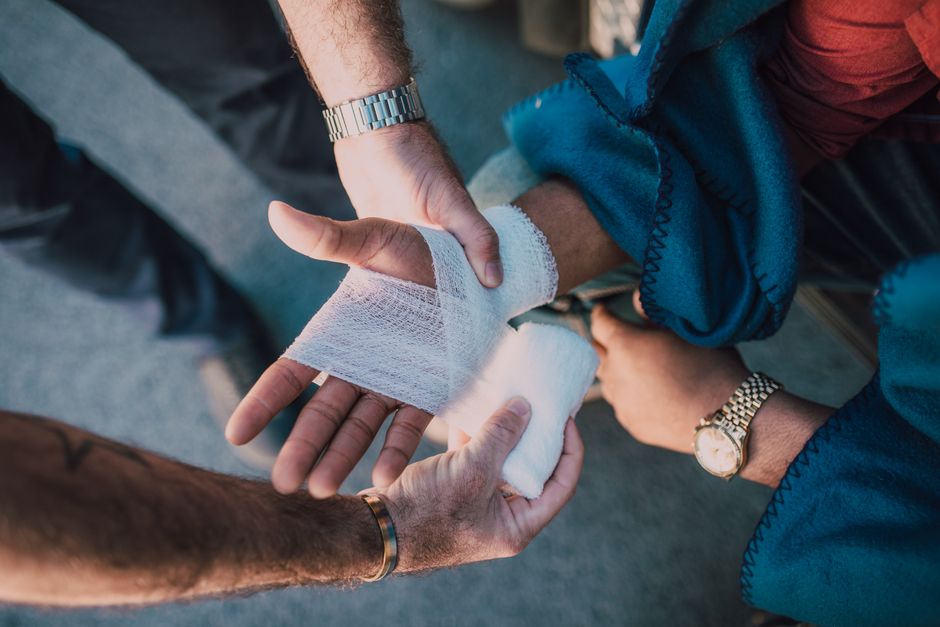
Wrist pain that shows up only when you move your hand usually points to a problem in the tendons, ligaments, or joint surfaces rather than the bone itself. The wrist is a complex junction of eight small carpal bones, multiple ligaments, and a tunnel of tendons passing from the forearm to the hand. When any of these structures become irritated, inflamed, or compressed, movement triggers pain because the affected tissue is being stretched, rubbed, or pinched. The location of the pain and the specific movement that causes it often tell you a lot about which structure is involved.
Why Does Your Wrist Hurt When I Move It?
Movement pain in the wrist almost always means a soft tissue structure is being mechanically stressed. Tendons glide through narrow sheaths when you flex or extend your wrist. Ligaments stretch when you bend or rotate. Cartilage surfaces in the joint rub together. If any of these are inflamed or damaged, that normal motion becomes painful.
The type of pain matters. A sharp, catching pain with specific movements suggests a mechanical problem like a tendon catching or a ligament tear. A dull ache that worsens with activity points more toward tendinopathy or inflammation. Burning or tingling that radiates into the fingers suggests nerve involvement.
One detail people often miss: the wrist has no muscles in it. All the muscles that move your fingers and wrist are in the forearm. Their tendons pass through the wrist. That is why a problem in the forearm or even the elbow can produce wrist pain with movement.
What Are the Most Common Causes of Wrist Pain With Movement?
Tendon problems are the most frequent source. The tendons that bend and straighten your fingers run through tight compartments at the wrist. Repetitive activity, awkward positions, or a sudden increase in hand use can irritate these tendons and their surrounding sheaths.
De Quervain’s tenosynovitis affects the tendons on the thumb side of the wrist. Pain typically occurs when you grip, twist, or turn your wrist toward the pinky. It is common in people who do repetitive thumb and wrist motions, and it is also seen after pregnancy and in people with certain inflammatory conditions.
Wrist tendonitis more broadly refers to irritation of any wrist tendon. It causes pain with active movement, sometimes with mild swelling. The discomfort usually builds gradually rather than appearing suddenly.
Ligament injuries are another major category. The scapholunate ligament connects two key carpal bones and is the most commonly injured wrist ligament. A fall onto an outstretched hand can tear it. Pain with this injury is often felt on the back of the wrist and worsens with weight-bearing or certain twisting motions.
Cartilage and joint problems round out the common causes. Osteoarthritis of the wrist causes pain with movement as the protective cartilage between bones wears down. It is less common than knee or hip arthritis but does occur, especially after an old injury. Inflammatory arthritis, including rheumatoid arthritis, can affect the wrist early and cause pain with motion along with stiffness and swelling.
How Do I Know If It Is a Sprain, Strain, or Something Else?
A sprain is a ligament injury. A strain is a muscle or tendon injury. Both can cause wrist pain with movement, but the pattern differs.
Sprains usually follow a specific event, like a fall or a sudden twist. The pain is often sharp and localized to one spot. Swelling and bruising may appear within hours. Movement in a particular direction reproduces the pain because that is the direction the injured ligament normally resists.
Strains tend to develop more gradually from overuse. The pain is often achy and may spread along the course of the tendon. It worsens with activity and improves with rest. There may be mild swelling but usually no bruising.
Other conditions can mimic both. A ganglion cyst, which is a fluid-filled sac near a joint or tendon, can cause pain with certain wrist positions. Nerve compression, such as carpal tunnel syndrome, causes tingling and numbness more than movement pain, but it can also produce discomfort when the wrist is bent. A fracture, even a small one, will cause pain with movement and usually follows trauma.
If pain started after a fall or direct impact, a fracture should be ruled out before assuming a sprain. Some wrist fractures, particularly of the scaphoid bone, do not always show up on initial X-rays and can be missed.





When Should I See a Doctor for Wrist Pain?
See a doctor if the pain followed a fall or injury and you cannot bear weight on the hand, if there is visible deformity, or if you have numbness or weakness in the fingers. These signs suggest a possible fracture or nerve injury that needs prompt evaluation.
Also seek care if pain persists beyond a few weeks despite rest, if it is getting worse rather than better, or if it interferes with basic daily tasks like dressing, eating, or writing. Swelling that does not improve, redness, or warmth over the joint could indicate infection or inflammation that needs medical attention.
For milder cases without trauma, many people try relative rest, avoiding the specific movements that hurt, and over-the-counter pain relief. If that does not help within a reasonable period, a medical evaluation can identify the specific structure involved. A physical exam, and sometimes imaging, is often needed to distinguish between tendon, ligament, and joint causes.
What Makes Wrist Pain Worse?
Certain activities reliably aggravate wrist pain because they load the affected structures. Repetitive gripping, twisting motions like opening jars or using a screwdriver, and prolonged typing or mouse use are common triggers. Lifting with the palm down puts more strain on the wrist than lifting with the palm up.
Position matters. Keeping the wrist bent for long periods, such as during sleep or while using a keyboard, can increase pressure on tendons and nerves. A neutral wrist position, where the hand is in line with the forearm, generally puts the least strain on the wrist structures.
Ignoring early symptoms and pushing through pain often makes things worse. Tendon irritation that is allowed to settle with relative rest tends to resolve more predictably than irritation that is continually aggravated. This is not a reason to stop all activity, but it is a reason to avoid the specific movements that reproduce the pain.
How Is Wrist Pain Treated?
Treatment depends on the cause, which is why an accurate diagnosis matters. For many tendon and ligament problems, the first steps are relative rest, avoiding aggravating activities, and sometimes a splint to limit motion while the tissue calms down.
Ice is commonly used in the early period after an injury. Some clinicians recommend it, though evidence for its effect on long-term healing is limited. Heat is sometimes used for chronic stiffness. Neither is a cure, but both can help with comfort.
Physical therapy can be helpful for many wrist conditions. It focuses on restoring motion, strengthening supporting muscles, and correcting movement patterns that contribute to the problem. For carpal tunnel syndrome, a wrist splint worn at night is a common first step, and some studies support its use for mild to moderate symptoms.
Corticosteroid injections are sometimes used for tendon sheath inflammation and can reduce pain in the short term. They are not a permanent fix and are generally used alongside other measures. Surgery is reserved for cases that do not improve with conservative care, such as ligament tears that cause instability or nerve compression that does not respond to other treatment.
No single treatment works for every cause. What helps a tendon problem may not help a ligament tear or arthritis. This is why identifying the specific source of pain is the most important step.
Can Wrist Pain With Movement Be Prevented?
Not all wrist pain is preventable, especially when it follows an injury. But some common causes related to overuse can be reduced with a few practical habits.
- Keep the wrist in a neutral position during repetitive tasks.
- Take frequent short breaks from typing, gripping, or twisting motions.
- Increase activity gradually rather than suddenly.
- Use larger joints and the whole arm for tasks instead of relying only on the wrist.
- Warm up the hands and wrists before activities that require a lot of grip strength.
These steps reduce strain but do not guarantee prevention. If pain does develop, addressing it early tends to lead to better outcomes than waiting.
Frequently Asked Questions
Why does my wrist hurt only when I move it?
Pain only with movement usually means a tendon, ligament, or joint surface is being stressed by that motion. When the wrist is still, the irritated tissue is not being stretched or compressed, so it does not hurt.
Is wrist pain with movement a sign of arthritis?
It can be, but arthritis is only one possible cause. Tendon and ligament problems are more common. A doctor can usually tell the difference with an exam and sometimes imaging.
Should I rest my wrist or keep using it?
Relative rest, meaning avoiding the movements that cause pain, is generally recommended in the early phase. Complete immobilization is usually not needed and can lead to stiffness.
How long does wrist pain from overuse usually last?
Mild overuse pain often improves within a few weeks with relative rest and activity modification. If it persists beyond that or worsens, a medical evaluation is reasonable.
