
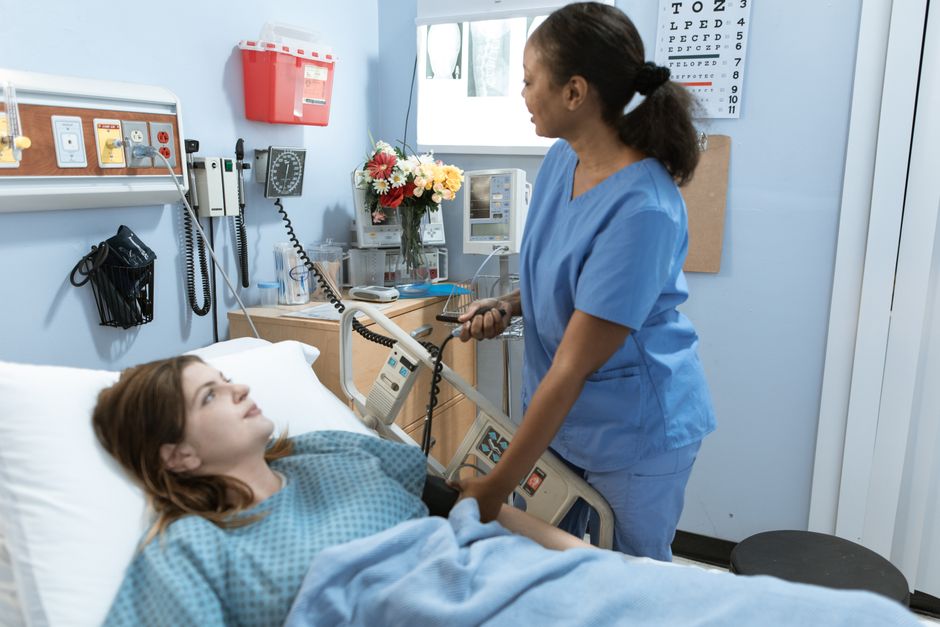
Cleaning a hospital room from a routine discharge to a terminal clean follows a fixed sequence: remove all trash and linens, clean high-touch and low-touch surfaces from clean to dirty and top to bottom, then disinfect every surface with an EPA-registered hospital-grade product and allow it to stay wet for the full contact time listed on the label. A terminal clean is the deep version done after a patient leaves, when the room must be fully decontaminated before the next patient enters. Routine cleaning happens while the room is still in use and targets the surfaces people actually touch.
What Is the Difference Between Routine Cleaning and a Terminal Clean?
Routine cleaning and terminal cleaning are not the same job, and mixing them up is one of the most common mistakes in room turnover.
Routine cleaning happens daily while a patient occupies the room. It focuses on high-touch surfaces — bed rails, call buttons, overbed tables, doorknobs, light switches, bathroom fixtures. The goal is to reduce the bioburden that builds up during normal use.
Terminal cleaning happens after the patient leaves, whether by discharge, transfer, or death. Every surface gets addressed, including walls, curtains, blinds, and the floor. The room is then considered ready for the next occupant.
Both processes rely on the same principle: cleaning removes soil and organic matter, and disinfection kills or inactivates pathogens. Cleaning must come first. A disinfectant applied over visible dirt or body fluids will not work as intended, because organic material interferes with the chemical action.
This distinction matters for infection control. Research in infection prevention has consistently shown that inadequate terminal cleaning leaves pathogens behind that can transfer to the next patient. That is why many hospitals use fluorescent markers or ATP bioluminescence testing to check whether surfaces were actually cleaned.
What Supplies Do You Need for a Terminal Clean?
You need personal protective equipment, waste bags, fresh linens, cleaning cloths, and an EPA-registered disinfectant appropriate for the organisms you are targeting.
The specific list depends on the setting. In a hospital, staff follow facility protocols. In home or hospice settings, the same logic applies with simpler tools.
- Gloves — change between dirty and clean tasks
- Gown or apron if splashing is possible
- Mask and eye protection if there is risk of sprays or aerosols
- EPA-registered disinfectant with a known contact time
- Clean cloths or disposable wipes — never reuse a cloth across rooms
- Trash bags and linen bags
- Hand hygiene supplies
One detail people miss: the contact time on the disinfectant label is not a suggestion. If a product says it must stay wet for one minute, wiping it dry after ten seconds means the surface was not disinfected. Contact times vary widely by product and by the organism being targeted.
How To Clean A Hospital Room Routine To Terminal: Step by Step
The order of operations is what separates an effective clean from a surface wipe-down. Work from clean to dirty, top to bottom, and never go back over a cleaned area with a contaminated cloth.
Step 1: Prepare. Put on PPE. Gather supplies. Open the room and check for any items left behind by the patient.
Step 2: Remove waste and linens. Bag trash and soiled linens at the point of use. Do not carry loose linens through the room. Never shake them, because that disperses particles.
Step 3: Clean from top to bottom. Start with high surfaces — bed rails, IV poles, monitors, call buttons. Move to mid-level surfaces like overbed tables and chairs. Finish with low surfaces and the floor.
Step 4: Pay attention to high-touch points. These include doorknobs, light switches, bed controls, telephones, remote controls, bathroom handles, and the toilet flush. These surfaces carry the highest risk of transferring pathogens.
Step 5: Apply disinfectant and respect contact time. Let the product stay wet for the full time listed on the label. Do not wipe it dry early.
Step 6: Handle the bathroom last. The bathroom is the dirtiest area. Clean it after the main room, then change gloves and perform hand hygiene.
Step 7: Replace and restock. Fresh linens, new trash bags, restocked supplies. The room should be ready for the next patient.
In terminal cleans specifically, curtains are often changed rather than spot-cleaned. Curtains are a documented reservoir for pathogens and are frequently overlooked.


Why Does Contact Time Matter So Much?
Contact time is the amount of time a disinfectant must remain wet on a surface to kill the organisms it claims to kill. It is the single most misunderstood part of disinfection.
Disinfectants are not instant. Their active ingredients need time to disrupt microbial cell walls, denature proteins, or oxidize essential components. If the surface dries before that process completes, the kill is incomplete.
Different products have different contact times. Some require as little as one minute. Others require several minutes. The label is the authority — not habit, not how fast the room needs to turn over.
This is also why pre-moistened wipes can be misleading. A wipe that dries out in seconds on a warm surface may not deliver the contact time its label claims.
What About Special Pathogens Like C. difficile or MRSA?
Some pathogens require more than standard cleaning. Clostridioides difficile spores are resistant to alcohol and many standard disinfectants, so rooms where a patient had C. difficile require a sporicidal agent, typically a chlorine-based product or an EPA-registered sporicidal disinfectant.
MRSA and other resistant bacteria are generally addressed with EPA-registered hospital disinfectants that carry the appropriate claim on the label. The key is matching the product to the organism, not assuming one product covers everything.
Some facilities use ultraviolet light or hydrogen peroxide vapor systems as an extra step after manual cleaning. These are adjuncts, not replacements. Manual cleaning still has to happen first, because these systems cannot penetrate soil or shadowed areas.
One clarification worth making: no-touch disinfection technologies have shown mixed results in reducing actual patient infections in studies. They reduce surface contamination, but the link to fewer infections is not as strong as the marketing suggests.
Who Should Do This Cleaning?
In hospitals, terminal cleaning is performed by trained environmental services staff following facility protocols and regulatory standards.
In home hospice or after a death at home, family members often do the cleaning themselves. The same principles apply — gloves, cleaning before disinfecting, contact time, and hand hygiene — but the scale is smaller and the products are typically household-level rather than hospital-grade.
If a person is cleaning a room after an infectious illness, the CDC recommends using an EPA-registered disinfectant appropriate for the situation and washing hands thoroughly afterward. For high-risk situations, a healthcare provider or infection prevention specialist can advise on specific products.
Common Mistakes That Undermine the Clean
Most failed cleans come down to a few recurring errors.
- Wiping disinfectant dry before contact time is complete
- Reusing cloths across multiple surfaces or rooms
- Cleaning from dirty to clean instead of clean to dirty
- Skipping high-touch surfaces like light switches and bed rails
- Cleaning visibly soiled surfaces without removing soil first
- Forgetting curtains, blinds, and the floor
The clean-to-dirty and top-to-bottom rule is not arbitrary. It prevents recontamination of surfaces you already cleaned.
Frequently Asked Questions
How long does a terminal clean take?
A terminal clean typically takes longer than a routine clean because every surface, including walls and curtains, is addressed. The exact time depends on room size, the disinfectant’s contact time, and facility protocol.
What is the difference between cleaning and disinfecting?
Cleaning physically removes soil and germs from a surface, while disinfecting uses chemicals to kill or inactivate pathogens. Cleaning must happen first, because disinfectants do not work well over dirt or organic matter.
Does a terminal clean kill C. difficile spores?
Only if a sporicidal disinfectant is used, since alcohol and many standard disinfectants do not kill C. difficile spores. Facilities typically use a chlorine-based or EPA-registered sporicidal product for these rooms.
Can family members do a terminal clean at home?
Yes, using gloves, a household or EPA-registered disinfectant, and proper hand hygiene. For rooms after a serious infectious illness, it is reasonable to ask a healthcare provider which product is appropriate.
