
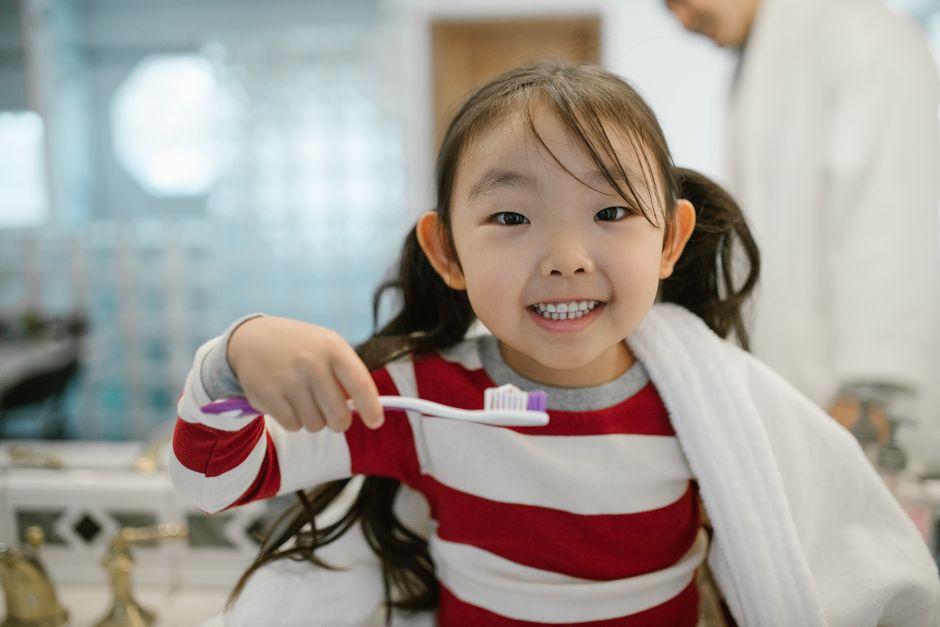
Brushing a toddler’s teeth comes down to a few basics: a small soft-bristled brush, a rice-grain-sized smear of fluoride toothpaste before age 3, gentle circular strokes along the gumline twice a day, and an adult finishing the job. Toddlers do not have the hand control to brush thoroughly on their own, so your hands do most of the work until they are older. The goal is not a perfect two minutes. It is cleaning every tooth surface and keeping fluoride on the teeth consistently.
How Much Fluoride Toothpaste Should a Toddler Use?
A rice-grain-sized smear of fluoride toothpaste is the standard for children under 3. Once a child is 3 to 6 years old, that amount increases to a pea-sized dab. These are the amounts recommended by pediatric dental organizations, and the distinction matters.
Fluoride is the reason toothpaste works. It strengthens enamel and helps repair early damage from acid. Small children swallow toothpaste because they have not learned to spit. That is why the amount is kept tiny. A rice-grain smear delivers the benefit while keeping swallowed fluoride low.
Use toothpaste that contains fluoride. Training toothpastes labeled “safe to swallow” often contain no fluoride, so they clean but do not protect enamel. If you are unsure which product to choose, ask your child’s dentist.
One clarification worth knowing: the risk of too much fluoride in early childhood is a cosmetic issue called dental fluorosis, which shows up as faint white marks on permanent teeth. It is not a poisoning risk at normal brushing amounts. The concern is real but small, and it is managed by using the right amount, not by skipping fluoride.
What Is the Right Brushing Technique for a Toddler?
Angle the brush at about 45 degrees toward the gums and use small circular motions. Cover the outside, inside, and chewing surfaces of every tooth. Tilt the brush upright to reach the backs of the front teeth.
Move slowly and gently. Pressing hard does not clean better and can irritate gums. Let the bristles do the work.
Two minutes is the usual target, but a toddler will rarely tolerate a full timed session at first. Build up gradually. Cleaning all surfaces twice a day matters more than hitting an exact clock.
Here is a sequence that works for many families:
- Start with the back molars, where food and plaque collect most.
- Work around the outside surfaces, then the insides, then the chewing tops.
- Finish with the front teeth, tilting the brush to reach behind them.
- Let your child hold a second brush or “help” so they feel involved.
Brushing works best when it is part of a routine. Same time, same order, same place. Toddlers resist surprises more than they resist brushing.
Should a Toddler Brush Their Own Teeth?
No, not unsupervised. Toddlers lack the fine motor control to brush effectively, and most cannot spit reliably until around age 6. Let them practice, but an adult should brush their teeth afterward every time.
A practical approach is “you go, then I go.” Your child brushes first for practice, then you brush to actually clean. This builds the habit without pretending the job is done.
Some children accept adult brushing better lying down, with their head in your lap. Others do better standing at the sink with a mirror. Try both and keep what works.




When Should You Start Brushing a Toddler’s Teeth?
Start cleaning your child’s mouth before teeth appear. Wipe the gums with a soft cloth. As soon as the first tooth breaks through, switch to a small soft brush with a rice-grain smear of fluoride toothpaste.
By the toddler years, most children have a full set of primary teeth, and those teeth matter. Baby teeth hold space for adult teeth, help with speech, and support chewing. Decay in them can cause pain and infection and is not something to wait out.
Dental visits should begin by the first birthday or within six months of the first tooth appearing, whichever comes first. That early visit is mostly about prevention and coaching, not treatment.
How Do You Brush a Toddler’s Teeth Without a Fight?
Most resistance is about control, not the brush. Give your toddler small choices: which brush, which side first, whether they stand or sit. Keep the actual brushing non-negotiable.
Distraction helps more than negotiation. Sing the same song each time, use a timer, or brush a stuffed animal’s teeth first. Predictability lowers resistance.
If your child clamps their mouth shut, try brushing from behind with their head tilted back, or lie them down. Do not force the brush. Pause, reset, and try again a minute later. A calm, brief session beats a long struggle.
If your child has a favorite flavor of toothpaste, use it. The best toothpaste is the one your toddler will accept twice a day.
What Else Protects a Toddler’s Teeth?
Brushing is the core habit, but a few other things shape toddler dental health.
Limit how often teeth meet sugar. Frequency matters as much as amount, because each sugar exposure feeds cavity-causing bacteria and produces acid. Sugary drinks and snacks sipped or nibbled all day keep teeth under constant acid attack.
Do not put a toddler to bed with a bottle of milk, formula, or juice. Liquids pool around the teeth during sleep, when saliva flow drops, and this pattern is linked to severe early decay. Water is the safe choice for bedtime and between meals.
Offer water after meals and snacks to help rinse the mouth. Fluoridated tap water adds a small protective benefit where it is available.
Ask your dentist whether your child needs fluoride varnish. It is a professional application, not a home product, and some children benefit more than others depending on their cavity risk.
When Should You See a Dentist?
See a dentist if you notice white or brown spots on teeth, dark lines near the gums, or any sign of pain or swelling. White spots can be an early sign of decay, and early decay is far easier to manage than advanced decay.
Regular checkups matter even when teeth look fine. A dentist can spot problems you cannot see and give you specific guidance for your child.
Tooth decay in young children is common and largely preventable. Consistent brushing with fluoride toothpaste, sensible sugar habits, and early dental care do most of the work. If your child has special health needs, ask the dentist about a plan tailored to them.
Frequently Asked Questions
How much fluoride toothpaste should I use for a toddler?
Use a rice-grain-sized smear for children under 3 and a pea-sized amount for ages 3 to 6. These amounts keep swallowed fluoride low while still protecting enamel.
Can my toddler use toothpaste without fluoride?
Fluoride-free toothpaste cleans but does not strengthen enamel against decay. Fluoride toothpaste in the correct small amount is the recommended choice for toddlers.
How often should I brush my toddler’s teeth?
Brush twice a day, once in the morning and once before bed. The bedtime brushing matters most because saliva flow drops during sleep.
At what age can a child brush their own teeth?
Most children cannot brush thoroughly alone until around age 6 or later. An adult should brush their teeth after them until then.
