
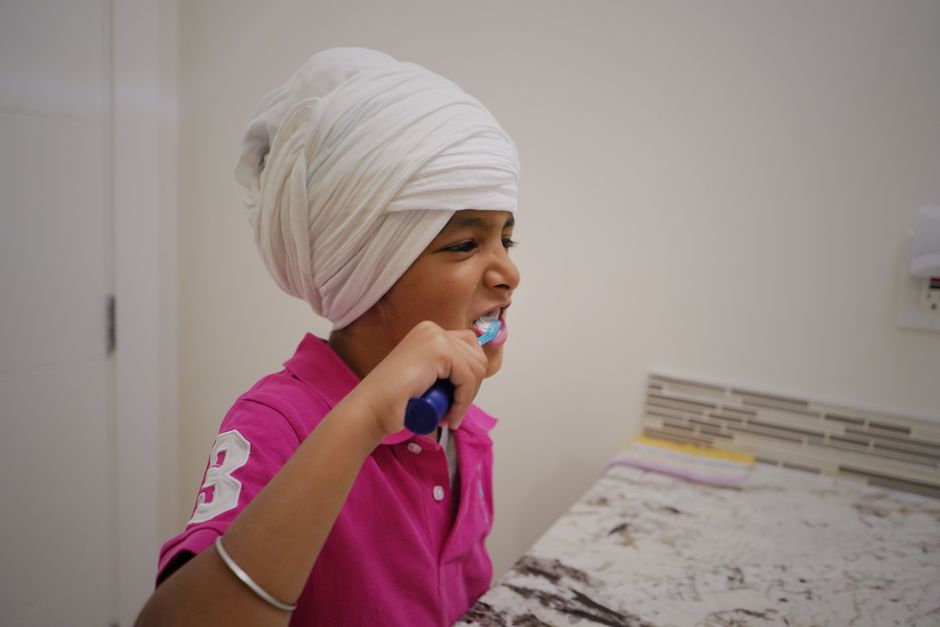
Brushing your teeth correctly means using a soft-bristled toothbrush and a fluoride toothpaste, angling the bristles at about 45 degrees toward the gumline, and moving the brush in short, gentle strokes across every surface of every tooth. You should brush twice a day for about two minutes each time, and spit out the toothpaste afterward without rinsing with water. Done consistently, this removes the plaque that causes cavities and gum disease before it can harden into tartar.
Most people learned to brush as children and never revisited the technique. That is why so many adults brush twice a day and still end up with gum problems. The mechanics matter as much as the habit.
Why Does Brushing Technique Matter More Than Brushing Effort?
Plaque is a soft, sticky film of bacteria that forms on teeth within hours of cleaning. It is the direct cause of both tooth decay and gum inflammation. When plaque sits undisturbed along the gumline, the bacteria in it produce acids that dissolve enamel and irritate the gums.
The goal of brushing is not to scrub hard. It is to disrupt that film everywhere it forms, especially in the hard-to-reach places where it accumulates fastest. Those places are predictable:
- The gumline, where the tooth meets the gum
- The back surfaces of the molars, near the tongue
- The spaces between teeth, which a brush cannot fully reach
- The chewing surfaces of back teeth, with their natural grooves and pits
Brushing harder does not clean these areas better. It can wear down enamel over time and cause the gums to recede, which exposes the softer root surface underneath. Receded gums cannot grow back. That is a permanent change from a habit that feels productive but is not.
Pressure is the most common mistake. A soft brush and light pressure clean better than a hard brush and force, because the bristles need to flex and reach into the gumline rather than flatten against it.
How To Brush Your Teeth Correctly Step By Step
The technique below is the one taught in dental schools and recommended by dental professionals. It takes about two minutes once you are used to it.
Start with the right tools. Use a soft-bristled brush with a head small enough to reach your back molars. Fluoride toothpaste is the standard recommendation for adults and children old enough to spit. The fluoride is not optional — it is the single most evidence-supported ingredient in the entire routine.
Angle the brush at 45 degrees. Hold the bristles so they point toward where the tooth meets the gum. This angle lets the tips of the bristles slip slightly under the gumline, which is exactly where plaque does the most damage.
Use short, gentle strokes. Move the brush back and forth in small motions, about the width of a tooth at a time. Do not scrub in wide circles or saw back and forth across several teeth at once.
Work through every surface. Brush the outer surfaces, the inner surfaces, and the chewing surfaces of every tooth. For the inner front teeth, tilt the brush vertically and use the front tip of the bristles with small up-and-down strokes.
Finish with the tongue. Brushing the tongue helps remove bacteria and can improve breath. Some people use a tongue scraper for this; a brush works too.
Spit, do not rinse. After brushing, spit out the excess toothpaste but skip the water rinse. Rinsing washes away the fluoride that is still working on your enamel. This is one of the most commonly missed steps, and it is genuinely important.
How Long Should You Brush and How Often?
Brush for about two minutes, twice a day. That is the standard guidance from dental and health organizations worldwide, and it reflects the time needed to reach every surface thoroughly.
Most people overestimate how long they brush. Studies that track actual brushing time consistently find that people fall well short of two minutes when they are not using a timer. A timer on your phone or a brush with a built-in two-minute timer solves this simply.
Timing of day matters less than consistency, but two routines stand out. Brushing before bed is the most important session, because saliva flow drops during sleep and leaves the mouth less able to neutralize acids and wash away bacteria. Brushing in the morning, ideally before breakfast or after waiting a while if you have had something acidic, protects teeth through the day.
One clarification worth knowing: brushing immediately after acidic food or drink can be counterproductive. Acid softens enamel temporarily, and brushing right away can wear away that softened layer. Waiting a short while, or rinsing with water first, is the safer approach.



Manual vs Electric Toothbrush: Which Is Better?
Both work. An electric brush does not automatically clean better — it depends on how you use it. But for many people, an electric brush with a rotating-oscillating head removes more plaque than a manual brush, largely because it does some of the motion for you and helps compensate for imperfect technique.
Here is a direct comparison of the two:
| Feature | Manual Brush | Electric Brush |
|---|---|---|
| Cost | Low | Higher upfront |
| Technique required | More | Less — the brush does the motion |
| Built-in timer | Usually none | Common |
| Pressure control | None | Some models signal when you press too hard |
| Plaque removal | Effective with good technique | Often more effective, especially with poor technique |
For someone with limited hand mobility or dexterity, an electric brush can make a real difference. For someone with good manual technique, the gap is smaller. The best brush is the one you will use correctly twice a day.
What Are the Most Common Brushing Mistakes?
Brushing too hard is the most frequent error, and it causes the most lasting harm. It wears enamel and pushes the gums back over time. If your brush bristles look flattened and splayed after a few weeks, you are pressing too hard.
Rinsing with water after brushing is another common habit that undercuts the whole point. It removes the fluoride film that protects enamel. Spitting without rinsing leaves that protection in place.
Other frequent mistakes include:
- Brushing in a rush and missing the back molars and inner surfaces
- Using a hard-bristled brush, which is not more effective and is more likely to damage gums
- Skipping the gumline because it feels sensitive — this is where plaque does the most harm
- Replacing the brush too rarely; a worn brush cleans less effectively
- Brushing only the front teeth that people see, and neglecting the back
One point that surprises many people: a brush that looks clean is not necessarily effective. Bristles lose their shape and stiffness over time. Replacing the brush every few months, or sooner if the bristles are visibly worn, keeps it working properly.
Does Brushing Alone Keep Teeth Healthy?
No. Brushing is the foundation, but it cannot reach the spaces between teeth. That is where a large share of cavities and gum problems begin, because a toothbrush simply cannot get between two touching teeth.
Cleaning between the teeth once a day, with floss or an interdental brush, addresses the surfaces brushing misses. This is not a marketing add-on — it targets a real anatomical gap. The evidence for interdental cleaning is strongest for gum health, and it is widely recommended by dental professionals for that reason.
Fluoride toothpaste is the other essential piece. Fluoride helps remineralize enamel and makes it more resistant to acid attacks. The evidence for fluoride in preventing cavities is among the strongest in all of dentistry. Brushing without fluoride toothpaste is like washing your hands without soap — the motion helps, but you are leaving out the part that does the most work.
Regular dental checkups matter too, because some problems, like early cavities between teeth or the beginnings of gum disease, are hard to spot at home and easier to treat when caught early.
Frequently Asked Questions
Should you rinse your mouth after brushing?
No, spit out the toothpaste but do not rinse with water. Rinsing washes away the fluoride that keeps protecting your enamel after you finish.
How often should you replace your toothbrush?
Replace it every few months, or sooner if the bristles look worn or splayed. A worn brush cleans less effectively than a fresh one.
Is it better to brush before or after breakfast?
Either can work, but if you eat or drink something acidic, wait a while before brushing. Acid softens enamel temporarily, and brushing right away can wear it down.
Can you brush too hard?
Yes, and it is a common mistake. Brushing hard can wear enamel and cause gums to recede, which is permanent, so light pressure with a soft brush is the safer choice.
