
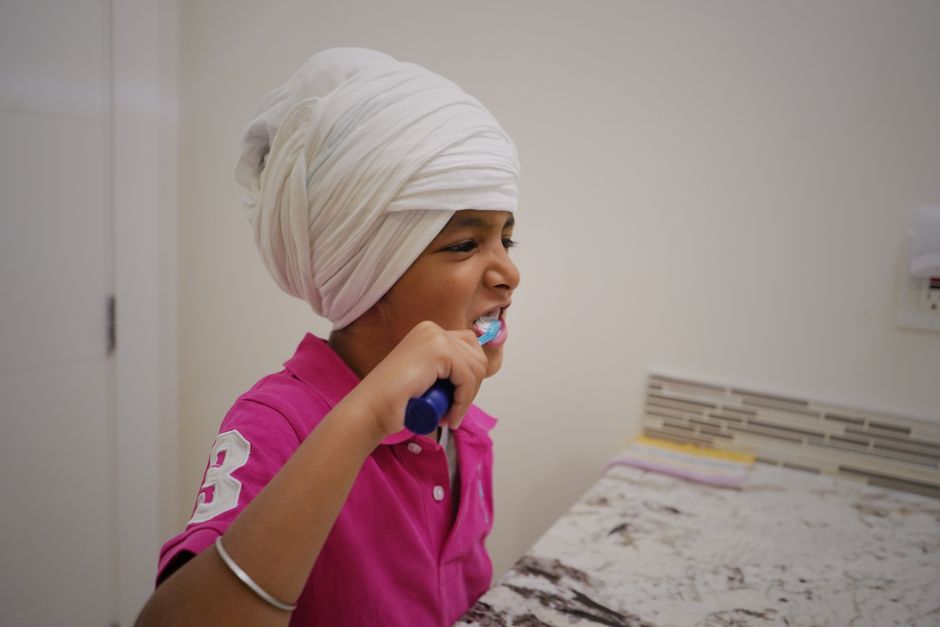
Brushing a baby’s teeth comes down to three things: the right brush, a rice-grain smear of fluoride toothpaste, and a gentle circular motion along the gumline twice a day. Start cleaning your baby’s mouth before the first tooth even appears, and begin brushing that first tooth the moment it breaks through. Done consistently, this simple routine protects teeth that will stay in your child’s mouth for years.
When Should You Start Cleaning Your Baby’s Mouth?
Dental care starts before the first tooth arrives. Wipe your baby’s gums with a clean, damp washcloth or a soft silicone finger brush after feedings. This clears milk residue and gets your baby used to having their mouth touched.
That second point matters more than most parents realize. A baby who is comfortable with a finger in their mouth at four months is far easier to brush at twelve months. You are not just cleaning — you are building tolerance.
When the first tooth appears, usually somewhere between 4 and 10 months, switch to an actual toothbrush. The American Academy of Pediatric Dentistry recommends scheduling a first dental visit by the time the first tooth appears or by the first birthday, whichever comes first.
What Supplies Do You Actually Need?
You need very little. A small soft-bristled toothbrush sized for infants, a smear of fluoride toothpaste, and something to help your baby stay still. That is the whole list.
What you do not need: fluoride-free “training toothpaste” marketed for babies. The entire point of toothpaste is fluoride. A fluoride-free paste cleans no better than water.
Choose a brush with a small head and soft bristles. A finger brush works for gums but is less effective once teeth are present. Electric toothbrushes are not necessary for babies and can be too aggressive for small mouths.
Some parents use a piece of clean gauze wrapped around a finger for the earliest teeth. It works in a pinch. A real brush does a better job of reaching the gumline.
How Much Toothpaste Should You Use?
For children under 3, use a smear of fluoride toothpaste the size of a grain of rice. For children 3 to 6, use a pea-sized amount. These are the standard amounts recommended by pediatric dental organizations.
This is where many parents get confused. The concern about fluoride has led some to skip it entirely, which removes the main protective benefit of brushing. The rice-grain amount is deliberately tiny. It is designed to give the protective benefit of fluoride while keeping the total amount swallowed very low.
If your water is fluoridated, that is a separate source of fluoride and does not change the toothpaste recommendation. If you use well water or fluoride-free bottled water, tell your dentist so they can factor that in.



How Do You Actually Brush Baby Teeth Safely And Effectively?
Position matters as much as technique. Sit your baby on your lap facing you, or stand behind them with their head resting against your body. You want a clear view of the upper teeth and a free hand to guide the brush.
Use a soft, circular motion along the gumline. Angle the bristles slightly toward the gums. Brush the front, back, and chewing surfaces of every tooth. Do not scrub hard — gentle pressure is enough to remove plaque.
Two minutes is the usual recommendation for a full brushing, but with a baby who has only a few teeth, you will finish faster. The goal is to touch every tooth surface, not to hit a time target.
Brush twice a day. The most important time is right before bed, because saliva flow drops during sleep and lets bacteria sit on the teeth longer. Morning brushing matters too, but the bedtime brush is the one not to skip.
If your baby fights it, try brushing while they lie on a changing table, or let them hold a second brush while you use the first. Some parents brush one tooth at a time and pause between. There is no single trick that works for every baby.
What About Fluoride Safety?
Fluoride toothpaste is safe for babies when used in the recommended tiny amounts. The risk of fluorosis — faint white spots on developing permanent teeth — comes from regularly swallowing too much fluoride over time, not from brushing with a rice-grain smear.
The main safeguard is simple: keep the toothpaste tube out of reach, and do not let your child eat toothpaste. Once your child can spit reliably, usually around age 3 or later, you can teach them to spit after brushing. Until then, they will swallow most of what is in their mouth, which is exactly why the amount is kept so small.
If you are worried about how much fluoride your child gets from all sources, ask your dentist or pediatrician. They can look at your water supply and your child’s diet together rather than guessing.
Common Mistakes Parents Make
Most brushing problems come down to a handful of recurring errors.
- Skipping the bedtime brush because the baby is already asleep or too fussy
- Using too much toothpaste, especially a full “pea” on a baby with two teeth
- Choosing fluoride-free toothpaste and losing the main protective benefit
- Brushing only the front teeth and missing the back molars
- Letting a baby fall asleep with a bottle of milk or juice, which keeps sugar on the teeth overnight
- Waiting until the child is older to start, when tolerance is harder to build
Bottle feeding at night is worth a separate mention. Prolonged contact between sugary liquid and teeth is a well-documented cause of early childhood cavities. If your baby needs a bottle to sleep, water is the safer choice.
When Should You See a Dentist?
Schedule a first dental visit by the first tooth or the first birthday, whichever comes first. Early visits are short and mostly about checking growth and giving you guidance. They also help your child get used to the dental chair before any problems develop.
Call a dentist sooner if you notice white or brown spots on the teeth, dark areas near the gumline, or if a tooth looks chipped or discolored. These can be early signs of decay, and treating them early is far simpler than waiting.
Baby teeth matter. They hold space for permanent teeth, help with chewing and speech, and can become infected if decay goes untreated. Cavities in baby teeth are not something to wait out.
Frequently Asked Questions
Can I brush my baby’s teeth with just water?
Water alone removes some food and plaque but does not provide fluoride, which is the main protective ingredient in toothpaste. For children under 3, a rice-grain smear of fluoride toothpaste is the standard recommendation.
What if my baby swallows the toothpaste?
Swallowing a rice-grain smear of fluoride toothpaste is expected in babies who cannot spit yet, which is why the amount is kept so small. Keep the tube stored out of reach so larger amounts are not accessible.
How often should I brush my baby’s teeth?
Twice a day, with the bedtime brushing being the most important. Saliva flow drops during sleep, so bacteria sit on the teeth longer overnight.
Do baby teeth really need to be brushed if they will fall out?
Yes. Baby teeth hold space for permanent teeth and can become infected if decay is not treated. Cavities in baby teeth can affect chewing, speech, and the health of the permanent teeth underneath.
