
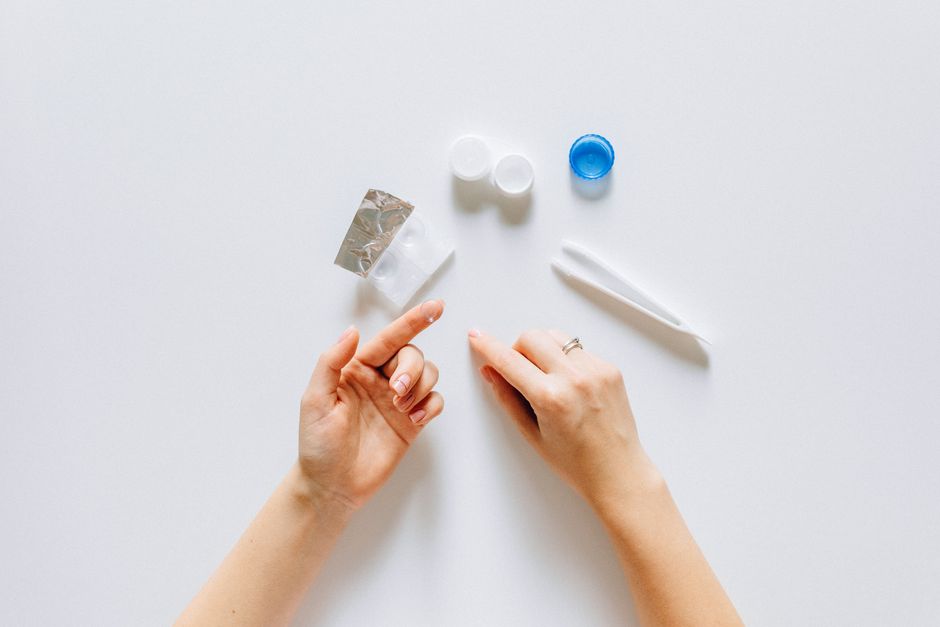
Putting in contact lenses for the first time can feel awkward, but the process is straightforward once you learn the basic steps. The safest method involves washing your hands, checking the lens is not inside out, holding your eyelids open, and gently placing the lens on the white of your eye. With a little practice and the right technique, most beginners insert their lenses successfully within a few tries.
Why Do Contact Lenses Feel So Hard To Insert At First?
Your eye has a natural blink reflex designed to protect it from anything coming near. When you bring a finger toward your eye, your brain triggers an automatic blink. This is the main obstacle for most beginners, not the lens itself.
Another reason is that contact lenses are thin and soft. They can fold or stick to your finger instead of going onto your eye cleanly. This is normal. Your eye is also very sensitive, and the sensation of a foreign object can make you hesitate.
Practice changes this. The more you do it, the less your eye reacts. Most people find that after a week of daily insertion, the process takes under a minute. The key is to stay calm and not rush.
What Do You Need Before You Start?
You need the basics ready before you touch your lenses. A clean, well-lit bathroom or desk works best. Avoid doing this near a sink with running water, as lenses can easily wash down the drain.
Gather these items:
- Your contact lens case with fresh solution
- Contact lens solution (never water or saliva)
- A mirror
- Your lenses, either from a daily pack or your storage case
- Clean, dry hands
Always check the expiration date on your solution. Do not use solution that has expired. Also, never top off old solution in your case with new solution. Empty the case, rinse it with fresh solution, and let it air dry between uses.
How To Insert Contact Lenses For Beginners Safely: Step-By-Step
Start with washing your hands. Use plain soap, not moisturizing or antibacterial soap with added lotions. These leave a film on your fingers that can transfer to the lens. Rinse thoroughly and dry with a lint-free towel.
Remove the lens from its case or blister pack. Place it on your index finger. Make sure the lens is sitting upright. It should look like a tiny bowl with clean, even edges. If the edges flare out like a plate, the lens is inside out.
Use the opposite hand to hold your upper eyelid open. Use the middle finger of the hand holding the lens to pull down your lower eyelid. Look up at the ceiling. Place the lens gently on the lower white part of your eye, below your pupil.
Release your eyelids slowly. Look down and blink a few times to settle the lens. The lens should feel comfortable within a few seconds. If it stings or feels like something is stuck in your eye, remove it, rinse it with solution, and try again.
Repeat the same process for the other eye. Always insert the same lens into the same eye every time. This prevents mixing up lenses if your prescription differs between eyes.





How To Tell If Your Contact Lens Is Inside Out
Putting a lens in inside out is a common beginner mistake. It does not harm your eye, but it feels uncomfortable and may not stay in place.
Use the taco test. Place the lens on your fingertip and gently squeeze the edges together like a taco shell. If the edges point upward and meet cleanly, the lens is correct. If the edges flop outward and resist meeting, the lens is inside out.
You can also look at the lens from the side. A correct lens looks like a smooth bowl with edges that point straight up. An inside-out lens has edges that flare out slightly, like a shallow plate. If you are unsure, rinse the lens and try the taco test again.
What Should You Do If The Lens Will Not Go In?
If the lens keeps sticking to your finger, your finger may be too wet. Dry your fingertip slightly with a lint-free cloth. If it keeps sticking to your eyelid, your eye may be too dry. Add a drop of approved rewetting drops to the lens before inserting.
If you blink every time your finger approaches, try a different approach. Look away from your finger and focus on a point across the room. This reduces the blink reflex. Some people find it easier to look to the side and slide the lens onto the white of the eye rather than directly over the pupil.
If you have tried several times and it is not working, stop. Take a break for a few minutes. Frustration makes your hands shakier and your eye more sensitive. Walk away, breathe, and try again. If you still cannot insert them after multiple attempts, contact your eye care provider for a hands-on training session.
What Are The Most Common Beginner Mistakes?
Using tap water to rinse lenses is one of the most serious mistakes. Tap water contains microorganisms that can cause severe eye infections. Never rinse lenses or your case with water.
Sleeping in lenses that are not approved for overnight wear is another common error. This significantly increases the risk of corneal ulcers and infections. Always follow your eye care provider’s instructions about when to remove your lenses.
Wearing lenses longer than recommended is also risky. Daily disposable lenses should be thrown away after one use. Monthly lenses should be replaced on schedule. Overwearing lenses reduces oxygen to your cornea and increases infection risk.
Another mistake is rubbing your eyes while wearing lenses. This can dislodge the lens or scratch your cornea. If your eye itches, use rewetting drops instead of rubbing.
How To Remove Contact Lenses Safely
Removal is just as important as insertion. Wash your hands first, just like before insertion. Make sure your hands are completely dry so the lens does not stick to your finger.
Look up and pull your lower eyelid down with your middle finger. Use your index finger to gently slide the lens down to the lower white part of your eye. Gently pinch the lens between your thumb and index finger. It should fold and come out easily.
If the lens feels stuck, do not pull it. Add a drop of rewetting solution and blink a few times. This rehydrates the lens and your eye. Try again after a few seconds.
Clean your lenses according to the instructions from your eye care provider. For daily disposables, throw them away. For reusable lenses, rub them with solution, rinse them, and place them in a clean case with fresh solution.
When Should You Call Your Eye Doctor?
Some symptoms require immediate attention. Redness, pain, light sensitivity, or blurry vision that does not clear after removing your lenses are warning signs. These can indicate a corneal abrasion or infection.
If you suspect you have a torn or chipped lens, remove it and do not wear it. A damaged lens can scratch your cornea. Replace it with a fresh lens or wear your glasses until you can get a replacement.
If you experience persistent discomfort that does not improve with rewetting drops, remove your lenses and wear glasses. Contact your eye care provider if symptoms last more than a few hours.
Never ignore eye pain. The cornea has many nerve endings, so pain is a reliable signal that something is wrong. Early treatment of eye infections prevents serious complications.
How Long Does It Take To Get Used To Contact Lenses?
Most people adapt within a few days to a week. The first insertion can take several minutes. By the end of the first week, most beginners insert their lenses in under a minute.
Your eye may water or feel slightly scratchy for the first few minutes after insertion. This usually settles quickly. If the feeling persists, remove the lens and check for damage or debris.
Follow your eye care provider’s wearing schedule. Beginners often start with a few hours per day and gradually increase. This lets your eyes adjust to the lenses and reduces dryness and irritation.
Frequently Asked Questions
Can I use water to rinse my contact lenses?
No, never use water on contact lenses. Water contains microorganisms that can cause serious eye infections, and only sterile contact lens solution should touch your lenses.
How do I know if my contact lens is inside out?
Place the lens on your fingertip and gently squeeze the edges together like a taco. If the edges point upward and meet cleanly, the lens is correct; if they flop outward, it is inside out.
What should I do if my contact lens feels stuck in my eye?
Do not pull it. Add a drop of rewetting solution and blink a few times to rehydrate the lens, then try sliding it down to the white of your eye before pinching it out.
How long should I wear contacts on my first day?
Follow your eye care provider’s instructions, but beginners typically start with a few hours and gradually increase wear time over several days to let your eyes adjust.
