
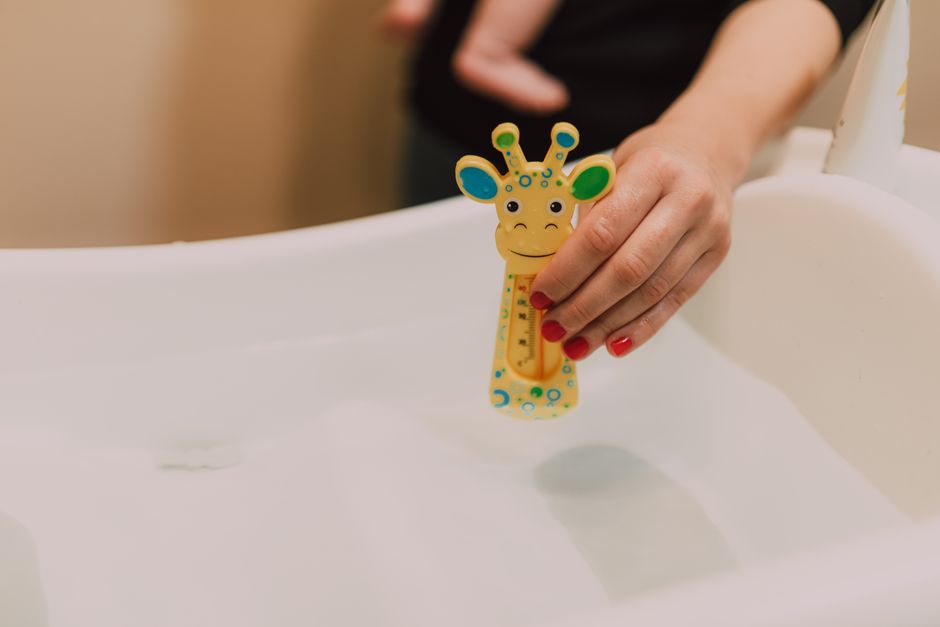
Bathing a baby is mostly about two things: keeping the water shallow and warm, and never letting go of your baby while they are in it. A safe bath uses just a few inches of water at about 100°F (37°C), a firm hold on your baby at all times, and everything you need within arm’s reach before you start. Most babies do not need a full bath every day. Two or three times a week is enough for many infants, with sponge baths in between for the face, neck, and diaper area.
How To Bathe A Baby Step By Step Safety Tips
Gather every item before you touch the water. Once your baby is in the tub, you cannot step away — not even for a second. A baby can slip under water in the time it takes to grab a towel from the next room.
Here is the sequence that works:
- Fill the tub with about 2 inches of warm water. Test it with your wrist or elbow. It should feel comfortably warm, not hot.
- Undress your baby and hold them on your forearm, supporting the head and neck with your hand.
- Lower your baby in feet first, still supporting the head and neck.
- Use one hand to keep a firm hold on your baby’s upper arm or the far side of their body the entire time.
- Wash the face first with plain water and a soft cloth. No soap needed here.
- Wash the body with a small amount of mild baby soap, then rinse.
- Wash the scalp last, since shampoo can run into the eyes.
- Lift your baby out and wrap them in a towel right away. Babies lose heat fast when wet.
The head and neck support is not optional. Newborns cannot hold their heads up on their own. That control develops over the first few months, and until it does, a slipping head is the main drowning risk in a baby tub.
What Temperature Should The Bath Water Be?
The water should be about 100°F, or 37°C. That is close to body temperature and feels warm but not hot on your skin.
Test it with the inside of your wrist or your elbow. These areas are more sensitive than your hands, which get used to heat quickly. If the water feels hot to your wrist, it is too hot for your baby.
Two other temperature points matter just as much:
- Room temperature: Keep the room warm, around 75°F if you can. A wet baby loses body heat quickly, and newborns are not good at regulating their own temperature.
- Water heater setting: Set your home water heater to 120°F or lower. This is a standard safety recommendation to reduce the risk of scald burns, especially for young children.
Never add water to the tub while your baby is in it. The temperature can shift fast, and the running water itself is a burn risk if it comes out hot.
How Much Water Should Be In A Baby Bath?
Two inches is enough. More water does not make a bath cleaner or better — it only increases the risk.
A shallow bath keeps your baby’s head and face well above the surface even if they squirm. It also makes it easier to keep a grip on a slippery, soapy baby.
If you use a baby tub, fill it only to the marked line or to about 2 inches. If you use a sink, the same rule applies. A bath seat or ring is not a substitute for your hands. These products have been linked to drownings, and safety agencies have warned against relying on them to hold a baby upright.





Can I Bathe My Baby In A Sink Or Regular Tub?
A kitchen or bathroom sink works well for a newborn. It is the right size, it holds your baby at a comfortable height, and you can keep one hand on them easily.
If you use a sink, clean it first and watch out for the faucet. A baby can bump into a metal spout or grab a hot handle. A folded towel over the spout helps.
A full-size bathtub is harder for a newborn. It is deep, and you have to lean over the edge, which makes it harder to keep a firm hold. If you use one, fill it with only a couple of inches of water and stay right beside your baby the whole time.
Whichever you choose, never leave your baby alone in the water. Not for a phone call, not for a towel, not for a doorbell. If you have to leave, pick your baby up and take them with you.
How Often Should You Bathe A Baby?
Two to three times a week is enough for most babies. Daily bathing is not required and can dry out a baby’s skin, especially in winter or in dry climates.
Between full baths, you can clean the parts that get dirty — the face, neck folds, hands, and diaper area — with a warm washcloth. This is often called a sponge bath, and it works fine for newborns whose umbilical cord stump has not yet fallen off.
Some babies have skin conditions that need a different routine. If your baby has eczema, your pediatrician can advise on how often to bathe and what to use. For babies with typical skin, there is no benefit to bathing every single day.
What You Need Before You Start
Set everything out first. This is the single most useful habit for a safe bath, because it removes the reason you might be tempted to step away.
- A soft washcloth and a baby towel, or a hooded towel
- Mild, fragrance-free baby soap and shampoo
- A clean diaper and fresh clothes
- Any ointment or cream you use at diaper changes
- A firm, flat surface to lay your baby on afterward
Keep one hand on your baby at all times, even when they are lying on the towel after the bath. A wet baby on a hard surface can wiggle off faster than you expect.
Common Bath Time Mistakes To Avoid
Most bath injuries come from a short list of avoidable mistakes.
- Leaving the baby alone. Even a few seconds is too long. This is the leading cause of bath-related drowning in infants.
- Using too much water. Deeper water gives a slipping baby less room to keep their face clear.
- Trusting a bath seat. These do not keep a baby safe on their own and should never be used as a substitute for your hands.
- Testing water with your hand. Your hand adapts to heat and can miss water that is too hot for a baby.
- Skipping the head and neck support. Until your baby can hold their head steady, that support is what keeps their face above water.
- Bathing right after a feeding. A full stomach plus handling can lead to spitting up. Wait a bit after feeding.
One point worth clarifying: a baby does not need to be bathed to be clean in the way an adult does. Infants do not sweat much or get very dirty. The bath is more about gentle cleaning and routine than about scrubbing.
When To Ask A Doctor
Talk to your pediatrician if your baby’s skin looks irritated, dry, or cracked after baths, or if a rash does not clear up. Some skin conditions need specific care, and the right soap or routine depends on what is causing the problem.
Also call your pediatrician if your baby seems to dislike baths intensely or cries hard every time. Sometimes this points to a skin issue, an ear problem, or simple sensitivity to the water or temperature. It is worth checking rather than pushing through.
Frequently Asked Questions
How much water should I put in a baby bath?
About 2 inches of warm water is enough for a safe bath. More water does not clean better and only adds risk.
What temperature should baby bath water be?
The water should be about 100°F (37°C), tested with your wrist or elbow. If it feels hot to your wrist, it is too hot for your baby.
Can I leave my baby alone in the bath for a second?
No. Never leave your baby alone in the water, even briefly, because a baby can slip under in seconds. If you must step away, pick your baby up and take them with you.
How often should I bathe my newborn?
Two to three times a week is enough for most newborns. Between baths, you can clean the face, neck, and diaper area with a warm washcloth.
