
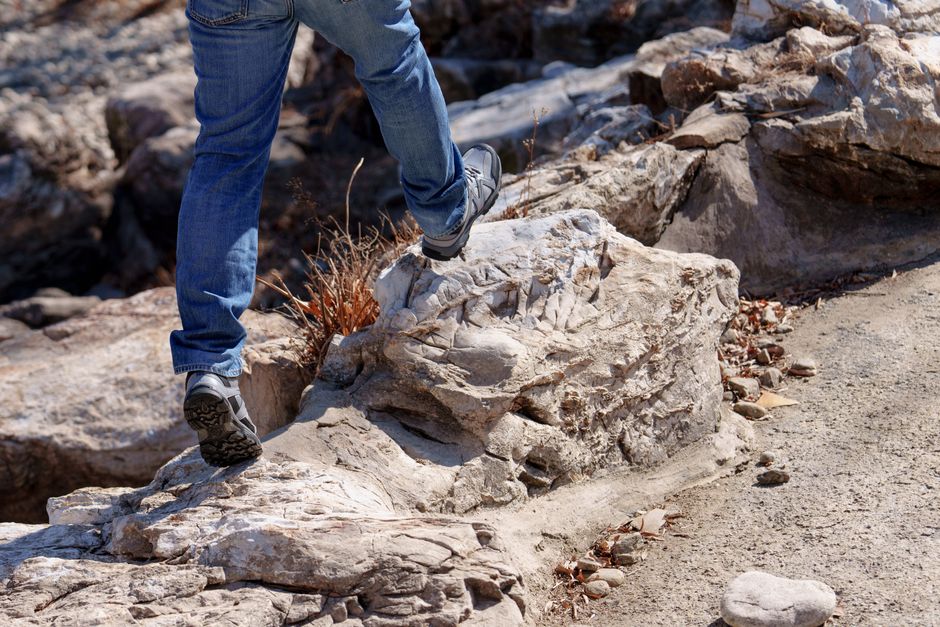
Blisters are the most common injury reported by long-distance hikers, and they are almost entirely preventable. The fix is not one product or one trick — it is a system: footwear that fits, socks that manage moisture, and tape applied correctly before hotspots turn into open wounds. Get those three working together and you can walk for days without a single blister.
How To Avoid Blisters When Hiking Fit Socks Tape
Blisters form when repeated friction causes the outer layer of skin to separate from the layers beneath it. Fluid fills the gap. That is the whole mechanism.
Three things drive it: friction, moisture, and heat. All three are manageable. Friction comes from movement between skin and sock, or sock and shoe. Moisture comes from sweat and from water that gets in through a wet trail or a stream crossing. Heat builds up inside the shoe and softens skin, which makes it more likely to shear.
The key insight most hikers miss is that friction alone rarely causes blisters. It is friction combined with moisture and heat that does the damage. Dry skin can tolerate a surprising amount of rubbing. Wet, warm skin breaks down fast.
So the strategy is not just “buy better socks.” It is to reduce movement, keep feet dry, and manage heat. Fit, socks, and tape each address a different part of that equation.
Why Does Footwear Fit Matter More Than Any Product?
A shoe that fits properly is the foundation. If your foot slides inside the shoe, no sock or tape will fully compensate.
Two fit problems cause most blisters. The first is a shoe that is too small. Your feet swell during hiking — sometimes by up to half a size — and a shoe that felt fine in the store can become tight after a few hours. Tight shoes press skin against the shoe’s interior and create pressure points.
The second is a shoe that is too loose. Excess room lets the foot slide forward, especially on descents. That sliding motion is pure friction.
The standard advice is to size up roughly a half size from your normal street shoe and to shop late in the day when your feet are at their largest. This is widely recommended by hiking and podiatric sources, though it is practical guidance rather than something tested in controlled trials.
Lacing matters too. A heel-lock lacing pattern — where the laces are threaded to pull the heel back into the heel cup — reduces forward sliding. Some hikers find this helpful; others do not notice a difference. It costs nothing to try.
Which Socks Actually Reduce Blister Risk?
Sock choice is where most people can make the biggest single improvement. The goal is to move moisture away from skin and reduce friction at the skin surface.
Merino wool and synthetic blends (polyester, nylon, acrylic) both work well. They wick moisture and dry faster than cotton. Cotton is the worst choice for hiking because it holds water against the skin. Wet skin blisters faster.
Here is where a specific product category needs honest treatment. So-called “blister-proof” socks — including double-layer designs — have some supporting evidence. Double-layer socks work by letting the two layers slide against each other instead of the sock sliding against your skin. Some studies suggest they reduce blister incidence compared with single-layer socks, though results vary and the effect is not universal.
Toe socks, which separate each toe, are popular among long-distance hikers. The theory is that separating toes reduces friction between them. Anecdotal reports are strong. Formal evidence is limited. They are worth trying if you blister between your toes, but do not assume they will solve a fit problem.
What matters most:
- Choose wool or synthetic, never cotton.
- Make sure the sock fits snugly with no bunching or wrinkles.
- Change socks when they get wet, including at stream crossings.
- Carry a spare pair so you always have a dry option.
Thickness is a trade-off. Cushioned socks add protection but take up room inside the shoe. If you switch to thicker socks, recheck your shoe fit.





How Should You Use Tape to Prevent Blisters?
Tape is your early-warning system. The moment you feel a hotspot — that warm, tender, rubbing sensation — stop and deal with it. A hotspot becomes a blister in a surprisingly short time.
Several tape options exist, and they are not equal.
Moleskin is a thick, felt-like adhesive padding. It cushions but does not slide, so it can sometimes create new friction at its edges. It is widely used but not always the best choice for prevention.
Medical tape (paper or cloth) is thin and conforms to skin. It works for short stretches but can roll off when wet.
Blister-specific tapes and patches — often made of a smooth, low-friction material — are designed to stay on damp skin and reduce shear. These tend to perform better for prevention than moleskin in practice, though head-to-head clinical comparisons are limited.
Hydrocolloid dressings are best known for treating blisters that have already formed. For prevention, they can work but are bulkier.
How to apply tape correctly:
- Clean and dry the skin first. Tape does not stick to sweaty or dirty skin.
- Apply to smooth skin with no wrinkles, or the tape itself will cause friction.
- Round the corners or cut them off — square corners peel up first.
- Extend the tape beyond the hotspot area so edges are not sitting on the rub point.
- Check it every few hours. Reapply if it starts to lift.
Some hikers apply tape preemptively to known problem spots before a long day. Others only tape when a hotspot appears. Both approaches are reasonable. Preemptive taping helps if you know exactly where you always blister.
Does Moisture Management Really Change the Outcome?
Yes. Moisture is arguably the single biggest controllable factor, and it is the one hikers neglect most.
Wet skin has a lower tolerance for friction than dry skin. When skin is soaked, it softens and the outer layer separates more easily. This is why blisters spike after river crossings, in rain, and on sweaty summer hikes.
Practical steps that help:
- Change into dry socks at breaks if your feet are wet.
- Air your feet and shoes during rest stops.
- Consider a thin liner sock under your main sock to move moisture and reduce shear.
- Use foot powder or an antiperspirant if sweating is heavy — some evidence supports antiperspirant use for reducing blister rates, though results are mixed.
- Waterproof shoes or gaiters help in wet conditions but can trap sweat in hot weather.
There is a trade-off between keeping water out and letting sweat escape. No footwear does both perfectly. Match your choice to the conditions.
What About Training and Foot Condition Before a Hike?
Skin that is accustomed to friction tolerates it better. This is why experienced hikers blister less than beginners on the same trail.
Building up gradually — shorter hikes before long ones — lets your skin adapt. There is no shortcut. Calluses help, but excessive calluses can themselves become pressure points, so balance matters.
Trim your toenails straight across and not too short. Long nails press against the toe box on descents and cause blisters under the nail. Keep feet clean and dry between hikes.
If you have diabetes, circulation problems, or nerve damage in your feet, blister prevention is more serious than a comfort issue. Foot injuries can escalate quickly in these groups, and clinical guidance recommends checking feet daily and addressing any wound promptly with a clinician.
The Bottom Line on Fit, Socks, and Tape
No single item prevents blisters. The combination does. A well-fitted shoe stops sliding. The right sock manages moisture and reduces shear. Tape catches hotspots before they become wounds.
Stop at the first sign of rubbing. That single habit prevents more blisters than any product you can buy.
Frequently Asked Questions
Should I tape my feet before a hike or only when I feel a hotspot?
Both approaches work, but preemptive taping helps most if you already know your problem spots. Taping at the first hotspot is the minimum — waiting until a blister forms is too late.
Are double-layer socks better than regular hiking socks?
Some studies suggest double-layer socks reduce blister incidence by letting layers slide against each other instead of against your skin. Results vary, so they are worth trying but not a guaranteed fix.
What is the best tape for preventing blisters?
Low-friction blister tapes and patches tend to stay on damp skin better than moleskin for prevention. Moleskin cushions well but its edges can create new friction points.
Can wet feet really cause blisters faster?
Yes. Moisture softens the outer layer of skin and lowers its tolerance for friction, which is why blisters spike after river crossings and in rain. Changing into dry socks is one of the most effective prevention steps.
