
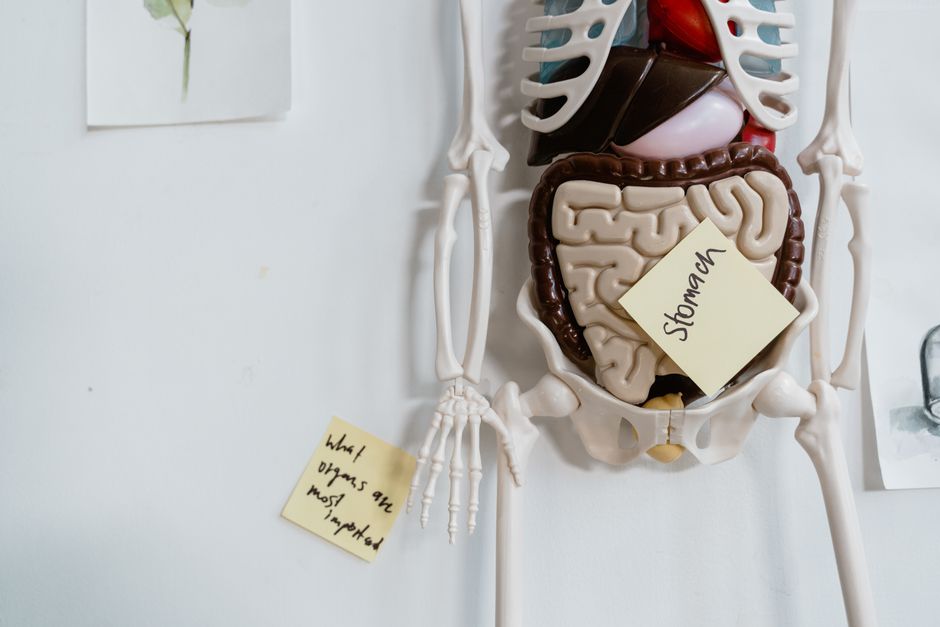
Your digestive tract is a continuous tube about 30 feet long that turns everything you eat and drink into fuel your body can use. It runs from your mouth to your anus, and along the way it breaks food down mechanically and chemically, absorbs nutrients and water, and pushes what is left out of the body. The whole process normally takes somewhere between one and three days from bite to exit, though that range varies widely from person to person.
What Is the Human Digestive Tract?
The digestive tract, also called the gastrointestinal tract or GI tract, is a single muscular tube lined with specialized tissue. It includes the mouth, throat, esophagus, stomach, small intestine, large intestine, rectum, and anus.
Several organs sit outside that tube but are still part of digestion. The liver, gallbladder, and pancreas produce and release substances that break food down and help the body absorb it. The liver makes bile, the gallbladder stores it, and the pancreas releases enzymes and bicarbonate into the small intestine.
The tract has its own nervous system, sometimes called the enteric nervous system. It contains a large number of nerve cells and can regulate much of digestion on its own, though it also takes signals from the brain and the rest of the body. This is partly why stress and emotions can affect how your gut feels and functions.
How The Human Digestive Tract Works From First Bite to Final Exit
Digestion happens in a set order, and each stage has a specific job. The process is both mechanical and chemical. Mechanical digestion is physical breakdown — chewing, churning, and pushing. Chemical digestion uses enzymes and acid to split food into molecules small enough to absorb.
Here is the basic sequence:
- Mouth: Chewing breaks food into smaller pieces. Saliva moistens it and contains an enzyme that begins breaking down starch.
- Esophagus: A wave of muscle contractions called peristalsis moves the swallowed food, now called a bolus, down to the stomach.
- Stomach: The stomach churns food and mixes it with acid and enzymes. This turns it into a thick liquid called chyme. Very little absorption happens here.
- Small intestine: Most chemical digestion and nutrient absorption occur here. It has three parts — the duodenum, jejunum, and ileum.
- Large intestine: The colon absorbs water and electrolytes and houses a large community of bacteria. What remains becomes stool.
- Rectum and anus: Stool is stored in the rectum and released through the anus during a bowel movement.
The small intestine is where the real work of absorption happens. Its inner surface is covered in finger-like projections called villi, and each villus is covered in even smaller projections called microvilli. This folds the surface area up enormously, so a tube that is only about 20 feet long can absorb a large amount of nutrients efficiently.
What Happens Inside the Stomach?
The stomach is a muscular sac that holds food, churns it, and starts protein digestion. Its lining produces hydrochloric acid, which is strong enough to break down food and kill many microbes that arrive with it. The same lining also produces a thick layer of mucus that protects the stomach wall from its own acid.
Cells in the stomach release pepsin, an enzyme that begins breaking proteins into smaller pieces. The stomach also releases a substance called intrinsic factor, which the body needs to absorb vitamin B12 in the small intestine.
Food usually stays in the stomach for a few hours, depending on what was eaten. A meal high in fat tends to empty more slowly than a meal high in carbohydrates. The stomach then releases chyme into the small intestine in controlled amounts.
One detail worth knowing: the stomach absorbs very little. Alcohol and some medications can be absorbed there, but the vast majority of nutrient absorption happens further down. The stomach’s main jobs are storage, mixing, and starting digestion.



How Does the Small Intestine Absorb Nutrients?
The small intestine is the body’s main absorption site. It receives chyme from the stomach, bile from the liver and gallbladder, and digestive enzymes from the pancreas. Together these break fats, proteins, and carbohydrates into forms the body can take in.
Bile emulsifies fat, meaning it breaks large fat droplets into smaller ones so enzymes can act on them. Pancreatic enzymes break down fats, proteins, and starches. The intestinal lining itself produces additional enzymes that finish the job.
Once nutrients are broken down, they cross the intestinal wall in different ways:
- Sugars and amino acids are absorbed into the bloodstream and travel first to the liver.
- Fats are packaged into particles called chylomicrons and enter the lymph system before reaching the blood.
- Vitamins and minerals are absorbed at specific points along the intestine, and some depend on other substances to be taken up at all.
- Water is absorbed mostly in the small intestine, with the colon handling the remainder.
Vitamin B12 absorption, for example, depends on intrinsic factor from the stomach. Iron is absorbed mainly in the duodenum. This is why surgery or disease affecting one part of the intestine can cause specific nutrient deficiencies rather than general ones.
What Does the Large Intestine Do?
The large intestine, or colon, absorbs water and electrolytes and turns liquid waste into stool. By the time material reaches the colon, most nutrients have already been absorbed. What is left is mostly water, fiber, and material the body cannot digest.
The colon also hosts trillions of bacteria. These microbes ferment some of the fiber that reaches them, producing compounds that the colon cells use for energy. This relationship is well established. What is less clear is how much specific bacterial populations influence overall health, and how much of what is marketed about gut bacteria is supported by strong human evidence. Some claims in this area outrun the science.
The colon moves waste toward the rectum using slow, rhythmic contractions. Stool is stored in the rectum until a bowel movement. Normal bowel frequency varies widely — anywhere from three times a day to three times a week can be normal for a given person, as long as it is consistent for them and not accompanied by pain or other symptoms.
What Controls the Speed of Digestion?
Digestion speed depends on several factors, and it is not the same for everyone. The type of food matters. Fat slows stomach emptying. Fiber adds bulk and can speed or slow transit depending on the type. Fluids, physical activity, medications, and medical conditions all play a role.
Hormones and nerve signals coordinate the process. The body releases hormones that signal when to release enzymes, when to slow emptying, and when to move contents forward. The enteric nervous system manages much of this without conscious input.
Many people assume a “normal” digestive system runs on a strict schedule. It does not. Transit time from eating to a bowel movement can range from under a day to several days in healthy people. What matters more is whether your pattern is steady for you and whether you have symptoms like pain, bloating, or changes that persist.
What Can Go Wrong With the Digestive Tract?
Digestive problems are common and range from mild and temporary to chronic and serious. Because symptoms like abdominal pain, bloating, and changes in bowel habits can come from many different causes, a specific diagnosis usually requires evaluation rather than assumption.
Some well-known conditions include:
- Gastroesophageal reflux disease (GERD): stomach contents flow back into the esophagus, causing burning and irritation.
- Peptic ulcers: open sores in the stomach or duodenum lining, often linked to a specific bacterial infection or to long-term use of certain pain medications.
- Celiac disease: an immune reaction to gluten that damages the small intestine and impairs nutrient absorption.
- Irritable bowel syndrome (IBS): a functional disorder causing pain, bloating, and changed bowel habits without visible damage to the tract.
- Inflammatory bowel disease (IBD): includes Crohn’s disease and ulcerative colitis, both involving chronic inflammation.
- Gallstones: hardened deposits in the gallbladder that can block bile flow and cause pain.
Symptoms that warrant medical attention include blood in the stool, unexplained weight loss, persistent vomiting, difficulty swallowing, and pain that wakes you from sleep. These are not automatically signs of something serious, but they are reasons to get evaluated rather than wait.
How Can You Support Digestive Health?
The basics that support digestion are not complicated, and they are supported by general health evidence rather than by any single product. Eating a varied diet with adequate fiber, drinking enough fluids, staying physically active, and getting regular sleep all support normal digestive function.
Fiber is worth highlighting. It adds bulk to stool, feeds some gut bacteria, and can help with both constipation and certain types of diarrhea. Most adults do not get the recommended amount. The general guidance is roughly 25 to 38 grams per day for adults, depending on age and sex, based on established dietary reference values.
What is not well supported is the idea that most people need probiotic supplements, detoxes, or cleansing products for a healthy gut. The evidence for many of these products is limited, and some marketing claims go well beyond what studies have shown. Some probiotics have evidence for specific conditions, but that is different from general daily use for everyone.
If you have persistent digestive symptoms, a clinician can help sort out what is going on. Self-treating with supplements or elimination diets without guidance can delay a proper diagnosis.
Frequently Asked Questions
How long does it take food to digest?
Food typically takes between one and three days to travel the full digestive tract, though this varies widely between people. Stomach emptying alone usually takes a few hours.
Where are most nutrients absorbed?
Most nutrient absorption happens in the small intestine, mainly in the jejunum and ileum. The stomach absorbs very little, and the colon mainly absorbs water and electrolytes.
Is a bowel movement every day normal?
Normal bowel frequency ranges from about three times a day to three times a week for different healthy people. What matters is whether your pattern is steady for you and free of pain or other symptoms.
Do probiotics help digestion in healthy people?
The evidence is limited for general digestive benefits in healthy adults, though some probiotics have shown benefit for specific conditions. No clinical evidence currently confirms that most healthy people need them daily.
