
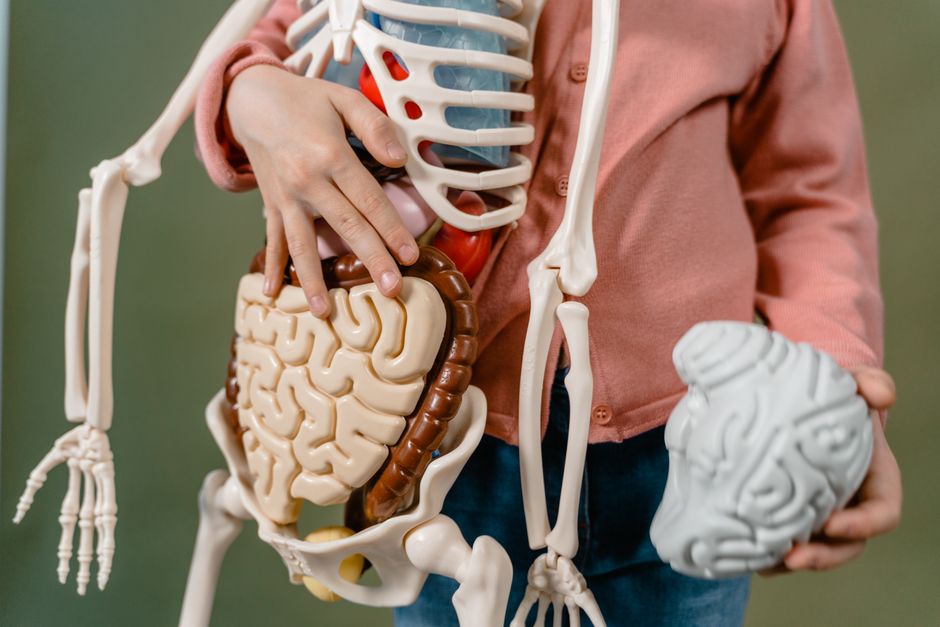
Your digestive system works best when you feed the bacteria living in your gut, move your body regularly, and eat a wide range of plant foods. Fiber, fermented foods, water, and physical activity have the strongest evidence behind them. Supplements and detox products mostly do not. The single most effective change most people can make is eating more different kinds of plants each week.
What Does a Healthy Digestive System Actually Do?
Digestion starts before food reaches your stomach. Chewing breaks food into smaller pieces. Saliva begins breaking down starch. From there, the stomach adds acid and enzymes, the small intestine absorbs most nutrients, and the colon absorbs water and hosts trillions of bacteria.
Those bacteria are not passive passengers. They ferment fiber your body cannot digest and produce short-chain fatty acids. One of these, butyrate, is the main fuel source for the cells lining your colon. This relationship between gut bacteria and colon cells is well established in the research literature.
A healthy gut does several things at once. It moves food through at a comfortable pace. It absorbs nutrients efficiently. It keeps harmful bacteria in check. It communicates with your brain through the vagus nerve and hormone signals. When any of these functions slip, you notice it — bloating, irregularity, discomfort, or fatigue.
The gut also contains a large share of your body’s immune tissue. That does not mean “boosting” it is simple or even desirable. An overactive immune response in the gut is what drives conditions like inflammatory bowel disease. The goal is balance, not maximum activity.
Which Foods Actually Boost Your Digestive System?
Fiber is the most studied dietary factor for digestive health. It adds bulk to stool, feeds gut bacteria, and helps regulate how fast food moves through your system. Most adults in the US eat far less fiber than the 25 to 38 grams per day recommended in the Dietary Guidelines for Americans.
Not all fiber works the same way. Soluble fiber dissolves in water and forms a gel. It is found in oats, barley, beans, apples, and carrots. Insoluble fiber does not dissolve and adds bulk. It is found in whole wheat, nuts, and many vegetables. Both matter, and most plant foods contain a mix.
Fermented foods are a separate category. Yogurt with live cultures, kefir, sauerkraut, kimchi, and tempeh contain live microorganisms. A study from Stanford University published in the journal Cell found that a diet high in fermented foods increased gut bacterial diversity and reduced markers of inflammation in healthy adults. That is one of the stronger pieces of evidence in this area, though it was a single study and the field is still developing.
Polyphenols — compounds in berries, dark chocolate, coffee, and red wine — also appear to feed beneficial bacteria. The evidence here is promising but mostly from smaller studies. It is reasonable to include these foods, but not to treat them as a treatment.
Why Does Fiber Diversity Matter More Than Fiber Amount?
Different gut bacteria eat different fibers. If you eat the same three vegetables every day, you feed the same narrow group of bacteria. Rotating through many plant types feeds a wider range.
This is why some researchers focus on the number of different plants eaten per week rather than grams of fiber alone. The American Gut Project, a large citizen science study, found that people who ate 30 or more different plant types per week had more diverse gut bacteria than those who ate 10 or fewer. Diversity in the gut microbiome is generally associated with better health markers, though researchers are still working out cause and effect.
Practically, this means variety beats repetition. A handful of mixed nuts, a spoonful of seeds, a different vegetable at dinner each night — these small changes add up.
- Beans and lentils — high in fiber and protein
- Berries — fiber plus polyphenols
- Oats and barley — soluble fiber
- Leafy greens — fiber and vitamins
- Nuts and seeds — fiber, healthy fats, minerals
- Fermented foods — live cultures
- Whole grains — fiber and B vitamins




Can Probiotics and Supplements Help?
Probiotic supplements are among the most heavily marketed digestive products. The evidence for them is narrower than most people assume. Specific strains have shown benefit for specific conditions — for example, certain strains may reduce antibiotic-associated diarrhea or help with some forms of irritable bowel syndrome. But “probiotic” is a broad category, not a single product, and most over-the-counter supplements have not been tested in rigorous trials.
Regulation is another issue. In the US, probiotics are sold as dietary supplements, not drugs. That means they do not need FDA approval for effectiveness before being sold. The label may not accurately reflect what is in the capsule. Some independent testing has found discrepancies between labeled and actual contents.
Prebiotics are different. These are fibers that feed your existing bacteria — things like inulin, found in chicory root, onions, and garlic. They are generally obtained through food rather than supplements. Taking large doses of prebiotic supplements can cause gas and bloating, especially at first.
Digestive enzyme supplements are another popular category. These may help people with specific conditions like pancreatic insufficiency, where the body does not produce enough enzymes. For general digestive discomfort in otherwise healthy people, the evidence is limited. No large trials have confirmed benefit for routine use.
What about “detox” teas and cleanses? The body already has a detox system — the liver and kidneys. No clinical evidence confirms that teas or cleanses improve digestion or remove toxins. Some contain laxatives that can cause cramping and dependence with regular use.
How Do Lifestyle Habits Affect Digestion?
Physical activity helps move food through the digestive tract. This is well established. Even a short walk after meals can reduce bloating and support regular bowel movements. Exercise also appears to shift the composition of gut bacteria, though the exact mechanisms are still being studied.
Hydration matters too. Fiber without enough water can make constipation worse, not better. Water helps fiber do its job. The general recommendation is roughly 8 cups of fluid per day for most adults, though needs vary with activity, climate, and health status.
Stress has a direct line to your gut. The brain and gut communicate constantly through the vagus nerve and hormone signals. Chronic stress can slow digestion, increase sensitivity to gut sensations, and worsen conditions like IBS. This gut-brain connection is one of the more solid findings in digestive research.
Sleep is often overlooked. Poor sleep is associated with worse gut symptoms and changes in gut bacteria. The relationship likely runs both ways — gut problems can disrupt sleep, and poor sleep can worsen gut problems.
Eating habits matter as well. Eating slowly, chewing thoroughly, and not overeating at one sitting reduce the workload on your system. Some people find that large late-night meals cause reflux or discomfort. These are common clinical observations rather than findings from large trials, but they are reasonable adjustments to try.
What About Specific Digestive Problems?
Occasional bloating, gas, or irregularity is common and usually not a sign of disease. Persistent or worsening symptoms are different. If you have blood in your stool, unexplained weight loss, severe pain, or symptoms that wake you at night, see a doctor. These are red flags that need evaluation, not dietary tweaks.
Irritable bowel syndrome (IBS) affects a significant share of adults. It involves altered bowel habits and abdominal pain without visible damage to the gut. Diet changes, stress management, and in some cases specific medications can help. A low-FODMAP diet, developed by researchers at Monash University, has good evidence for reducing IBS symptoms in some people. It should be done with a dietitian because it is restrictive and not meant for long-term use without guidance.
Inflammatory bowel disease (IBD) — Crohn’s disease and ulcerative colitis — is a different condition. It involves actual inflammation and damage to the digestive tract. Diet can support treatment but does not replace medical care. The evidence for specific diets in IBD is mixed and still evolving.
Celiac disease is an autoimmune reaction to gluten. It is not a digestive preference or a sensitivity. It requires strict gluten avoidance for life. If you suspect it, get tested before cutting gluten, because testing requires you to still be eating it.
What Actually Works Best?
The highest-confidence steps are not complicated. Eat more plants, aim for variety, include fermented foods, drink enough water, move your body, and manage stress. These are supported by consistent research and carry little risk.
Supplements and cleanses are lower on the list for a reason. The evidence is thinner, the products are loosely regulated, and the marketing often outruns the science. If you have a diagnosed condition or persistent symptoms, work with a doctor rather than self-treating.
Digestion is not something you fix once. It responds to daily habits over weeks and months. Small, consistent changes tend to work better than dramatic overhauls that are hard to maintain.
Frequently Asked Questions
How long does it take to improve digestion?
Most people notice changes in bowel habits within one to two weeks of increasing fiber and water. Shifts in gut bacteria take longer — often several weeks to months of consistent diet changes.
What is the fastest way to boost your digestive system?
Drinking more water and adding a serving of fiber-rich food at each meal are the quickest evidence-based steps. Neither requires supplements or special products.
Are probiotics worth taking?
Specific strains have shown benefit for specific conditions like antibiotic-associated diarrhea, but general-purpose probiotic supplements are not well supported by large trials. Food sources like yogurt and kefir are a reasonable alternative.
Can stress really cause digestive problems?
Yes. The gut and brain communicate directly through the vagus nerve and hormone signals, and chronic stress is well documented to worsen digestive symptoms. Stress management is a legitimate part of digestive care.
