
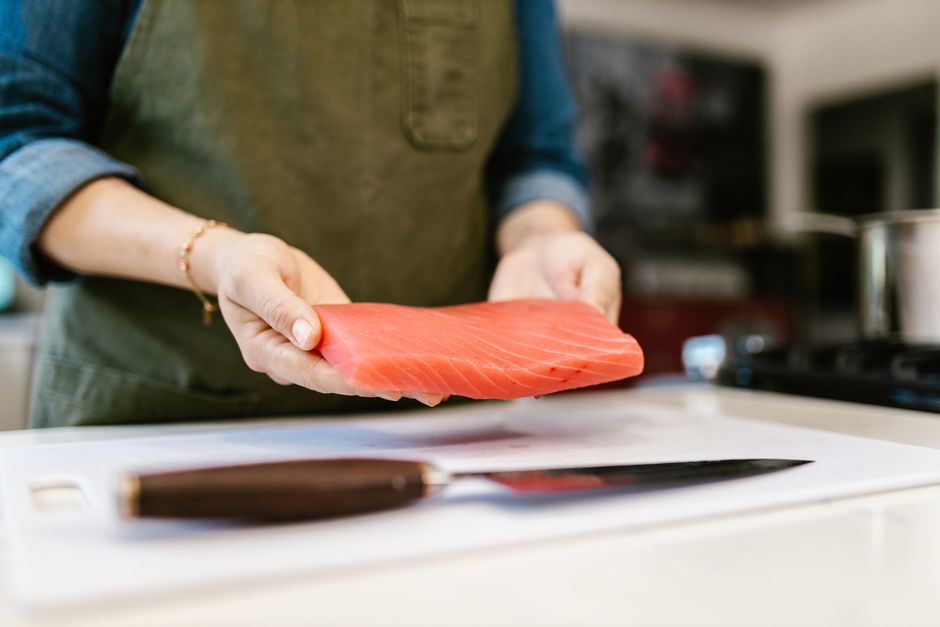
A 6-ounce serving of cooked salmon contains roughly 40 to 44 grams of protein. The exact number depends on whether the salmon is wild or farmed. Wild salmon tends to be leaner and slightly higher in protein per ounce. This makes salmon one of the most protein-dense fish you can eat. For comparison, that is about the same protein you would get from six large eggs or two boneless chicken thighs.
How Much Protein Is In 6 Oz Of Salmon?
For a standard 6-ounce cooked portion, you are looking at 40 to 44 grams of protein. Wild-caught salmon typically sits at the higher end around 43-44 grams. Farmed Atlantic salmon is closer to 40-41 grams. The difference comes from fat content. Wild salmon has less fat so the protein makes up a larger percentage of the weight.
Raw salmon weighs more than cooked salmon because water cooks off. If you measure 6 ounces raw, the cooked portion will be about 5 ounces. The protein content stays the same though. Protein does not cook away. So a 6-ounce raw fillet still gives you around 40-44 grams of protein once cooked.
Wild Salmon vs. Farmed Salmon Protein Content
Wild salmon has a slightly better protein-to-calorie ratio. A 6-ounce serving of cooked wild sockeye salmon provides about 43 grams of protein and roughly 280 calories. Farmed Atlantic salmon in the same serving size gives you about 40 grams of protein and around 340 calories. The extra 60 calories come from higher fat content in farmed fish.
Both are excellent protein sources. The difference is small enough that it should not dictate your choice. If you are tracking macros closely, wild salmon gives you slightly more protein per calorie. If you are just eating for general health, both options work well.
How Salmon Compares to Other Protein Sources
Salmon holds up well against other common protein foods. A 6-ounce serving of chicken breast has about 50 grams of protein. That is 6-10 grams more than salmon. Lean beef in the same portion gives you roughly 48 grams. So salmon is not the absolute highest protein source, but it is close.
What sets salmon apart is the additional nutrition. You get omega-3 fatty acids, vitamin D, selenium, and B vitamins alongside the protein. Chicken and beef do not provide omega-3s in meaningful amounts. If your goal is protein plus overall nutrient density, salmon is hard to beat.
Here is a quick comparison of 6-ounce cooked portions:
- Wild salmon: 43g protein, 280 calories
- Farmed salmon: 40g protein, 340 calories
- Chicken breast: 50g protein, 280 calories
- Lean beef: 48g protein, 330 calories
- Tofu: 18g protein, 180 calories




Does Cooking Method Change Protein Content?
Cooking method does not change the amount of protein in salmon. Protein is a macronutrient. Heat can change its structure but cannot destroy it. You will get the same 40-44 grams whether you bake, grill, pan-sear, or poach the fish.
What cooking method changes is moisture loss. Dry cooking methods like grilling or baking cause more water to evaporate. The fillet becomes smaller and denser. But the protein grams remain the same. If you weigh after cooking, a more cooked fillet will show higher protein per ounce simply because there is less water weight. That is a measurement illusion, not a real change.
Should You Eat Salmon Daily for Protein?
Eating salmon daily is safe for most people. The FDA recommends 2-3 servings of fish per week for general health. But eating it daily is not harmful as long as you vary your seafood. The concern with eating the same fish every day is heavy metal accumulation. Salmon is a low-mercury fish, so the risk is minimal.
A 6-ounce serving provides about 80% of the daily protein needs for an average sedentary woman and about 60% for an average sedentary man. Active people need more. If you eat salmon daily, you will hit your protein targets easily but you may miss out on the variety of nutrients from other protein sources. Rotating between salmon, chicken, eggs, beans, and lean beef gives you a broader nutrient profile.
How Much Protein Do You Actually Need Per Day?
The Recommended Dietary Allowance for protein is 0.8 grams per kilogram of body weight. That equals about 54 grams per day for a 150-pound person. A 6-ounce serving of salmon covers most of that in one meal. But this is the minimum to prevent deficiency, not the optimal amount for health.
Research consistently shows that higher protein intake supports muscle maintenance, bone health, and weight management. Most adults do better with 1.2 to 1.6 grams per kilogram. For a 150-pound person, that is 82 to 109 grams daily. A 6-ounce salmon fillet provides about half of that target. That makes it an excellent centerpiece for a high-protein meal, especially when paired with other protein-containing foods like quinoa, Greek yogurt, or lentils on the side.
Common Protein Myths About Salmon
One common myth is that raw salmon has more protein than cooked salmon. This is false. Protein content is identical. Raw salmon just has more water weight. When you cook it, water leaves but protein stays. Weighing raw versus cooked creates confusion because the density changes but the total protein grams do not.
Another myth is that salmon skin is high in protein. The skin contains some protein but much less than the flesh. Most of the protein in salmon is in the muscle tissue. The skin is mostly fat and connective tissue. It provides about 1-2 grams of protein per serving. Not zero, but not significant either.
Some people believe that canned salmon has less protein than fresh. Actually, canned salmon often has slightly more protein per ounce because it is packed without the water that fresh salmon holds. A 6-ounce serving of drained canned salmon gives you about 45 grams of protein. That is right in line with fresh wild salmon.
Is Salmon a Complete Protein?
Yes, salmon is a complete protein. It contains all nine essential amino acids that your body cannot make on its own. This is true of all animal-based proteins. Plant proteins like beans and rice are often incomplete individually but can be combined to form complete proteins.
Salmon is particularly rich in leucine, the amino acid that triggers muscle protein synthesis. This makes it an effective protein source for muscle repair and growth. You do not need to combine salmon with anything to make it “complete.” It already is.
Frequently Asked Questions
How much protein is in 6 oz of cooked salmon?
Cooked wild salmon has about 43 grams of protein per 6 ounces. Cooked farmed salmon has about 40 grams.
Is salmon a better protein source than chicken?
Chicken has slightly more protein per ounce, but salmon provides omega-3 fatty acids and more vitamins. Both are excellent choices depending on your nutritional goals.
How many grams of protein do I need per day?
The minimum is 0.8 grams per kilogram of body weight, but most adults benefit from 1.2 to 1.6 grams per kilogram. A 150-pound person needs about 82 to 109 grams daily.
Does frozen salmon have the same protein as fresh salmon?
Yes, freezing does not change the protein content. Frozen and fresh salmon have identical protein grams per ounce when cooked.
