
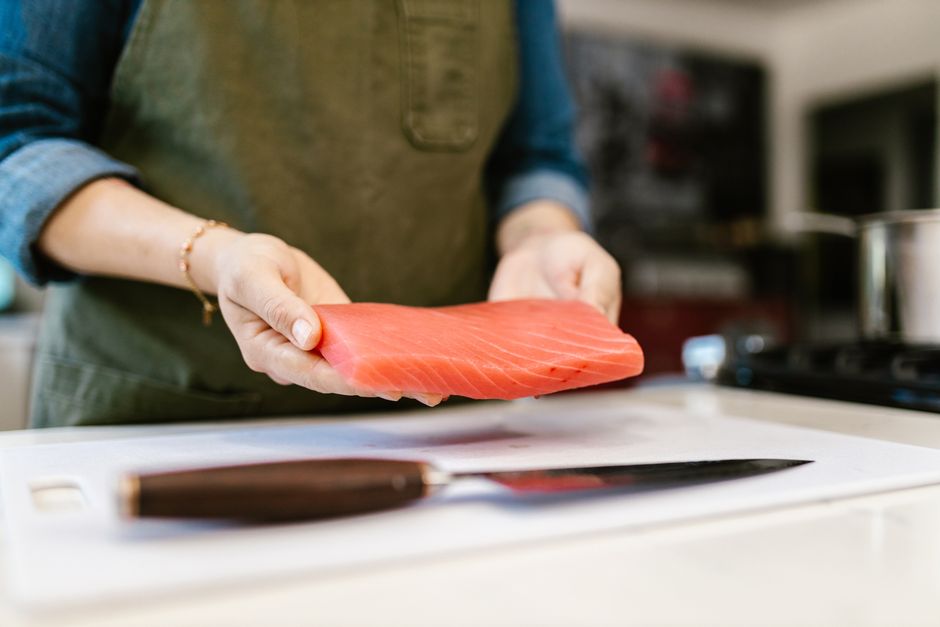
Yes, salmon is very high in protein. A standard 3-ounce (85-gram) serving of cooked salmon provides about 22 grams of protein. That is roughly the same amount you would get from a similar portion of chicken breast or beef. Salmon is considered a complete protein source because it contains all nine essential amino acids your body needs from food.
How Much Protein Is in Salmon Compared to Other Foods?
Salmon ranks among the top protein sources for animal-based foods. A 3-ounce serving of cooked wild Atlantic salmon contains 22-23 grams of protein. Farmed Atlantic salmon is similar at about 21-22 grams per 3-ounce serving. The difference between wild and farmed is small enough that it does not matter for most people.
Here is how salmon compares to other common protein sources per 3-ounce cooked serving:
| Food | Protein (grams) |
|---|---|
| Chicken breast (skinless) | 26 |
| Salmon | 22 |
| Lean beef steak | 23 |
| Pork chop | 22 |
| Tuna (canned, drained) | 20 |
| Eggs (2 large) | 12 |
| Greek yogurt (plain, 6 oz) | 15 |
Salmon is not the absolute highest protein food. Chicken breast and lean beef edge it out by a few grams. But salmon offers something those foods do not: high levels of omega-3 fatty acids. You get protein plus heart-healthy fats in one serving.
Is Salmon a Complete Protein?
Yes, salmon is a complete protein. This means it provides all nine essential amino acids that your body cannot make on its own. The USDA classifies salmon as a high-quality protein source for this reason.
Many plant proteins are incomplete. They lack one or more essential amino acids. For example, rice is low in lysine and beans are low in methionine. You have to combine different plant foods to get all amino acids. Salmon gives you everything in one serving. This makes it especially useful for people who eat animal products and want efficient protein intake.
The protein in salmon is also highly digestible. Research published in the Journal of Nutrition has found that animal proteins like salmon have a digestibility score above 90 percent. That means your body actually uses most of the protein you eat rather than excreting it.
Does the Protein Content Change Between Wild and Farmed Salmon?
The protein difference between wild and farmed salmon is minimal. Wild salmon contains about 22-23 grams of protein per 3 ounces. Farmed salmon contains about 21-22 grams. That one-gram difference is not meaningful for most people.
The bigger difference between wild and farmed salmon is fat content. Farmed salmon has more total fat and more omega-3s per serving. But farmed salmon also has a higher ratio of omega-6 to omega-3, which some researchers consider less ideal. A 2020 analysis in Nutrients compared the two types and found both are excellent protein sources. The authors noted that choosing between them should depend on your priorities around fat content and sustainability, not protein.
For protein specifically, both options work equally well. If you are eating salmon primarily for protein, the wild versus farmed decision does not matter. Pick whichever fits your budget and taste preferences.




How Much Salmon Should You Eat for Protein Needs?
The Recommended Dietary Allowance (RDA) for protein is 0.8 grams per kilogram of body weight per day. For a 150-pound person, that is about 55 grams of protein daily. A single 3-ounce serving of salmon provides 40 percent of that amount. Many people need more protein than the RDA, especially if they are active or older.
For context, the average US adult eats about 80-100 grams of protein per day. A 3-ounce salmon fillet covers roughly a quarter of that. If you eat salmon twice per week, you get about 44 grams of protein from salmon alone. That is a solid contribution to your weekly intake.
Here are practical ways to incorporate salmon for protein:
- Add a 3-ounce portion to a salad for lunch
- Eat a 4-ounce fillet as your dinner protein
- Mix canned salmon into a sandwich or wrap
- Use salmon flakes in a grain bowl with quinoa or brown rice
- Include salmon in a weekly meal prep plan for easy protein
Salmon is versatile enough to fit into most eating patterns. You do not need to eat it every day. Two to three servings per week gives you meaningful protein along with omega-3 benefits.
Common Misconceptions About Salmon and Protein
Some people believe that salmon is not a high-protein food because it is fatty. This is wrong. The fat in salmon does not reduce its protein content. Salmon has both fat and protein. A 3-ounce serving has about 7 grams of fat and 22 grams of protein. The fat is mostly the beneficial unsaturated type.
Another misconception is that canned salmon is lower in protein than fresh salmon. This is also incorrect. Canned salmon is cooked and packed in water or oil. A 3-ounce serving of drained canned salmon provides about 20-22 grams of protein. That is nearly identical to fresh salmon. The protein quality is the same. Canned salmon is a convenient and affordable option that does not sacrifice protein content.
Some people worry that cooking destroys protein. It does not. Cooking can slightly reduce moisture content, which concentrates the protein per gram. But the protein itself remains intact and usable by your body. The only way to significantly damage protein is through extreme heat or prolonged cooking, which is not how most people prepare salmon.
There is also a belief that you need to eat salmon raw to get full protein benefits. This is false. Cooking salmon makes its protein more digestible, not less. A study in the Journal of Food Science found that cooking salmon at typical temperatures increases protein digestibility by about 10 percent compared to raw. Your body can use cooked salmon protein more efficiently.
What to Look for When Buying Salmon for Protein
When buying salmon for protein, the most important factor is whether it is fresh or properly frozen. Fresh salmon should smell like the ocean, not fishy. The flesh should be firm and spring back when pressed. Frozen salmon should be vacuum-sealed with no freezer burn.
The type of salmon matters less for protein than for taste and sustainability. Atlantic salmon is almost always farmed. Pacific salmon species like sockeye, coho, and king are typically wild-caught. All of them provide similar protein amounts. Choose based on your budget and environmental concerns.
Canned salmon is a practical protein source. Look for cans labeled “wild” or “Alaskan” if you want to avoid farmed fish. Canned salmon often includes edible bones, which add calcium. This does not affect protein content. The bones are soft and harmless.
Avoid salmon that has been injected with added water or salt solutions. Some processors do this to increase weight. Check the ingredient list. It should say only “salmon” or “salmon, salt” for smoked varieties. Added ingredients do not change protein content much, but they mean you pay for water instead of fish.
Smoked salmon has similar protein to fresh salmon. A 3-ounce serving of smoked salmon provides about 18-20 grams of protein. The smoking process does not significantly reduce protein. Watch the sodium content in smoked salmon. It can be high, which matters if you have high blood pressure.
Frequently Asked Questions
Is salmon higher in protein than chicken?
No. Chicken breast has about 26 grams of protein per 3-ounce serving, while salmon has about 22 grams. Chicken is slightly higher, but both are excellent protein sources.
Can you get enough protein from salmon alone?
You could, but it is not practical. You would need to eat about 8 ounces of salmon daily to meet average protein needs. That is a lot of salmon and may expose you to higher mercury levels.
Is canned salmon as high in protein as fresh salmon?
Yes. Canned salmon provides about 20-22 grams of protein per 3-ounce serving, nearly identical to fresh salmon. The protein quality is the same.
Does cooking salmon reduce its protein content?
No. Cooking does not destroy protein. It may slightly concentrate protein by removing water. Cooked salmon protein is actually more digestible than raw salmon protein.
