
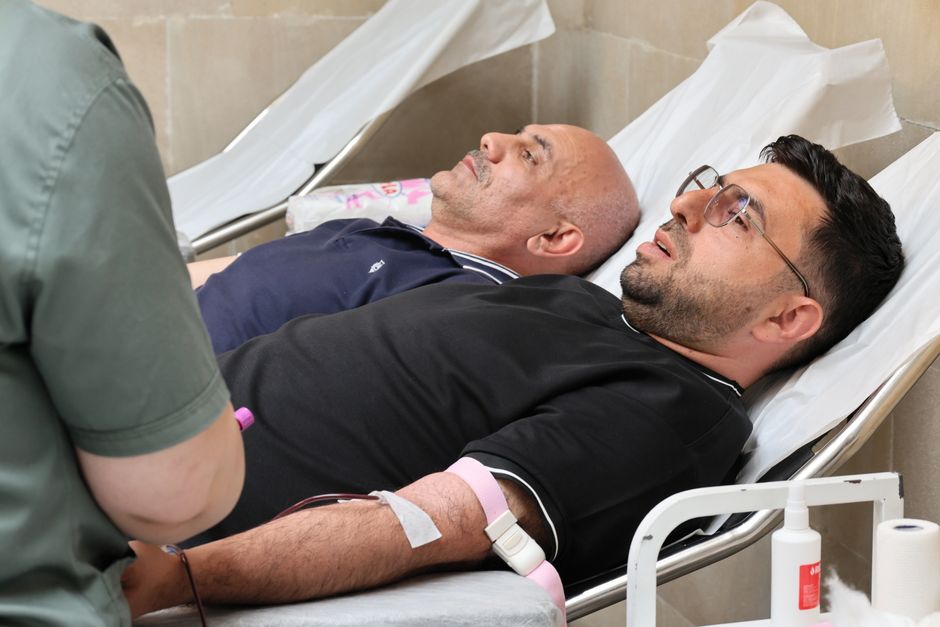
Donating blood lowers hematocrit by roughly 3 to 4 percentage points in most adults. A person with a hematocrit of 45% will typically measure around 41% to 42% immediately after a standard whole blood donation. This drop is temporary. The body replaces the lost red blood cells over the following weeks, usually returning to the pre-donation level within 6 to 8 weeks.
What Exactly Is Hematocrit?
Hematocrit is the percentage of your blood that is made up of red blood cells. If your hematocrit is 45%, then 45% of your blood volume is red cells. The rest is plasma, white blood cells, and platelets.
Red blood cells carry oxygen from your lungs to every tissue in your body. They contain hemoglobin, the protein that actually binds oxygen. Hematocrit is a quick way to estimate how much oxygen-carrying capacity your blood has.
Normal ranges vary by age, sex, and even altitude. For adult men, normal hematocrit is roughly 40% to 54%. For adult women, it is about 36% to 48%. People living at high altitudes naturally run higher because the body makes more red blood cells to compensate for thinner air.
How the Standard Blood Donation Works
A standard whole blood donation collects about one pint of blood, which is roughly 470 to 500 milliliters. For an average adult, that represents about 10% of total blood volume.
That pint contains red blood cells, plasma, and other components. When you lose that volume, your hematocrit drops immediately because you have removed a concentrated portion of red cells from circulation.
The math is straightforward. If you remove 10% of your blood and that blood has the same hematocrit as the rest of your body, your hematocrit drops by roughly 10% of its starting value. For a starting hematocrit of 45%, that is a drop of about 4.5 points, landing near 40.5%. For a starting value of 40%, the drop is about 4 points, landing near 36%.
Why the Drop Is Temporary
Your body treats blood loss as an emergency. Within hours, your kidneys release a hormone called erythropoietin. This hormone signals bone marrow to step up production of new red blood cells.
Plasma volume recovers fastest. Most of the fluid you lost is replaced within 24 to 48 hours. That is why blood banks advise drinking extra fluids after donating. The plasma comes back quickly, but the red cells take longer.
Red blood cells live about 120 days. Your bone marrow produces new ones continuously, but after a donation it ramps up production. Most people fully replace the donated red cells within 6 to 8 weeks. Some research suggests complete recovery can take up to 8 weeks in women and slightly less in men.





Can Donating Blood Treat High Hematocrit?
Some doctors use therapeutic phlebotomy — the medical term for removing blood — to treat conditions that cause dangerously high hematocrit. The most common is polycythemia vera, a bone marrow disorder that produces too many red blood cells.
In that setting, the goal is not a single donation. It is repeated phlebotomy to keep hematocrit below a target level, often under 45% for men and under 42% for women. These targets come from clinical guidelines for managing the condition.
For a healthy person with mildly elevated hematocrit, routine blood donation is not a treatment. It is a temporary adjustment. The drop lasts weeks, not months, and your body will return to its baseline. If your hematocrit is high for a reason — such as sleep apnea, smoking, or lung disease — donating blood does not fix the underlying cause.
Hematocrit Levels and Blood Donation Eligibility
Blood banks screen hematocrit before every donation. The minimum is typically 38% for women and 40% for men. Some centers use hemoglobin instead of hematocrit, but the logic is the same. They want to ensure you can safely lose the red cells.
If your hematocrit is below the cutoff, you will be deferred. This is a safety measure. Donating when your red cell count is already low could leave you anemic and symptomatic.
If your hematocrit is above the cutoff, you can donate. There is no upper limit for routine whole blood donation at most centers, though some have policies for very high values. The concern is not the donor’s safety but the quality of the product. Blood with extremely high hematocrit can be harder to process into components.
How Long Until Hematocrit Returns to Normal
Hematocrit does not return to baseline overnight. The recovery curve is gradual.
In the first week after donation, hematocrit remains near its post-donation low. Plasma volume has recovered, but red cell mass is still depleted. By week two to four, you may see a measurable increase as new red cells enter circulation.
Full recovery typically takes 6 to 8 weeks in healthy adults. This timeline matches the standard donation interval. The FDA requires at least 8 weeks between whole blood donations. This is not arbitrary — it is based on the time needed to restore red cell mass.
Iron status matters here. Each donation removes about 200 to 250 milligrams of iron. If your iron stores are adequate, recovery proceeds on schedule. If they are low, your bone marrow cannot make red cells as quickly, and hematocrit recovery may be delayed.
Factors That Affect the Drop and Recovery
Body size matters. A larger person has more blood volume, so a one-pint donation represents a smaller percentage of total blood. A smaller person loses a larger fraction and will see a bigger relative drop in hematocrit.
Starting hematocrit matters too. A person starting at 50% will drop more points than someone starting at 40%, even though the relative change is similar.
Sex and age influence recovery. Women tend to have lower iron stores than men, which can slow red cell regeneration. Older adults may also recover more slowly, though the evidence here is not strong enough to make firm rules.
Diet plays a role. Adequate dietary iron, vitamin B12, and folate are all required for red blood cell production. A deficiency in any of these will slow recovery.
What the Drop Feels Like
Most people tolerate the hematocrit drop without symptoms. The immediate effects of donation — lightheadedness or fatigue — are more related to the sudden loss of blood volume than the drop in red cells.
Some donors feel more tired than usual for a few days. This is expected. Your body is working harder to produce new blood cells.
Severe symptoms are uncommon. If you feel short of breath, experience chest pain, or feel unusually weak after donation, contact a healthcare provider. These symptoms could indicate that your hematocrit dropped more than expected or that you were borderline anemic before donation.
Frequently Asked Questions
How many points does hematocrit drop after donating blood?
A standard whole blood donation lowers hematocrit by about 3 to 4 percentage points in most adults. The exact drop depends on your starting hematocrit and your total blood volume.
How long does it take for hematocrit to return to normal after donating blood?
Most healthy adults fully recover their hematocrit within 6 to 8 weeks after donation. The 8-week minimum interval between donations is based on this recovery timeline.
Can I donate blood if my hematocrit is high?
Yes, most blood banks accept donors with high hematocrit as long as there is no upper limit at that center. A single donation lowers hematocrit temporarily, but it does not treat the underlying cause of elevated levels.
Will donating blood lower my hematocrit permanently?
No. The drop lasts only until your body replaces the red blood cells, which takes 6 to 8 weeks. For permanent reduction, you would need repeated phlebotomy under medical supervision.
