
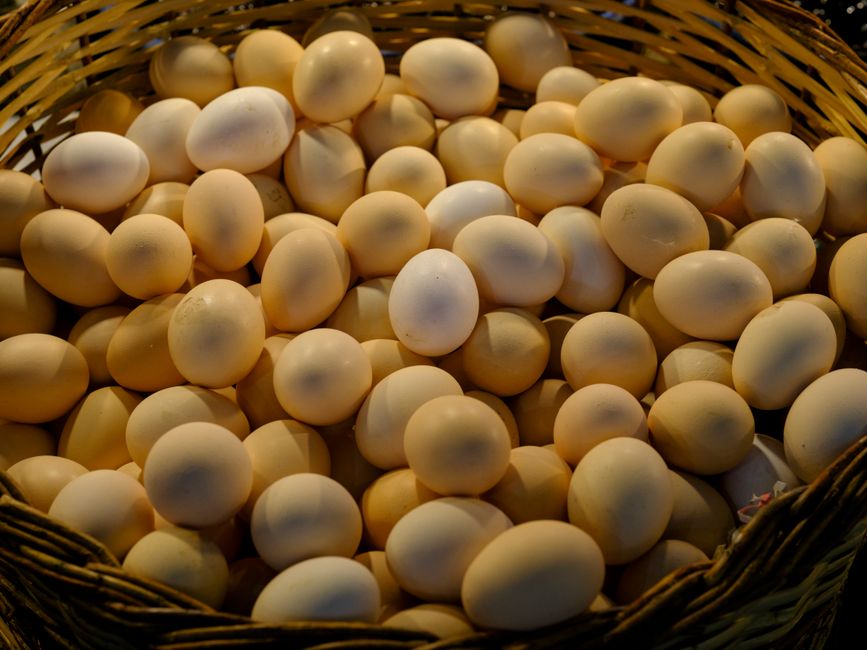
Cooked eggs keep in the fridge for about one week. That applies to hard-boiled eggs still in their shells, and to egg dishes like frittata, quiche, and egg salad. The clock starts the day you cook them, not the day you bought the eggs. After seven days, the risk of foodborne illness climbs and the quality drops, so it is time to throw them out.
That one-week figure comes from federal food safety guidance. The U.S. Department of Agriculture advises using hard-cooked eggs within one week of cooking. The same window applies to most cooked egg dishes stored in the refrigerator. Fresh, uncooked eggs in the shell last much longer, but cooking changes the math.
How Long Will Cooked Eggs Keep In The Fridge?
One week is the outer limit for hard-boiled eggs in the shell.
Peeled hard-boiled eggs are a different story. Once you remove the shell, the egg loses its natural protective barrier. Food safety guidance generally recommends eating peeled hard-boiled eggs within about two to three days. Some sources say up to a week, but the shorter window is the safer target.
Egg dishes behave differently again. Egg salad, deviled eggs, and similar mixtures that combine eggs with mayonnaise or other ingredients should be eaten within three to five days. Cooked egg dishes like quiche, frittata, and stratas also keep for three to four days in most food safety guidance.
The reason for the difference is simple. Every time you peel, slice, or mix a cooked egg, you create new surfaces where bacteria can grow. More handling means more opportunity for contamination and a shorter safe window.
Why Do Cooked Eggs Have a Shorter Shelf Life Than Raw Eggs?
The eggshell has a natural coating called the bloom or cuticle. It seals the shell’s pores and helps block bacteria from getting inside.
Washing eggs removes some of that coating. In the United States, commercial eggs are washed and then refrigerated, which is why American eggs must stay cold from store to kitchen. In many European countries, eggs are not washed and are often stored at room temperature. Neither approach is wrong. They are different systems built around different handling practices.
When you boil an egg, the heat changes the proteins in the white and yolk. It also damages the shell’s protective layers. The egg is now a moist, protein-rich food with a compromised barrier. That is an ideal environment for bacteria if it sits too long.
Refrigeration slows bacterial growth but does not stop it. That is why the one-week window exists. It is not a suggestion. It reflects how long the food stays reasonably safe under cold storage.
Does the Cooking Method Change How Long They Last?
How you cook the egg matters less than how you store it afterward.
Hard-boiled eggs, soft-boiled eggs, and baked eggs all face the same basic issue: cooked protein plus moisture plus time. The main difference is how much the egg is handled and whether the shell stays intact.
Hard-boiled eggs in the shell last longest because the shell still offers some protection. Soft-boiled eggs are usually eaten right away, so storage is rarely a concern. Fried eggs and scrambled eggs are typically eaten fresh, though leftovers can be refrigerated.
Leftover scrambled eggs or fried eggs should be refrigerated within two hours of cooking and eaten within three to four days. That two-hour rule is a general food safety standard for perishable foods left at room temperature. If the room is above 90°F, the limit drops to one hour.




How Should You Store Cooked Eggs Safely?
Refrigerate cooked eggs within two hours of cooking. Put them in a covered container, not loose on a shelf.
Keep them in the main part of the refrigerator, not the door. The door is the warmest spot and the temperature fluctuates every time you open it. The main compartment holds a steadier cold.
Your refrigerator should stay at or below 40°F. A refrigerator thermometer is the only reliable way to know. Most fridges do not display their actual internal temperature.
Here is a storage reference for common cooked egg items:
| Cooked Egg Type | Refrigerator Shelf Life |
|---|---|
| Hard-boiled eggs, in shell | Up to 1 week |
| Hard-boiled eggs, peeled | About 2-3 days |
| Egg salad, deviled eggs | 3-5 days |
| Quiche, frittata, egg casseroles | 3-4 days |
| Leftover scrambled or fried eggs | 3-4 days |
These windows assume proper refrigeration the whole time. An egg left out on the counter overnight should be thrown away, no matter how it looks or smells.
How Can You Tell If a Cooked Egg Has Gone Bad?
Your senses are useful but not fully reliable. Bacteria that cause foodborne illness often do not change the taste, smell, or appearance of food.
That said, some signs clearly mean toss it:
- A sulfur or rotten smell
- Slimy or sticky texture on the white
- Discoloration, like pink, green, or iridescent patches on the white
- Visible mold
A greenish ring around the yolk is different. That gray-green color comes from a reaction between sulfur in the white and iron in the yolk during cooking. It is harmless and does not mean the egg has spoiled. It usually means the egg was cooked too long or cooled too slowly.
If an egg has been in the fridge past the safe window and looks and smells fine, that still does not make it safe. The one-week rule is based on time, not appearance. When in doubt, throw it out.
Can You Freeze Cooked Eggs?
Yes, with some limits. Hard-boiled egg whites freeze reasonably well. Hard-boiled yolks do not. They become grainy and watery after freezing and thawing.
If you want to freeze cooked eggs, separate the whites from the yolks. The whites can be frozen for up to a few months in an airtight container. Thaw them in the refrigerator, not on the counter.
Egg dishes like quiche and frittata can also be frozen, though the texture may change. Cooked egg mixtures with mayonnaise, like egg salad, do not freeze well at all. The mayonnaise separates and the texture becomes unpleasant.
Freezing does not reset the safety clock. Once thawed, eat frozen cooked eggs within a few days.
What About Pickled Eggs and Other Preserved Eggs?
Pickled eggs last longer than plain hard-boiled eggs because the acidic brine slows bacterial growth. Refrigerated pickled eggs are generally considered safe for about one week after the eggs are added to the brine, though some sources give a longer window if the brine is properly acidic and refrigeration is consistent.
The evidence on exact safe storage times for pickled eggs is not as standardized as it is for plain hard-boiled eggs. Food safety guidance varies. The safest approach is to follow the recipe’s storage instructions and keep them refrigerated at all times.
Commercially pickled eggs sold in sealed jars have their own shelf life and should be stored according to the label.
The Bottom Line
Hard-boiled eggs in the shell keep for about one week in the refrigerator. Peeled eggs should be eaten within two to three days. Egg dishes and egg salads are best within three to five days.
Refrigerate cooked eggs within two hours. Store them in a covered container in the main part of the fridge. Keep your refrigerator at or below 40°F. When the window passes, throw them out even if they look fine.
Frequently Asked Questions
How long do hard-boiled eggs last in the fridge?
Hard-boiled eggs in the shell last up to one week in the refrigerator, according to federal food safety guidance. Peeled hard-boiled eggs should be eaten within about two to three days.
Can you eat hard-boiled eggs after a week?
No. Federal guidance recommends using hard-cooked eggs within one week of cooking. After that, the risk of foodborne illness increases even if the egg looks and smells normal.
How long does egg salad last in the fridge?
Egg salad should be eaten within three to five days when kept refrigerated at or below 40°F. Discard it if it has been left at room temperature for more than two hours.
Do you have to refrigerate cooked eggs?
Yes. Cooked eggs are a perishable food and must be refrigerated within two hours of cooking. Leaving them out longer allows bacteria to multiply quickly.
