
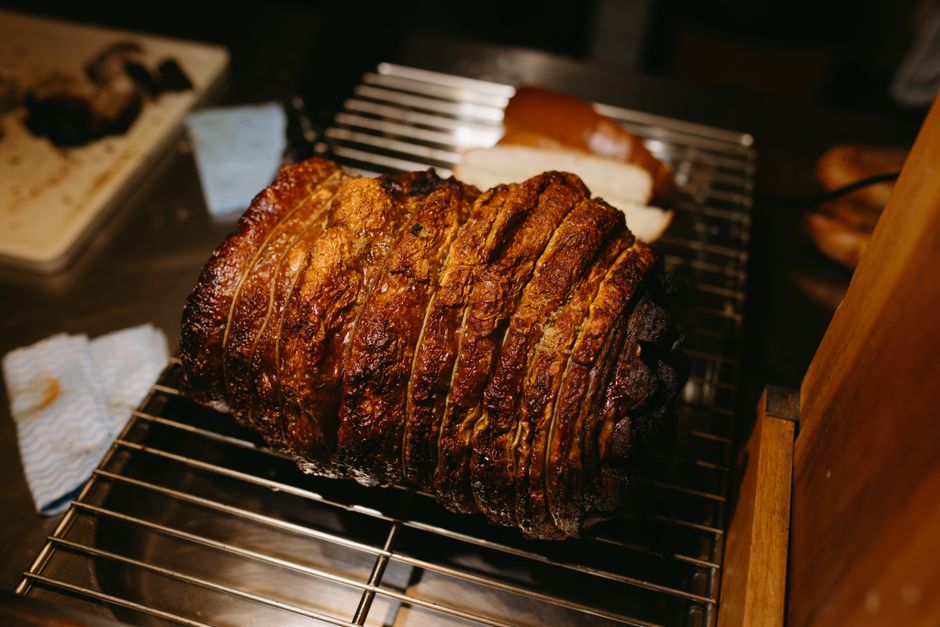
Cooked roast beef will last 3 to 4 days in the refrigerator if stored properly. This is the standard recommendation from the U.S. Department of Agriculture (USDA). After that window, the risk of foodborne illness increases even if the meat looks and smells fine. The clock starts ticking the moment the roast comes out of the oven.
How Long Does Cooked Roast Beef Last In The Fridge Before It Goes Bad?
The USDA sets the safe storage window for all cooked meats at 3 to 4 days. This is not a guess. It is based on how fast bacteria like Staphylococcus aureus and Listeria monocytogenes multiply at standard refrigerator temperatures.
Your fridge should be at or below 40°F (4°C). If your fridge runs warmer, that 3 to 4 day window shrinks. A fridge at 45°F might only keep cooked roast beef safe for 1 to 2 days. Most home refrigerators are set between 37°F and 40°F, which is fine.
The 3 to 4 day rule applies from the time the meat is fully cooked and cooled. Not from when you bought it. Not from when you sliced it. From the moment it hit safe internal temperature and you put it in the fridge.
What Is the Best Way to Store Cooked Roast Beef in the Fridge?
Storage method directly determines how long your roast beef stays safe and edible. The goal is to limit oxygen exposure and prevent cross-contamination. Here is what works best:
- Wrap tightly in aluminum foil or plastic wrap — this keeps air out and moisture in. Exposed meat dries out and develops off-flavors faster.
- Place wrapped meat in an airtight container or resealable bag — double protection reduces the chance of bacteria from other foods getting onto the roast.
- Store on the bottom shelf of the fridge — this is the coldest and most consistent temperature zone. Avoid the fridge door, which warms up each time you open it.
- Slice only what you plan to eat — whole roasts stay moist longer than sliced meat. Cut slices as needed rather than pre-slicing the entire roast.
If you follow these steps, your cooked roast beef will stay safe for the full 3 to 4 days. The texture and flavor will degrade slightly by day four, but it will still be safe to eat.
How Can You Tell If Cooked Roast Beef Has Gone Bad?
Your senses are reliable here. Do not rely on the calendar alone. Check for these signs before eating:
Smell is the first giveaway. Fresh cooked roast beef has a mild meaty aroma. If it smells sour, sulfur-like, or ammonia-tinged, throw it out. That smell means bacteria have already produced waste byproducts.
Texture changes next. Fresh roast beef is firm and slightly moist. If it feels slimy or sticky to the touch, that is bacterial biofilm. Do not rinse it off. Rinsing spreads bacteria around your kitchen. Discard the meat.
Color is less reliable but still useful. Gray or green patches on the surface indicate spoilage. A slight darkening from oxidation is normal, but green or fuzzy spots are mold. Mold means the meat has been contaminated and should be thrown away.
If the meat passes all three checks but is still past day four, the USDA still recommends discarding it. Some pathogens do not change the smell, texture, or color of food. You cannot see or smell Listeria.




Can You Freeze Cooked Roast Beef to Make It Last Longer?
Yes. Freezing stops bacterial growth completely. Cooked roast beef will maintain its best quality for 2 to 3 months in the freezer. It remains safe indefinitely at 0°F, but the texture and flavor will degrade over time.
Freeze the roast beef as soon as it has cooled to room temperature, which should take no more than 2 hours. Wrap it tightly in freezer paper or heavy-duty aluminum foil, then place it in a freezer-safe bag. Squeeze out as much air as possible before sealing.
Thaw frozen roast beef in the refrigerator, not on the counter. Counter thawing brings the outer layers into the danger zone (40°F to 140°F) where bacteria multiply rapidly. Refrigerator thawing takes 24 to 48 hours for a whole roast but keeps the meat safe.
Once thawed, eat the roast beef within 3 to 4 days. Do not refreeze it. Each freeze-thaw cycle damages the meat’s cell structure, making it dry and mealy. It also increases the risk of bacterial growth during the thawing process.
Does the Type of Roast Beef Affect How Long It Lasts?
| Type of Cooked Roast Beef | Fridge Shelf Life (40°F or below) | Notes |
|---|---|---|
| Whole roasted beef (unsliced) | 3–4 days | Stays moist longest. Slice as needed. |
| Sliced roast beef (deli-style or home-sliced) | 3–4 days | Dries out faster. More surface area for bacteria. |
| Roast beef with gravy or au jus | 3–4 days | Gravy can mask spoilage odors. Check meat directly. |
| Store-bought deli roast beef (opened package) | 3–5 days | Some deli meats have preservatives that extend shelf life slightly. |
| Vacuum-sealed cooked roast beef (unopened) | 1–2 weeks | Check package date. Once opened, follow 3–4 day rule. |
The table shows that the biggest difference is between whole roasts and sliced meat. Sliced meat has more surface area exposed to air and bacteria. If you want your roast beef to last the full 4 days, keep it whole as long as possible.
Vacuum-sealed packages are a special case. The lack of oxygen slows bacterial growth significantly. But once you open the package, the clock resets to 3 to 4 days. Do not assume the remaining meat in the opened package lasts longer than that.
Common Misconceptions About Cooked Roast Beef Storage
One common belief is that putting hot roast beef directly into the fridge is dangerous. This is not true. The USDA says you can put hot food in the refrigerator. The risk is that a large hot roast might raise the internal temperature of your fridge temporarily, but modern refrigerators handle this fine. The bigger risk is leaving the roast out on the counter for more than 2 hours.
Another myth is that if the meat still smells fine, it is safe to eat. This is false. Pathogens like Listeria monocytogenes do not produce noticeable odors. The meat can smell perfectly normal and still make you sick. This is why the 3 to 4 day rule exists regardless of how the meat looks or smells.
Some people believe that reheating spoiled meat kills the bacteria and makes it safe. This is partially true but dangerous. Reheating kills the bacteria, but it does not destroy the heat-stable toxins some bacteria produce. Those toxins can still cause food poisoning even after thorough reheating.
Frequently Asked Questions
Can I eat cooked roast beef after 5 days in the fridge?
The USDA recommends discarding cooked roast beef after 4 days. Eating it on day 5 increases your risk of food poisoning even if it looks and smells normal.
How long does cooked roast beef last at room temperature?
Cooked roast beef should not sit at room temperature for more than 2 hours. After that, bacteria multiply rapidly and the meat becomes unsafe to eat.
Can I reheat cooked roast beef that has been in the fridge for 4 days?
Yes, as long as it has been stored properly and is within the 3 to 4 day window. Reheat it to an internal temperature of 165°F to kill any surface bacteria.
Does cooked roast beef last longer if stored in the freezer?
Yes, frozen cooked roast beef stays safe indefinitely and maintains best quality for 2 to 3 months. Thaw it in the refrigerator and eat within 3 to 4 days after thawing.
