
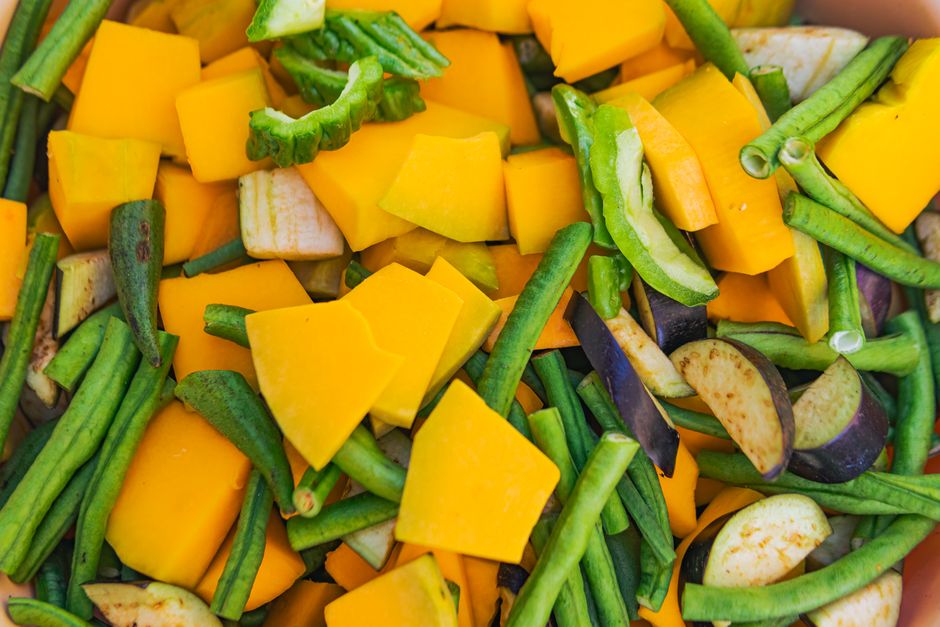
Cooked vegetables will keep in the refrigerator for about three to four days when stored properly. That window comes from food safety guidance used by the U.S. Department of Agriculture and the Food and Drug Administration. After four days, the risk of harmful bacterial growth climbs, even if the food still looks and smells fine. The clock starts the moment the vegetables finish cooking, not the day you notice them in the fridge.
How you cool and store them matters as much as the calendar. A hot dish left out too long or sealed while still steaming can spoil faster than the same food chilled quickly. Here is what actually determines how long cooked vegetables last, and how to tell when they are past their prime.
How Long Can Cooked Vegetables Last In The Fridge?
The standard answer is three to four days for most cooked vegetables stored at 40°F (4°C) or colder. This is the range cited in federal food safety guidance for cooked leftovers in general, and cooked vegetables fall into that category.
Some vegetables push toward the shorter end. Cooked leafy greens, mushrooms, and anything with a high water content tend to break down faster and can get slippery or sour within two to three days. Denser vegetables like cooked carrots, squash, or potatoes often hold up well for the full four days.
Four days is a safety limit, not a freshness guarantee. A dish can be perfectly safe on day three and risky on day five. The bacteria that cause foodborne illness do not always change the taste, smell, or appearance of food. That is the part people get wrong most often.
The three-to-four-day rule applies to the refrigerator. It does not extend to vegetables left sitting on the counter, and it does not apply once a dish has been reheated and cooled again.
Why Do Cooked Vegetables Spoil Faster Than Raw Ones?
Cooking breaks down cell walls. That is what makes vegetables soft and easier to chew, and it is also what makes them more vulnerable. Once those walls are disrupted, moisture escapes, nutrients become more available, and the surface area that bacteria can colonize increases.
Raw vegetables have intact outer layers that slow microbial growth. Cooked vegetables have lost much of that natural protection. They also carry more free water, which supports bacterial multiplication.
The cooking process itself does not sterilize food. Heat kills many microorganisms, but not all of them, and recontamination happens easily through hands, utensils, containers, and the air. A cooked dish is essentially a fresh, moist, nutrient-rich environment once it cools.
This is why cooked vegetables behave more like other cooked leftovers than like the raw produce sitting in your crisper drawer.
What Is the Safest Way to Store Cooked Vegetables?
Cool them quickly, then refrigerate. The goal is to move food through the temperature range where bacteria multiply fastest as fast as reasonably possible. That range is roughly 40°F to 140°F (4°C to 60°C).
Do not leave cooked vegetables at room temperature for more than two hours. If the room is warm, above about 90°F (32°C), cut that to one hour. This two-hour rule is well established in food safety guidance and is one of the most reliable habits you can keep.
Divide large batches into shallow containers so they cool faster. A deep pot of stewed vegetables can stay warm in the center for hours, which gives bacteria a long window. Spreading the food thin speeds cooling.
- Use shallow, airtight containers rather than one deep bowl.
- Refrigerate within two hours of cooking.
- Keep the fridge at 40°F (4°C) or below.
- Leave a little headspace, but seal the container to limit drying and contamination.
- Label with the date so you are not guessing later.
One clarification worth knowing: putting hot food directly in the fridge is generally fine and often safer than letting it sit out to cool. Modern refrigerators can handle a warm container. The old advice to cool everything on the counter first can actually push food into the danger zone for too long.



Does the Type of Vegetable Change How Long It Lasts?
Yes, and the differences are practical. Water content, acidity, and density all affect how quickly a cooked vegetable deteriorates.
| Type of Cooked Vegetable | Typical Fridge Life | What to Expect |
|---|---|---|
| Leafy greens (spinach, kale) | 2 to 3 days | Get limp, watery, or sour quickly |
| Mushrooms | 2 to 3 days | Turn slimy and dark |
| Tomatoes and tomato-based dishes | 3 to 4 days | Acidity offers slight protection |
| Root vegetables (carrots, potatoes, squash) | 3 to 4 days | Hold texture and flavor well |
| Mixed vegetable dishes with sauce or oil | 3 to 4 days | Depends on other ingredients present |
These ranges assume proper refrigeration and clean handling. They are general patterns, not precise cutoffs. A dish with meat, dairy, or eggs mixed in should follow the guidance for the most perishable ingredient, which is usually the animal product.
Acidic dishes tend to resist spoilage slightly better because many bacteria struggle in acidic environments. That is a modest effect, not a license to keep them longer than four days.
How Can You Tell If Cooked Vegetables Have Gone Bad?
Trust your senses, but understand their limits. Visible mold, a sour or off smell, a slimy texture, or a change in color are clear signs to throw the food out. When in doubt, discard it.
The catch is that dangerous bacteria often leave no trace. Food can be contaminated with pathogens and still look, smell, and taste completely normal. This is why the four-day guideline exists as a backstop rather than relying on your nose alone.
Signs that cooked vegetables should be discarded include:
- Any visible mold, including small spots
- A sour, fermented, or rotten odor
- Slimy or unusually sticky texture
- Color changes like darkening, graying, or dulling
- Bubbling or a fizzy appearance, which can signal fermentation
Never taste food to check if it is safe. A small amount of contaminated food can still make you sick, and the pathogens that cause the most serious illness do not announce themselves through flavor.
Can You Freeze Cooked Vegetables to Make Them Last Longer?
Freezing extends the safe storage time well beyond four days. Cooked vegetables can generally be frozen for two to three months and remain safe, though quality declines over time.
Texture is the main casualty. Freezing and thawing breaks down cell walls further, so vegetables that were tender can become mushy. Dishes like soups, stews, and purees freeze better than plain roasted or steamed vegetables.
Cool the food first, then freeze it in airtight containers or freezer bags. Squeeze out excess air to reduce freezer burn. Label with the date.
Thaw in the refrigerator, not on the counter. Once thawed, reheat to steaming hot and eat within the same three-to-four-day window you would use for fresh leftovers. Reheating does not reset the clock on how long food stays safe.
Does Reheating Affect How Long They Last?
Reheating does not extend storage life. It kills some bacteria but does not remove the toxins they may have already produced, and it does not undo the time food spent in the danger zone.
Each time you reheat and cool a dish, you give bacteria another opportunity to multiply during the warm periods. For that reason, it is better to reheat only the portion you plan to eat rather than warming the entire batch repeatedly.
Reheat leftovers to an internal temperature of 165°F (74°C), which is the standard guidance for reheated leftovers. Bring sauces, soups, and gravies to a rolling boil. Once reheated, eat the food promptly rather than letting it sit out again.
If a dish has been in the fridge for four days, reheating it will not make it safe to keep for another four. The four-day window applies to the total time in the refrigerator, not to each round of reheating.
What About Vegetables Cooked in Oil or Sauce?
Added ingredients change the picture. Oil, butter, cream, and meat-based sauces can support microbial growth differently than plain cooked vegetables, and they may go rancid or separate over time.
Dishes with dairy or meat should follow the guidance for those ingredients. In general, that still lands in the three-to-four-day range for refrigerator storage, but the margin for error is smaller. If a creamy or meat-based vegetable dish smells or looks off, discard it without hesitation.
Oil-rich dishes stored cold can solidify or separate. That is a texture change, not necessarily a safety problem, but it makes judging freshness harder. When you cannot tell, err on the side of throwing it out.
Frequently Asked Questions
How long do cooked vegetables last in the fridge?
Most cooked vegetables last three to four days when refrigerated at 40°F (4°C) or colder. Leafy greens and mushrooms tend to spoil sooner, often within two to three days.
Can I eat cooked vegetables after 5 days in the fridge?
It is not recommended. Federal food safety guidance sets four days as the outer limit for cooked leftovers, and the risk of harmful bacterial growth rises after that point even if the food looks fine.
Can I leave cooked vegetables out overnight?
No. Cooked vegetables should not sit at room temperature for more than two hours, or one hour if the room is above 90°F (32°C). Beyond that, bacteria can multiply to unsafe levels.
Do cooked vegetables last longer if I freeze them?
Yes. Freezing extends safe storage to roughly two to three months, though texture often suffers. Thaw them in the refrigerator and reheat to 165°F (74°C) before eating.
