
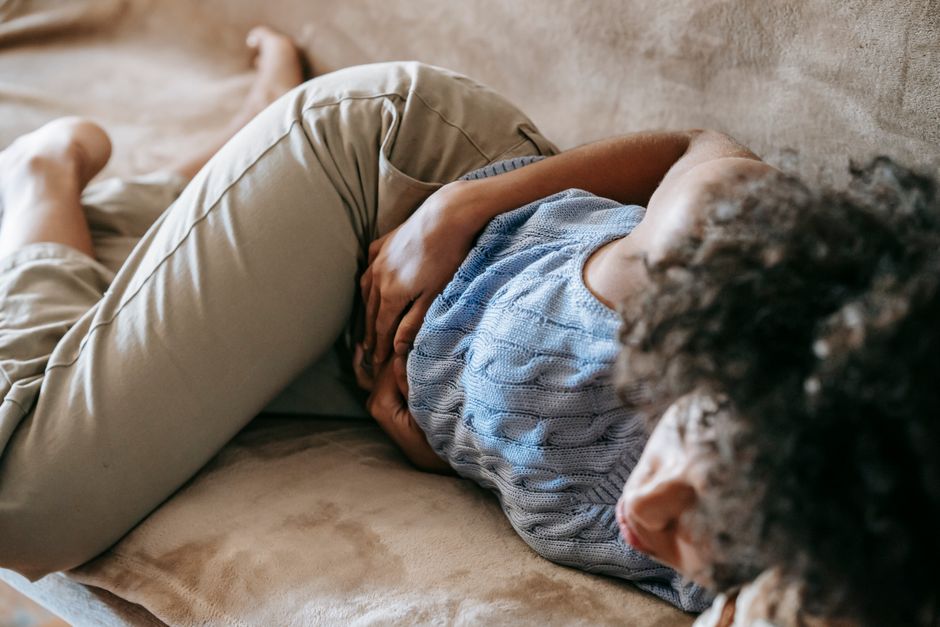
Ovulation pain, often called mittelschmerz, usually lasts anywhere from a few minutes to a few hours. Some women feel it for up to one or two days. It typically happens midway through the menstrual cycle, around day 14 in a 28-day cycle, and it is almost always harmless. The key thing to know is that it should be a mild, one-sided twinge that passes on its own. Pain that is severe, lasts longer than a couple of days, or comes with fever, heavy bleeding, or vomiting is not normal ovulation pain and needs medical attention.
What Is Ovulation Pain And What Causes It?
Ovulation pain is the discomfort some women feel when an ovary releases an egg. It is a real physical event, not a figment of imagination, and it has a fairly well understood mechanism.
Each month, a follicle in one ovary matures and eventually ruptures to release the egg. That rupture stretches the surface of the ovary. The fluid and a small amount of blood that escape from the follicle can also irritate the lining of the abdomen, called the peritoneum. That irritation is what produces the ache or sharp twinge many women notice.
Not everyone feels it. Estimates vary, but a minority of women report noticeable ovulation pain. Some feel it every cycle, others only occasionally, and many never feel it at all. Feeling it or not feeling it says nothing about your fertility.
One detail worth knowing: the pain is usually felt on the side of the ovary that is ovulating that month. Which ovary ovulates is not strictly predictable and does not reliably alternate. So the side can change from cycle to cycle, and that is normal.
How Long Does Ovulation Pain Last?
For most women who feel it, ovulation pain is brief. It can last a few minutes, a few hours, or in some cases up to a day or two. It rarely persists beyond that.
The timing within the cycle is fairly consistent. Ovulation generally occurs about 14 days before the start of the next period, not necessarily on day 14 of the cycle. In a 28-day cycle, that lands around the middle. In longer or shorter cycles, the midpoint shifts accordingly. This is why tracking pain alone is an unreliable way to pinpoint ovulation, especially if your cycles are irregular.
The sensation itself varies. Some women describe a dull ache. Others describe a sudden sharp twinge. Some notice a brief pinch followed by a lingering soreness on one side. The intensity tends to be mild to moderate.
What matters most is the pattern. Ovulation pain that is predictable, mild, one-sided, and short-lived fits the normal picture. Pain that breaks that pattern does not.
What Does Normal Ovulation Pain Feel Like?
Normal ovulation pain is usually mild and localized to one side of the lower abdomen. It may be a sharp, sudden twinge or a dull, cramping ache. It can occasionally radiate slightly to the lower back or thigh on the same side.
A few features help distinguish it from other kinds of pelvic pain:
- It is one-sided, matching the ovary that is ovulating.
- It is short-lived, often resolving within hours.
- It tends to recur around the same point in the cycle.
- It is not accompanied by fever, nausea, vomiting, or unusual bleeding.
- It does not get steadily worse over hours or days.
If your pain matches this pattern and you have had it before, it is very likely just ovulation. If any of these features are missing, it is worth a closer look.





When Should You Worry About Ovulation Pain?
Ovulation pain is not dangerous on its own. But pelvic pain has many possible causes, and some of them are serious. The tricky part is that early symptoms can overlap.
Seek medical care if you notice any of the following:
- Pain that is severe or that stops you from your normal activities.
- Pain that lasts longer than one or two days.
- Pain that gets worse instead of easing.
- Fever or chills.
- Nausea or vomiting.
- Heavy or unusual vaginal bleeding.
- Pain during pregnancy, or any possibility you could be pregnant.
- Dizziness, fainting, or a rapid heartbeat.
- Pain that is not clearly tied to the middle of your cycle.
The pregnancy point deserves emphasis. A pregnancy that implants outside the uterus, called an ectopic pregnancy, can cause one-sided pelvic pain. It is a medical emergency. If there is any chance you are pregnant, one-sided pelvic pain should not be assumed to be ovulation pain.
Other conditions that can mimic ovulation pain include ovarian cysts, appendicitis, urinary tract infections, endometriosis, and pelvic inflammatory disease. These are not things to self-diagnose at home. A clinician can help sort out what is going on.
How Is Ovulation Pain Different From Other Pelvic Pain?
Pelvic pain is a broad category. Ovulation pain is only one small piece of it. Knowing the differences helps you decide whether to wait or to call a doctor.
The table below compares common features. It is a general guide, not a diagnostic tool. Only a clinician can diagnose a specific condition.
| Feature | Ovulation Pain | Other Pelvic Pain (general) |
|---|---|---|
| Timing | Mid-cycle, roughly 14 days before next period | Varies; may be constant or unrelated to cycle |
| Duration | Minutes to about two days | Often longer, sometimes persistent |
| Location | One side, lower abdomen | Can be one side, both sides, or diffuse |
| Severity | Usually mild to moderate | Can range from mild to severe |
| Accompanying signs | None typically | May include fever, vomiting, bleeding, discharge |
One clarification that gets lost in online discussions: ovulation pain does not confirm that ovulation happened. Feeling a twinge does not prove an egg was released, and not feeling one does not mean it was not. If tracking ovulation matters to you, methods like basal body temperature charting, ovulation predictor kits, or clinical monitoring are more reliable than pain alone.
What Helps With Ovulation Pain?
Because ovulation pain is usually mild and brief, many women do not need any treatment. When discomfort is bothersome, some simple measures are commonly used.
A warm compress or heating pad on the lower abdomen can ease the ache. A warm bath may help too. Light activity is generally fine, and some women find gentle movement reduces the discomfort.
Over-the-counter pain relievers are commonly used for menstrual and ovulation-related pain. If you are considering one, talk with a pharmacist or clinician about what is appropriate for you, especially if you take other medications or have any health conditions. This is general information, not a recommendation for your situation.
If ovulation pain is consistently severe or disruptive, that is a reason to see a clinician. Recurrent severe pain may point to something else, such as endometriosis or ovarian cysts, that deserves proper evaluation.
There is no established way to prevent ovulation pain, because it is tied to a normal physiological event. The goal is not to stop ovulation but to understand what is normal for you and to recognize when something is off.
Does Ovulation Pain Mean Anything About Fertility?
Feeling ovulation pain does not mean you are more or less fertile. It is simply a sensation some women get and others do not.
It also should not be used as a birth control method or as a reliable fertility signal. The pain, when present, is a rough clue at best. Sperm can survive in the reproductive tract for several days, and the fertile window spans more than just the day of ovulation. Relying on pain to time or avoid pregnancy is not reliable.
If you are trying to conceive or trying to avoid pregnancy, talk with a clinician about methods that match your goals. Ovulation pain can be a helpful piece of information alongside other tracking methods, but it is not a stand-alone tool.
Frequently Asked Questions
How long does ovulation pain usually last?
For most women it lasts from a few minutes to a few hours, and sometimes up to one or two days. Pain that persists longer than that is not typical and should be checked.
Is ovulation pain on the left or right side?
It is felt on the side of the ovary that is ovulating that cycle. Which ovary ovulates is not strictly predictable and does not reliably alternate, so the side can change from month to month.
When should I worry about ovulation pain?
Worry if the pain is severe, lasts more than a day or two, gets worse, or comes with fever, vomiting, heavy bleeding, or fainting. Any one-sided pelvic pain during possible pregnancy needs urgent care.
Can ovulation pain mean I am pregnant?
No. Ovulation pain happens before a possible pregnancy could implant. If you have one-sided pelvic pain and there is any chance you are pregnant, seek medical care rather than assuming it is ovulation.
