
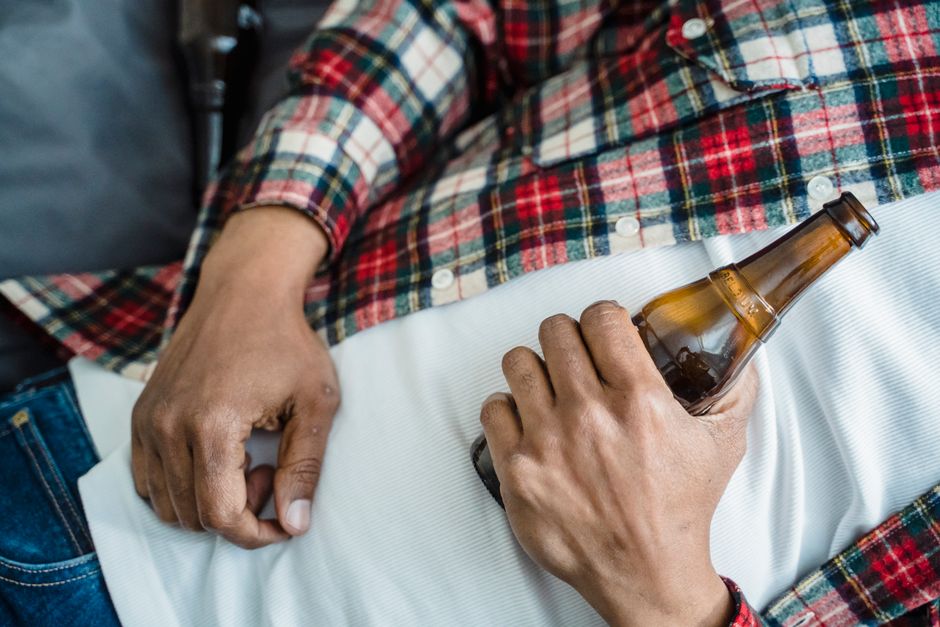
Alcohol leaves your blood at a fairly predictable rate, but the exact detection window depends on the test being used. In most people, alcohol is eliminated from the blood at a rate of about 0.015% blood alcohol concentration (BAC) per hour. A breathalyzer can detect alcohol for up to 24 hours after heavy drinking, while a urine test can pick it up for 12 to 48 hours, and a hair test can detect it for up to 90 days.
How Does the Body Process Alcohol?
When you drink, alcohol moves quickly from your stomach and small intestine into your bloodstream. Your liver does most of the work of breaking it down. A small amount leaves through your breath, sweat, and urine.
Your liver processes about one standard drink per hour. A standard drink is 12 ounces of beer, 5 ounces of wine, or 1.5 ounces of distilled spirits. If you drink faster than your liver can process, your BAC rises and you feel the effects of intoxication.
Several factors change how fast your body clears alcohol. Your weight, sex, age, and how much food you ate matter. So does your overall liver health. People who drink regularly may process alcohol faster than occasional drinkers, but this is not a reliable rule.
How Long Does Alcohol Stay In The Blood Detection Times?
Blood tests detect alcohol directly. The detection window is short because alcohol leaves the bloodstream quickly. Most standard blood tests for alcohol are positive for up to 12 hours after your last drink.
In heavy drinking episodes, alcohol may remain detectable in blood for slightly longer. But by 24 hours after your last drink, a standard blood alcohol test will almost always be negative. This is true even for people who drank heavily the night before.
There is one exception. Some specialized blood tests look for biomarkers of alcohol use rather than alcohol itself. These markers, such as carbohydrate-deficient transferrin (CDT), can remain elevated for two to three weeks after heavy drinking. These tests are not standard and are usually used in medical or legal settings to assess long-term drinking patterns.
How Long Can Breath Tests Detect Alcohol?
Breathalyzers measure alcohol that evaporates from your blood into your lungs. This means breath alcohol closely tracks blood alcohol. For most people, a breathalyzer is positive only while alcohol is still in the bloodstream.
After a single drink, a breathalyzer may be positive for 1 to 2 hours. After heavy drinking, breath alcohol can be detected for up to 24 hours. This is why people sometimes fail a breathalyzer the morning after a night of heavy drinking even when they feel sober.
Feeling sober is not the same as being sober. Your BAC may still be above legal limits even if you slept and feel fine. The only reliable way to know is to test.


How Long Does Alcohol Show Up in Urine?
Urine tests are common in workplace and legal settings. There are two types of urine alcohol tests. One detects alcohol itself, and the other detects ethyl glucuronide (EtG), a byproduct of alcohol metabolism.
Standard urine tests that look for alcohol itself are usually positive for 12 to 24 hours after drinking. In some cases, they may be positive for up to 48 hours. The exact window depends on how much you drank and how hydrated you are.
EtG tests are different. They can detect alcohol use for up to 80 hours after your last drink. Some studies suggest EtG can be positive for even longer after very heavy drinking. EtG tests are sensitive, but they are also controversial because they can produce false positives from non-alcoholic products like mouthwash or certain foods.
How Long Does Alcohol Stay in Hair?
Hair tests look at fatty acid ethyl esters (FAEEs) or EtG that become trapped in hair as it grows. These tests provide the longest detection window of any alcohol test. Hair testing can detect alcohol use for up to 90 days.
Hair tests are not commonly used for routine alcohol screening. They are more typical in legal cases, custody disputes, or monitoring programs where a longer history of drinking is relevant.
Hair testing has limitations. It cannot tell when exactly you drank, only that you drank during the growth period of the tested hair. It also does not measure impairment. A hair test cannot tell if you were intoxicated at any specific moment.
What Factors Affect How Fast Alcohol Leaves Your System?
No method speeds up alcohol elimination. Coffee, cold showers, exercise, and drinking water do not lower your BAC faster. Your liver works at a fixed rate regardless of what you do.
Time is the only factor that reliably lowers your BAC. The rate of elimination is roughly 0.015% per hour. If your BAC is 0.10%, it will take about 6.5 hours to reach zero.
Women often process alcohol slightly slower than men. This is partly because women typically have less body water and lower levels of the enzyme that breaks down alcohol. Body weight matters too. A heavier person has more blood volume, so the same amount of alcohol produces a lower BAC.
Food slows alcohol absorption. If you drink on an empty stomach, alcohol enters your bloodstream faster and your BAC peaks higher. Eating before or during drinking does not speed up elimination, but it does slow absorption, which can keep your peak BAC lower.
How Long Until You Are Sober Enough to Drive?
The legal driving limit in all US states is a BAC of 0.08% for drivers aged 21 and older. Some states have lower limits for commercial drivers and drivers under 21.
If your BAC is 0.08%, it will take roughly 5.3 hours to reach zero. If your BAC is 0.15%, it will take about 10 hours. These are estimates. Your actual time depends on your individual metabolism and other factors.
There is no reliable way to calculate your exact BAC without testing. If you have been drinking, the safest choice is to not drive. Even if you feel fine, your reaction time and judgment may still be impaired.
Can You Speed Up Alcohol Elimination?
No. This is one of the most persistent myths about alcohol. Drinking water, eating food, sleeping, or vomiting does not remove alcohol from your blood faster. These actions may make you feel better, but they do not lower your BAC.
Some products marketed as detox drinks or supplements claim to speed up alcohol clearance. No clinical evidence supports these claims. These products are not regulated for this purpose, and no study has shown they accelerate alcohol metabolism.
The only thing that lowers BAC is time. If you need to pass a breathalyzer or blood test, the only reliable approach is to wait until your body has processed the alcohol.
Why Do Some People Still Test Positive the Morning After?
Heavy drinking the night before can leave your BAC above zero in the morning. This is sometimes called the “morning-after effect.” If you drank to a high BAC and slept for only a few hours, you may still be above legal limits when you wake up.
Sleep does not speed up alcohol metabolism. Your liver keeps working while you sleep, but it works at the same rate as when you are awake. A person who drinks heavily until 2 a.m. and wakes at 7 a.m. may still have a BAC around 0.05% or higher.
This is why many DUI arrests happen in the morning. People genuinely believe they are sober because they slept, but their BAC tells a different story.
Frequently Asked Questions
How long does alcohol stay in your blood for a blood test?
Standard blood tests detect alcohol for up to 12 hours after your last drink. Heavy drinking may extend this to 24 hours at most.
Can a breathalyzer detect alcohol after 24 hours?
No. Breath alcohol closely tracks blood alcohol, and by 24 hours after your last drink, both are typically negative. Breathalyzers measure alcohol evaporating from your blood into your lungs, so the detection window is short.
How long does alcohol stay in urine for a drug test?
Standard urine tests detect alcohol for 12 to 48 hours after drinking. Specialized EtG tests can detect alcohol byproducts for up to 80 hours.
Does drinking water help you pass a breathalyzer faster?
No. Drinking water does not speed up alcohol elimination from your blood. Your liver processes alcohol at a fixed rate, and only time lowers your BAC.
