
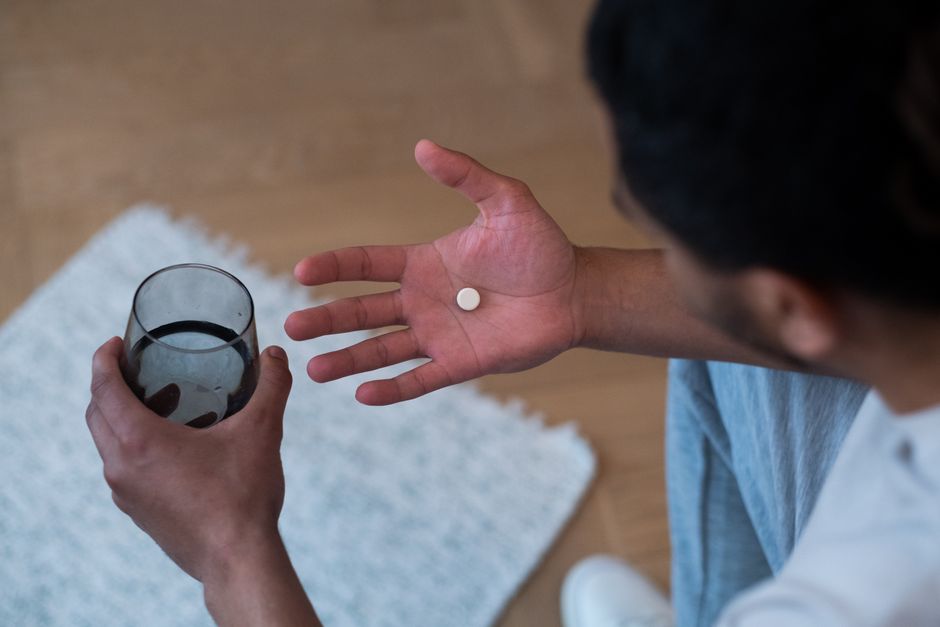
Adderall can stay in your blood for 24 to 48 hours after your last dose. The exact time depends on your dose, your metabolism, and your body’s chemistry. The 46-hour mark falls within that window for many people, but it is not a fixed number for everyone.
How Long Does Adderall Stay in Your Blood?
Blood tests can detect Adderall for about 24 to 48 hours after you take it. For most people, the level drops below detectable limits by the second day. The active ingredient, amphetamine, has a half‑life of roughly 9 to 14 hours in adults with normal kidney function. A half‑life means it takes that long for half of the drug to leave your system. After about four to five half‑lives, the drug is mostly gone. That works out to 36 to 70 hours for complete elimination, but detection in blood usually ends before that because the concentration gets too low to measure.
Some sources quote 46 hours as the typical blood detection window. That number likely comes from older studies that measured the drug in a group of people under controlled conditions. Real‑world times vary. A low single dose may clear faster, while high doses or extended‑release forms can linger longer.
What Determines How Long Adderall Stays in Your System?
Several factors change how your body handles amphetamine. Your urine pH is one of the most important. Acidic urine speeds up elimination, while alkaline urine slows it down. A person with naturally acidic urine could clear Adderall in under 24 hours. Someone with alkaline urine might still have detectable levels past 60 hours.
Your dose matters too. A 5 mg tablet will leave your system sooner than a 30 mg tablet. Taking it every day builds up a steady level that takes longer to eliminate. Your age, liver function, and kidney function also play a role. Older adults and people with liver or kidney disease process the drug more slowly.
Metabolism varies from person to person because of genetics. Some people have a fast version of the enzyme that breaks down amphetamine. Others have a slower version. This can shift the detection window by many hours.
Is the 46‑Hour Claim Accurate?
The 46‑hour number is accurate for some people under certain conditions. It comes from the upper end of the typical blood detection range. But it is not a universal truth. Many people will test negative in blood before 46 hours, and some will test positive after it. The number probably gained attention because it is a memorable middle ground between the common 24‑hour and 48‑hour estimates.
If you see a website or a lab report that says Adderall stays in blood for 46 hours, that is a reasonable general guideline. But do not take it as a guarantee for your own body. The honest answer is that detection varies, and 46 hours is not a hard cutoff.





How Does Adderall Leave Your Body?
Adderall is processed mainly in the liver by an enzyme called CYP2D6. The liver converts amphetamine into inactive metabolites. Those metabolites, along with a small amount of unchanged amphetamine, are then filtered by the kidneys and excreted in urine.
The pH of your urine directly affects how much unchanged amphetamine leaves the body. When urine is acidic, more amphetamine stays in a form that the kidneys can easily remove. When urine is alkaline, more amphetamine is reabsorbed back into the blood, so it stays in your system longer. This is why large doses of vitamin C (which acidifies urine) are sometimes used to speed up elimination, and why antacids can slow it down.
About 30–40% of an oral dose is excreted unchanged in urine within 24 hours in people with normal urine pH. The rest is metabolized and eliminated as inactive compounds.
Detection Windows: Blood vs. Urine vs. Saliva vs. Hair
Different tests look for Adderall in different samples. Each has a different time window.
- Blood: 24 to 48 hours for most people. Some individuals may test positive up to 60 hours.
- Urine: 2 to 4 days after the last dose. Heavy or chronic use can push it to 5 or 6 days. Urine is the most common test because it detects the drug longer than blood.
- Saliva: 1 to 2 days. Saliva tests are less common but becoming more popular for roadside or workplace testing.
- Hair: Up to 90 days. Hair tests detect drug use over months, not days. They cannot pinpoint recent use as accurately as blood or urine.
The 46‑hour figure applies only to blood tests. If you hear someone say Adderall stays in your system for 46 hours, they are probably talking about blood detection.
How Long Do the Effects of Adderall Last?
The effects of Adderall are much shorter than the detection window. Immediate‑release tablets last about 4 to 6 hours. Extended‑release capsules last 10 to 12 hours. After that, the drug is still present in your blood but at levels too low to produce noticeable effects.
This difference is important. You may feel fine 12 hours after a dose, but a blood test could still pick it up 36 hours later. The drug does not have to be active to be detectable.
Can You Speed Up Elimination?
Some people try to flush Adderall out faster by drinking lots of water, taking vitamin C, or exercising. The evidence for these methods is limited. Drinking water helps your kidneys work, but it will not dramatically change how fast the drug is cleared. Taking large amounts of vitamin C can acidify your urine and may reduce detection time, but this has not been proven in large studies. It also carries risks, such as stomach upset or kidney stones if overdone.
There is no reliable way to guarantee faster elimination. The best strategy is to simply stop taking the drug and let your body process it naturally. Do not try to manipulate your urine pH without medical supervision, especially if you take other medications.
Why People Ask About 46 Hours – Common Misunderstandings
The 46‑hour number often confuses people. Some think it means the drug stays active for two days. Others think it means the half‑life is 46 hours. Neither is correct. The half‑life of amphetamine is about 10–13 hours, not 46. The activity lasts less than 12 hours for most doses. The 46‑hour number is simply the upper end of the blood detection window for some people.
Another common myth is that Adderall shows up in a blood test for exactly 46 hours in everyone. That is not true. Tests have different cutoffs. A laboratory with a lower cutoff will detect the drug longer. A test with a higher cutoff may miss it after 24 hours. So 46 hours is a rough estimate, not a scientific constant.
Frequently Asked Questions
How long does Adderall stay in your blood for a drug test?
For a standard blood test, Adderall is detectable for about 24 to 48 hours after the last dose. Some tests may show a positive result up to 60 hours in people with slower metabolism.
Can drinking water flush Adderall out of your blood faster?
Drinking extra water does not significantly speed up elimination of amphetamine. Staying hydrated helps kidney function but will not change the detection window by more than a few hours.
What factors make Adderall stay in your blood longer?
High doses, extended‑release formulations, alkaline urine, older age, and reduced liver or kidney function all prolong detection times.
Does Adderall show up in a blood test after 3 days?
It is unlikely. By 72 hours, most people will have levels below the cutoff for standard blood tests. Only people with very slow metabolism or very high doses might still test positive.
