
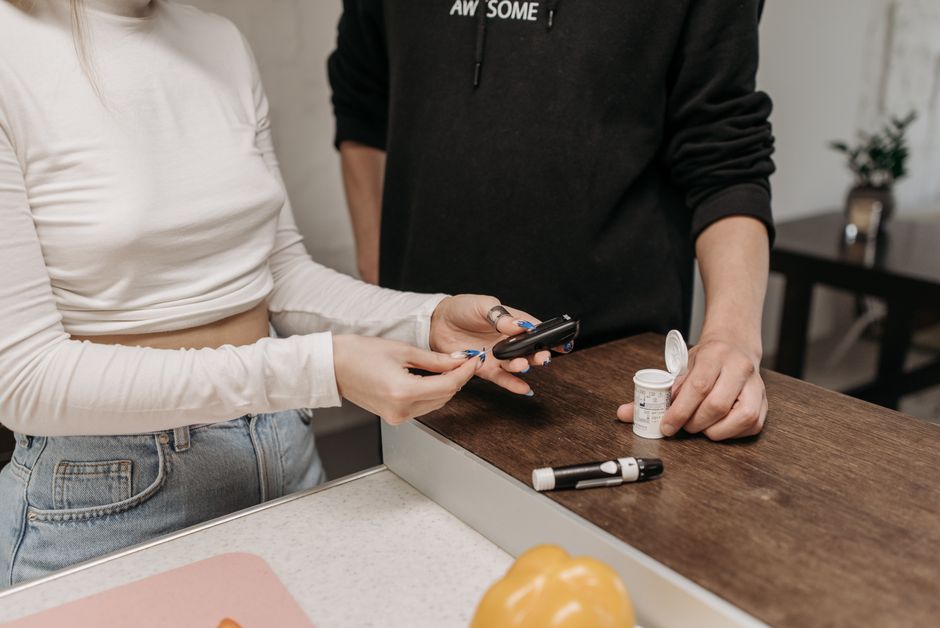
How long a continuous glucose monitor lasts depends on the device. Most sensors are approved for 7 to 15 days of continuous wear, and the reusable transmitter or receiver that powers them typically lasts 90 days to a year or more. After the sensor’s approved window ends, it has to be replaced — even if it still seems to be working.
That gap between how long a sensor is approved to last and how long it might physically keep working is one of the most misunderstood parts of CGM use. The number on the box is not a suggestion. It is the window the manufacturer tested and the regulator cleared.
How Long Do Continuous Glucose Monitors Last?
A CGM is not one device. It is at least two, and often three, each with its own lifespan.
The sensor is the small patch that sits on your skin with a thin filament under it. This is the part that expires. Most sensors on the US market are approved for 7, 10, 14, or 15 days of wear, depending on the brand and model. A few newer sensors are cleared for longer.
The transmitter is the reusable piece that snaps into or over the sensor and sends readings to your phone or receiver. Transmitters generally last around 90 days, though some are designed to last longer or to be recharged.
The receiver or app is the display. A dedicated handheld receiver can last years. If you use a smartphone app, the “lifespan” is really just how long the app stays compatible with your phone’s operating system.
When people ask how long a CGM lasts, they usually mean the sensor. That is the part you replace most often and the part with the firmest expiration date.
Why Do CGM Sensors Have an Expiration Date?
The expiration date reflects what the manufacturer tested and what regulators reviewed. It is not arbitrary.
Over time, the enzyme or chemical reaction inside the sensor that detects glucose in the fluid under your skin can drift. Readings may become less accurate. The adhesive also breaks down, and the filament site can develop irritation or inflammation that affects the reading.
Accuracy is the main concern. A sensor that is drifting can tell you your glucose is stable when it is not. That matters most for people making treatment decisions based on the number.
There is also an infection-control reason. Any device that breaks the skin carries some risk of local infection or skin irritation, and that risk grows the longer a site is left in place.
Can You Wear a CGM Sensor Longer Than Approved?
Some people do extend sensor wear beyond the labeled window, and some report that readings still look reasonable. That does not make it a safe or reliable practice.
Using a sensor past its approved wear time means you are relying on a device outside the conditions it was tested under. Accuracy is not guaranteed, and in some cases it can degrade meaningfully. There is no clinical guideline that supports extending wear time, and manufacturers generally advise against it.
If cost or supply is the reason you are considering stretching a sensor, that is worth raising with your clinician or the manufacturer directly. Many manufacturers have patient assistance programs, and insurance coverage for CGM has expanded in recent years for people with diabetes.



What Affects How Long a CGM Actually Lasts?
Two sensors of the same model can behave differently on two different people. A few factors reliably matter.
- Adhesion and skin type. Oily, sweaty, or very dry skin can shorten how long the patch stays stuck. So can frequent swimming or heavy sweating.
- Placement. Sensors are approved for specific sites, usually the back of the upper arm or the abdomen. Using an unapproved site can affect both accuracy and how long the sensor stays on.
- Calibration and interference. Some substances, including high doses of vitamin C or certain medications, can interfere with certain sensor chemistries. This varies by brand.
- Compression. Lying on a sensor can cause a false low reading, often called a compression low. It does not shorten sensor life, but it can make you think the sensor has failed when it has not.
- Phone and app compatibility. If your phone updates its operating system and the app is not yet compatible, your CGM can effectively stop working even though the sensor is fine.
How Long Do CGM Transmitters and Receivers Last?
Transmitters are the reusable half of the system, and their lifespan is measured in months, not days.
Most transmitters are designed to last around 90 days before they need to be replaced. Some systems use a rechargeable transmitter that can last considerably longer. A dedicated handheld receiver can last years if it is cared for.
The transmitter has a battery and internal electronics, and both degrade. When a transmitter reaches the end of its rated life, the system usually prompts you to replace it. Ignoring that prompt is not recommended.
One practical note: transmitter and sensor lifespans do not line up neatly. You may go through several sensors before a single transmitter needs replacing. That mismatch is normal and not a sign of a problem.
How Do CGM Lifespans Compare Across Devices?
Sensor wear times vary by brand and model. The table below shows the general ranges you will see across the US market, not the specifics of any one product.
| Component | Typical Approved Lifespan | What Ends Its Life |
|---|---|---|
| Sensor | 7 to 15 days (varies by model) | Approved wear window, accuracy drift, adhesive failure |
| Transmitter | About 90 days, longer for rechargeable models | Battery and electronics |
| Handheld receiver | Several years | Battery, hardware failure |
| Smartphone app | Until OS incompatibility | Software updates, app support |
Always check the label and the app for your specific device. Approved lifespans change as manufacturers release new versions and as regulators clear longer wear times.
What Happens When a CGM Sensor Expires?
The system will alert you. Most CGMs display a countdown and then stop reporting once the sensor reaches its approved end.
To keep monitoring, you remove the old sensor, apply a new one, and start it. Many sensors need a warm-up period of about an hour before they begin reporting readings. During that window, you will not have CGM data.
If you rely on CGM readings to make treatment decisions, that gap matters. It is worth planning sensor changes at a time when you can check your glucose another way, such as with a fingerstick meter.
Some people rotate sensor sites to give skin time to recover. That is a reasonable practice and one many clinicians recommend, though the ideal rotation schedule is not firmly established in guidelines.
Does Insurance Cover CGM Replacement?
Coverage varies widely, and this is where the practical lifespan of a CGM becomes a financial question as much as a technical one.
Insurance generally covers CGM for people with diabetes who meet certain criteria, and coverage has expanded in recent years. How often you can refill sensors depends on your plan, your diagnosis, and your clinician’s documentation.
If you are paying out of pocket, the cost of replacing sensors on schedule can add up quickly. That is a real constraint, and it is worth discussing openly with your care team rather than stretching sensors in ways that could compromise your readings.
Do CGMs for Non-Diabetics Last the Same?
The hardware is the same, so the sensor lifespan is the same. What differs is the evidence base.
CGMs are cleared by regulators for people with diabetes, and that is where the clinical evidence for improved outcomes is strongest. Use by people without diabetes — sometimes marketed for general wellness or metabolic tracking — is a different situation.
The sensors still expire on the same schedule. But whether the data provides meaningful benefit for someone without diabetes is not well established. Some research suggests CGM can help people see how specific foods affect their glucose, but whether that translates into lasting health improvements is not confirmed by large trials.
If you are considering a CGM without a diabetes diagnosis, it is worth being clear-eyed about what the device can and cannot tell you.
Frequently Asked Questions
How long does a CGM sensor last?
Most CGM sensors are approved for 7 to 15 days of wear, depending on the brand and model. The sensor must be replaced once it reaches that approved window, even if it still appears to be working.
How long does a CGM transmitter last?
Most transmitters last about 90 days before they need to be replaced, though some rechargeable models last longer. The transmitter lifespan is measured in months, not days.
Can I wear a CGM sensor longer than the approved time?
Some people do, but there is no clinical guideline supporting it and accuracy is not guaranteed past the approved window. Manufacturers generally advise against extending sensor wear.
Why does my CGM stop working before the sensor expires?
Common causes include adhesive failure, a transmitter at the end of its life, or a phone app that is no longer compatible with your device’s operating system. Check the transmitter status and app compatibility before assuming the sensor has failed.
