
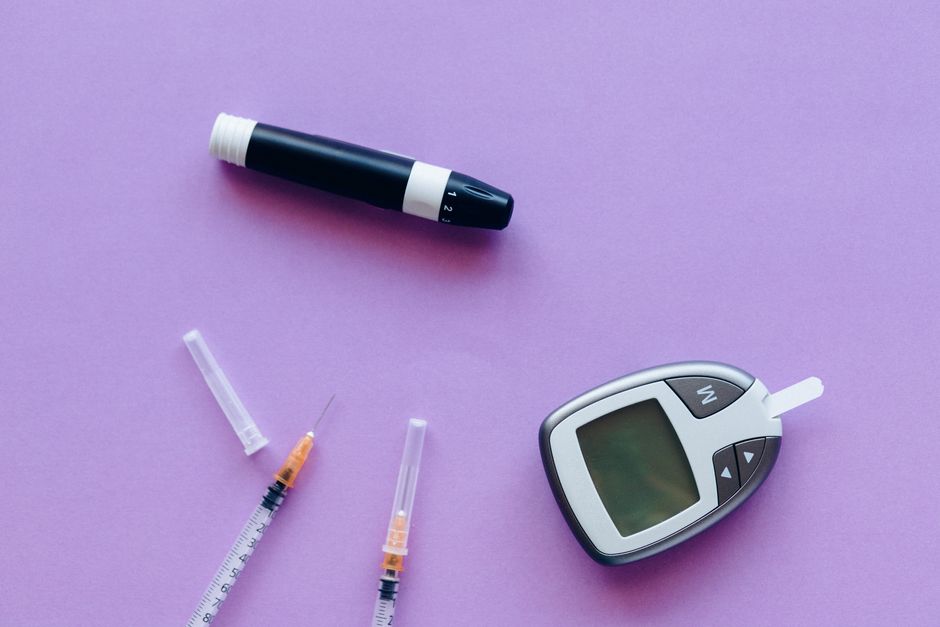
Continuous glucose monitors (CGMs) detect hypoglycemia by measuring the glucose level in the fluid surrounding your cells, called interstitial fluid, every one to five minutes. A tiny sensor inserted just under the skin sends this data to a receiver or smartphone app, triggering an alarm when glucose drops below a set threshold. This real-time tracking catches dangerous lows that fingerstick tests might miss, especially during sleep or exercise.
How Does a Continuous Glucose Monitor Actually Measure Glucose?
A CGM uses a small, flexible filament that sits in the interstitial fluid just beneath your skin. This filament contains an enzyme called glucose oxidase. When glucose in the fluid touches this enzyme, a small electrical current is created.
The sensor measures this current and converts it into a glucose reading. This process happens automatically, usually every one to five minutes, depending on the device. The reading is then sent wirelessly to a receiver, a smartphone, or a smartwatch.
It is important to understand that CGMs do not measure blood glucose directly. They measure glucose in interstitial fluid. This fluid lags behind blood glucose by about 5 to 15 minutes. This delay matters most when glucose is changing rapidly, like after a meal or during intense exercise.
How Do CGMs Tell You Your Glucose Is Dropping Too Low?
The device uses two main features to detect hypoglycemia: a threshold alarm and a rate-of-change arrow. The threshold alarm goes off when your glucose level falls below a number you set, typically around 70 mg/dL. This is the direct alert for a low.
The rate-of-change arrow is just as important. It shows whether your glucose is steady, rising, or falling, and how fast. A single downward arrow means a slow drop. Two downward arrows mean a rapid drop. This gives you a warning before you even hit the low threshold.
Many modern CGMs also have predictive alerts. These use your current glucose level and the rate of change to estimate when you will reach a low. Some devices can warn you 20 to 30 minutes before you actually get there. This gives you time to eat something and prevent the low entirely.
How Accurate Are CGMs for Detecting Low Blood Sugar?
Accuracy for CGMs is measured by something called the Mean Absolute Relative Difference (MARD). A lower MARD percentage means higher accuracy. Most current CGMs have a MARD between 8% and 10%. For comparison, a standard fingerstick meter has a MARD of about 5% to 6%.
Here is the honest part: CGMs are slightly less accurate than fingersticks, especially in the low range. A study published in Diabetes Technology & Therapeutics found that CGM accuracy can decrease when glucose is below 70 mg/dL. The sensor might read 65 mg/dL when your blood glucose is actually 55 mg/dL.
This does not mean CGMs are unreliable. It means they are a trend tool, not a perfect measurement. The real power is seeing the direction and speed of the change. If your CGM says you are at 75 mg/dL and dropping fast, you should treat it as a low even if a fingerstick says 85 mg/dL.
| Feature | Fingerstick Meter | Continuous Glucose Monitor |
|---|---|---|
| What it measures | Blood glucose directly | Interstitial fluid glucose |
| Measurement frequency | Each time you prick | Every 1-5 minutes automatically |
| Accuracy in low range | Higher (MARD ~5-6%) | Slightly lower (MARD ~8-10%) |
| Trend information | None | Rate-of-change arrows and predictive alerts |
| Alarms for lows | No | Yes, threshold and predictive |


What Causes False High or False Low Readings on a CGM?
False low readings, called compression lows, happen when you put pressure on the sensor. This usually occurs during sleep. If you roll over and lie directly on top of the sensor, it can temporarily read much lower than your actual glucose. The reading typically corrects itself within 15 to 30 minutes after you shift position.
False high readings can happen for a few reasons. Dehydration is a common cause. If the interstitial fluid does not have enough water, the sensor may read higher than reality. Acetaminophen (Tylenol) can also interfere with older CGM models, though newer ones like the Dexcom G7 and Freestyle Libre 3 have largely fixed this issue.
It is also worth knowing that some people report inaccurate readings during the first 12 to 24 hours after inserting a new sensor. The body needs a little time to adjust to the foreign object. This is why most devices have a warm-up period, and many users find the second day is more accurate than the first.
If your CGM reading does not match how you feel, always confirm with a fingerstick. This is standard medical advice for anyone using a CGM, especially when making treatment decisions for hypoglycemia.
Do CGMs Work for People Without Diabetes Who Want to Track Glucose?
This is a growing trend, especially among people interested in metabolic health, weight loss, or athletic performance. Companies now market CGMs directly to people without diabetes. The question is whether the data is useful for them.
Research on this is still limited. For a person without diabetes, blood glucose typically stays within a healthy range of 70 to 140 mg/dL. Some studies suggest that even non-diabetic individuals can have brief dips into the 50s or 60s after high-carb meals or intense exercise without it being dangerous. These are called reactive hypoglycemic episodes.
The evidence for using CGMs to improve health in non-diabetic people is mixed. Some people report that seeing the data helps them choose better foods and avoid energy crashes. However, there is no strong clinical evidence that this leads to better long-term health outcomes in people without blood sugar problems.
There is also a risk of unnecessary anxiety. Seeing normal glucose dips or sensor noise can make someone think they have a problem when they do not. As of 2026, the American Diabetes Association does not recommend CGMs for people without diabetes. If you are considering it, talk to your doctor first about what the data will actually mean for you.
What Should You Do If Your CGM Alerts You to a Low?
First, confirm the reading with a fingerstick if you can. This is especially important if you do not feel symptoms of low blood sugar. Symptoms include shakiness, sweating, confusion, and rapid heartbeat. If you feel fine but the CGM says you are low, the sensor might be wrong.
If the reading is confirmed or you have symptoms, treat the low immediately. The standard rule is the 15-15 rule: eat 15 grams of fast-acting carbohydrates, wait 15 minutes, and recheck. Fast-acting carbs include glucose tablets, fruit juice, regular soda, or hard candy. Do not eat chocolate or cake, because the fat slows down sugar absorption.
After treating, do not just rely on the CGM trend. Wait until you feel better and the reading has clearly moved above your low threshold. If your glucose does not rise after two treatments, seek medical help. This can be a sign of a more serious problem.
It is also smart to review the data later. Look at what caused the low. Was it too much insulin? A missed meal? Unusual exercise? Most CGM apps let you add notes to your data. Over time, this helps you and your doctor find patterns and adjust your treatment plan to avoid future lows.
Common Misconceptions About CGMs and Hypoglycemia
A common myth is that a CGM can replace fingersticks completely. This is not true. While CGMs reduce the need for fingersticks, the FDA still requires users to do a fingerstick before making treatment decisions in certain situations, especially when symptoms do not match the CGM reading. Always follow your device’s instructions.
Another misconception is that a CGM will alert you to every low. CGMs are very good at detecting lows, but no device is perfect. Sensor errors, signal loss, or simply not hearing the alarm can mean a low goes unnoticed. This is why people living alone or sleeping alone should have a backup plan, like a family member who can check on them.
Some people also think a CGM is a cure for hypoglycemia unawareness, a condition where a person no longer feels the symptoms of a low. CGMs are a powerful tool for this, but they do not fix the underlying problem. They can help you regain some awareness over time by preventing severe lows, but the condition itself requires careful management with a healthcare team.
Frequently Asked Questions
How long does a CGM sensor last before needing replacement?
Most CGM sensors last between 7 and 14 days, depending on the brand and model. The Dexcom G7 lasts 10 days, and the Freestyle Libre 3 lasts 14 days.
Can you shower or swim with a CGM sensor on?
Yes, most modern CGMs are water-resistant and can be worn during showering, swimming, and exercise. Check your device’s manual for specific depth and duration limits.
Will a CGM work if you are severely dehydrated?
Dehydration can cause inaccurate readings because the interstitial fluid volume changes. It is best to stay well-hydrated for the most reliable data from your CGM.
Do insurance plans cover CGMs for people without diabetes?
Most insurance plans only cover CGMs for people with diabetes who meet specific criteria, such as using insulin. Coverage for non-diabetic use is rare and typically requires out-of-pocket payment.
