
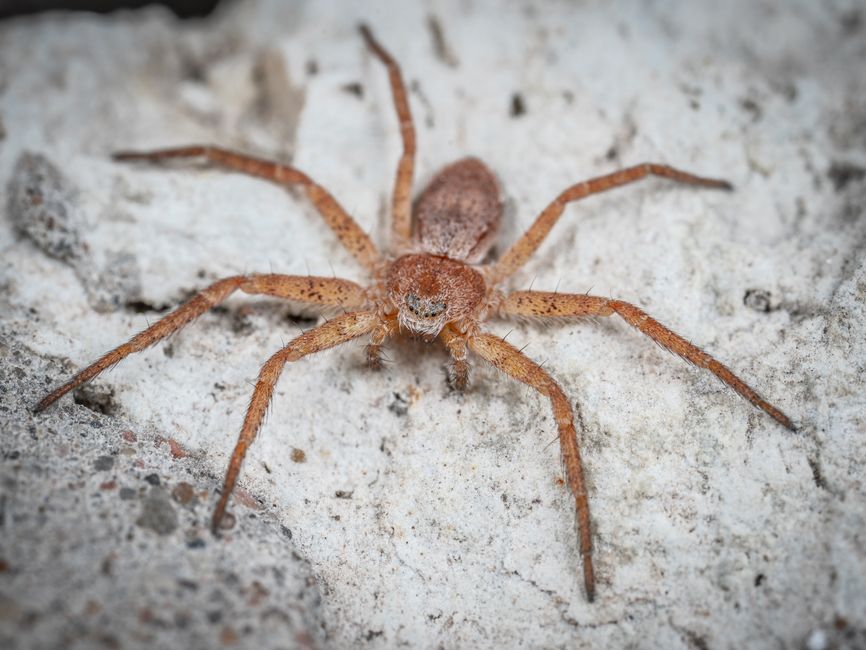
Brown recluse spider venom works by destroying tissue and blood cells at the bite site, and in rare cases, it can trigger a body-wide reaction. The venom contains an enzyme called sphingomyelinase D, which attacks the membranes of skin cells, red blood cells, and the immune cells that arrive to fight the bite. This damage can cause the skin and underlying tissue to die, forming an open ulcer that can take weeks or months to heal.
What Is In Brown Recluse Venom?
The brown recluse spider carries a venom that is unusual among spiders found in the United States. Most spider venoms contain neurotoxins that attack the nervous system. Brown recluse venom is different. It is dermonecrotic, meaning it kills skin and tissue cells.
The main active component is an enzyme called sphingomyelinase D. This enzyme breaks down sphingomyelin, a fat-like molecule that is a key part of cell membranes. When the enzyme destroys this molecule, the cell membrane falls apart and the cell dies.
This process does not stay contained. The death of cells triggers an intense inflammatory response. The body sends white blood cells to the area to clean up the damage, but in this case, those immune cells also get destroyed by the venom. Their death releases more toxic contents into the tissue, which causes more damage. This is why a brown recluse bite can keep getting worse over the first several days rather than improving.
How Does Brown Recluse Venom Work In The Body?
The venom has two main effects on the body: local tissue destruction and, less commonly, a systemic reaction that affects the whole body.
Locally, the venom causes direct cell death at the bite site. Blood vessels in the area are damaged, which reduces blood flow to the tissue. Without adequate blood supply, the tissue begins to die from lack of oxygen. This combination of direct cell destruction and reduced blood flow is what leads to the characteristic necrotic ulcer.
Systemically, the venom can cause red blood cells to break apart, a condition called hemolysis. This is rare, occurring in a small percentage of bites. When red blood cells rupture, they release hemoglobin into the bloodstream. Large amounts of free hemoglobin can overwhelm the kidneys and lead to kidney damage or kidney failure. This systemic reaction typically appears within the first 24 to 72 hours after the bite.
What Does A Brown Recluse Bite Look Like?
Many brown recluse bites are mild and cause no more than a small red bump that heals on its own. The dramatic, decaying wound that people associate with the brown recluse happens in a minority of cases.
When tissue destruction does occur, the bite often follows a recognizable pattern. In the first few hours, there is redness and pain at the site. Over the next 12 to 24 hours, a blister may form. The center of the bite can turn dark blue or purple as tissue dies. In severe cases, the dead tissue sloughs off, leaving an open ulcer.
A common description is the “red, white, and blue” sign. The outer area is red from inflammation, the middle ring is pale from reduced blood flow, and the center is dark blue or purple from dying tissue. This pattern is suggestive of a brown recluse bite but is not proof. Other conditions, including bacterial infections and other spider bites, can look similar.




When Do Symptoms Appear?
Most people do not feel the bite when it happens. The brown recluse is a shy spider that bites only when pressed against skin, such as when it gets trapped in clothing or bedding. The bite itself is often described as a mild sting or nothing at all.
Symptoms typically begin within 2 to 8 hours. Pain, redness, and itching develop at the site. Over the next 24 to 72 hours, the bite can become more painful as tissue damage progresses. Systemic symptoms, when they occur, usually appear within this same window.
If you were bitten and have no symptoms after 24 hours, the bite is unlikely to cause significant tissue damage. Most bites resolve on their own without medical intervention.
When Is A Brown Recluse Bite A Medical Emergency?
Most brown recluse bites do not require emergency treatment. The majority heal without complications, though healing can take weeks. However, certain symptoms require immediate medical attention.
Seek emergency care if you develop fever, chills, nausea, body aches, or dark-colored urine. These can be signs of the systemic reaction where red blood cells are breaking apart. Dark urine is especially concerning because it may indicate that the kidneys are being overwhelmed. Other warning signs include a rapidly enlarging wound, severe pain, or signs of a spreading bacterial infection.
Children and older adults are at higher risk for severe reactions. People with weakened immune systems or chronic illnesses may also have worse outcomes. If a child is bitten and develops any concerning symptoms, seek medical care promptly.
How Is A Brown Recluse Bite Treated?
There is no antivenom for brown recluse bites in the United States. Treatment focuses on wound care and managing symptoms. This is an important point because many online sources overstate the effectiveness of various home remedies.
For a mild bite, standard care includes cleaning the wound with soap and water, applying a cold compress to reduce pain and swelling, and elevating the affected limb. Over-the-counter pain relievers such as acetaminophen or ibuprofen can help with discomfort. Keeping the wound clean reduces the risk of secondary bacterial infection.
No study has confirmed that any home remedy, including electric shock, vitamin supplements, or topical herbs, prevents tissue destruction. These treatments are not supported by evidence. Some clinicians recommend early surgical removal of the bite site, but current consensus is that surgery is not helpful in the acute phase and may actually cause more damage. Surgical debridement, when needed, is delayed until the wound has stabilized, which can take several weeks.
For systemic reactions, treatment is supportive. Patients may require IV fluids, blood transfusions, or dialysis if the kidneys are affected. These severe reactions are rare but require hospital-level care.
How Common Are Severe Brown Recluse Bites?
Severe reactions are the exception, not the rule. Research consistently shows that a large percentage of suspected brown recluse bites cause only minor symptoms. One reason for this is that brown recluse spiders do not always inject venom when they bite. “Dry bites,” where no venom is released, are common.
Even when venom is injected, the amount is small. A single brown recluse bite delivers only a tiny volume of venom, and the severity of the reaction depends on how much venom enters the skin and how deeply it is deposited. Bites that occur through clothing may inject less venom than those directly on bare skin.
It is also worth noting that brown recluses are not aggressive. They bite defensively when trapped against skin. Most bites occur when a spider is inside a shoe, glove, or bed sheet and gets pressed against the person. Checking shoes and shaking out clothing in areas where brown recluses live can reduce the risk of bites.
How Is A Brown Recluse Bite Diagnosed?
Diagnosis is primarily clinical, meaning it is based on the appearance of the wound and the circumstances of the bite. There is no reliable blood test or wound swab test that confirms a brown recluse bite in a clinical setting.
Doctors look for several factors. The person must live in or have traveled to an area where brown recluses are known to live. The spider must have been seen, or the bite pattern must be consistent. The wound must develop in a way that matches the typical progression of a recluse bite.
Importantly, many wounds are incorrectly attributed to brown recluse bites. Bacterial infections, diabetic ulcers, and other spider bites can all produce similar skin lesions. In areas where brown recluses are not native, a brown recluse bite is highly unlikely. The brown recluse is found primarily in the south-central United States, ranging from Nebraska to Ohio and south to Texas and Georgia. Outside this range, other causes of skin ulcers should be considered first.
Frequently Asked Questions
Can a brown recluse bite kill you?
Death from a brown recluse bite is extremely rare. Fatalities have been reported, mostly in children, but the risk is very low with proper medical care.
How long does it take for a brown recluse bite to heal?
Mild bites heal within 2 to 3 weeks. Severe wounds with tissue loss can take several months to heal and may require skin grafting.
Should I go to the ER for a brown recluse bite?
Go to the emergency room if you develop fever, chills, dark urine, or a rapidly worsening wound. For a small, painless bite without other symptoms, contact your doctor for guidance.
Can a brown recluse bite cause permanent damage?
Yes, severe bites can leave permanent scarring and, in rare cases, cause muscle or joint damage if the wound is near a joint. Kidney damage from the systemic reaction can also have lasting effects.
