
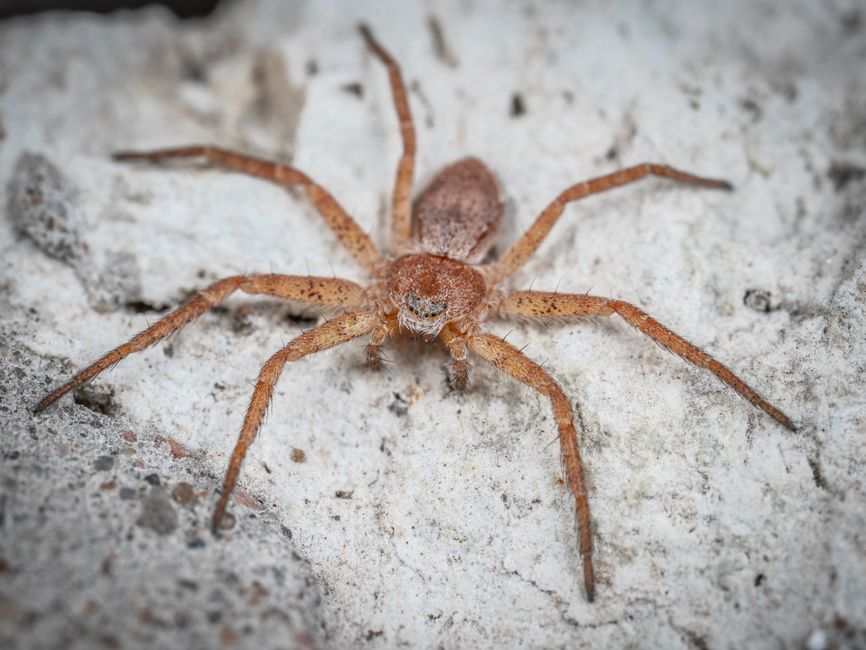
Brown recluse spiders do make webs, but they are not the classic organized webs most people picture. Instead of the large, circular orb webs or the flat sheet webs of other spiders, a brown recluse builds a loose, irregular, and messy web. These webs are used for resting and molting, not for catching prey. Understanding what these webs look like, and where they are found, is a key part of identifying a potential infestation and staying safe.
What Does a Brown Recluse Web Actually Look Like?
If you are looking for a symmetrical web, you will not find it with a brown recluse. Their webs are described as irregular and tangled. They often appear as a dense, cotton-like mass of silk that is off-white or gray in color.
These webs are not designed to trap flying insects. The brown recluse is a hunting spider that actively stalks its prey at night. The web serves a different purpose entirely. It provides a secure retreat where the spider can hide during the day, rest, and safely shed its exoskeleton during molting.
The web is often built in corners, behind furniture, or in cluttered areas. It is not sticky in the same way an orb-weaver’s web is. The primary function is shelter, not capture.
Where Do Brown Recluse Spiders Build Their Webs?
Brown recluse spiders prefer warm, dry, and undisturbed environments. Indoors, this means they are commonly found in:
- Attics and basements
- Closets and storage boxes
- Behind furniture and baseboards
- Inside shoes, clothing, and bedding that has been left undisturbed
- In garages and sheds
Outdoors, they are typically found under rocks, logs, and loose bark. The key factor is seclusion. They build their webs in areas where they will not be disturbed by humans or other predators. This preference for hiding is the reason they are called “recluses.”
Do Brown Recluse Webs Help Identify an Infestation?
Finding a web alone is not enough to confirm a brown recluse infestation. Many other spider species build irregular webs. However, the location and structure of the web can be a strong clue when combined with other evidence.
If you find a loose, tangled web in a dark corner of a closet or basement, it is worth investigating further. The presence of the spider itself, or the telltale shed skins (exuviae) left near the web, is more reliable evidence. Brown recluse spiders molt multiple times in their lives and often leave these pale, translucent exoskeletons near their retreats.
The most reliable way to identify a brown recluse is by looking at the spider itself. It has a distinctive dark, violin-shaped marking on its back, with the neck of the violin pointing toward the abdomen. It also has six eyes arranged in three pairs, unlike most spiders which have eight eyes. These physical features are the definitive identifiers, not the web.
How Does the Brown Recluse Hunt if Not With a Web?
The brown recluse is a nocturnal hunter. It leaves its web at night to actively search for food. Its diet consists mainly of small insects like crickets, cockroaches, and other spiders.
It does not use the web to ensnare prey. Instead, it relies on speed and its venom to subdue victims. When it bites, the venom contains enzymes that break down tissue. This is a hunting strategy, not a defensive one. The spider uses its web purely as a home base.
This hunting method is important to understand. It means that simply removing webs will not solve a brown recluse problem. You must address the spider population itself and the conditions that attract them.
Are Brown Recluse Webs Dangerous?
The web itself is not dangerous. It is not toxic, and simply touching it poses no health risk. The danger comes from the spider that lives in the web.
A brown recluse will only bite if it feels threatened or is pressed against the skin. This often happens when a person puts on clothing or shoes that have been left on the floor, or when they reach into a cluttered area where the spider is hiding. The web can serve as a warning sign to check an area before reaching in blindly.
Most brown recluse bites are minor and heal without medical treatment. However, some bites can cause significant tissue damage, known as loxoscelism. In rare cases, this can lead to a deep, slow-healing ulcer. If you suspect you have been bitten by a brown recluse, it is important to clean the wound and seek medical advice, especially if pain or skin changes develop.
How to Safely Remove Brown Recluse Webs and Spiders
If you find a web you suspect belongs to a brown recluse, do not panic. The first step is to confirm the spider’s presence. Use a flashlight to inspect the area carefully.
For a single web, you can remove it with a vacuum cleaner. This is a safe way to remove both the web and any spider or eggs that may be present. After vacuuming, seal the vacuum bag in a plastic bag and dispose of it outside.
For larger infestations, professional pest control is often necessary. Brown recluses are resilient, and eliminating them requires a comprehensive approach that includes reducing clutter, sealing cracks and gaps, and applying residual insecticides in targeted areas. This is a job best left to professionals who have the proper equipment and knowledge.
Reducing clutter is the most effective prevention method. Boxes, piles of paper, and unused clothing provide ideal harborage for these spiders. By removing these hiding spots, you make your home less attractive to them.
Do All Recluse Spiders Build the Same Kind of Web?
There are several species of recluse spiders in the United States, but the brown recluse (Loxosceles reclusa) is the most common and widespread. Other species, like the desert recluse and the Mediterranean recluse, build similar irregular webs.
All members of the Loxosceles genus share the same general web-building behavior. They construct loose, irregular retreats in hidden places. The venom toxicity can vary between species, but the web structure is consistent across the genus.
This consistency is useful for identification. If you find an irregular web in a dark corner, it is a sign that a recluse spider might be present, regardless of the exact species.
Frequently Asked Questions
Do brown recluse spiders make webs in the open?
No, they prefer to build webs in hidden, undisturbed areas like corners, behind furniture, and in clutter.
Can you identify a brown recluse by its web alone?
No, the web is too similar to other spider species, so you need to see the spider’s violin marking or eye pattern to confirm.
What should I do if I find a brown recluse web?
Carefully inspect the area with a flashlight to confirm the spider is present, then vacuum up the web and any spider you see.
Is a brown recluse web sticky like other spider webs?
No, the web is loose and messy, and it is used for shelter and molting, not for catching prey.
