
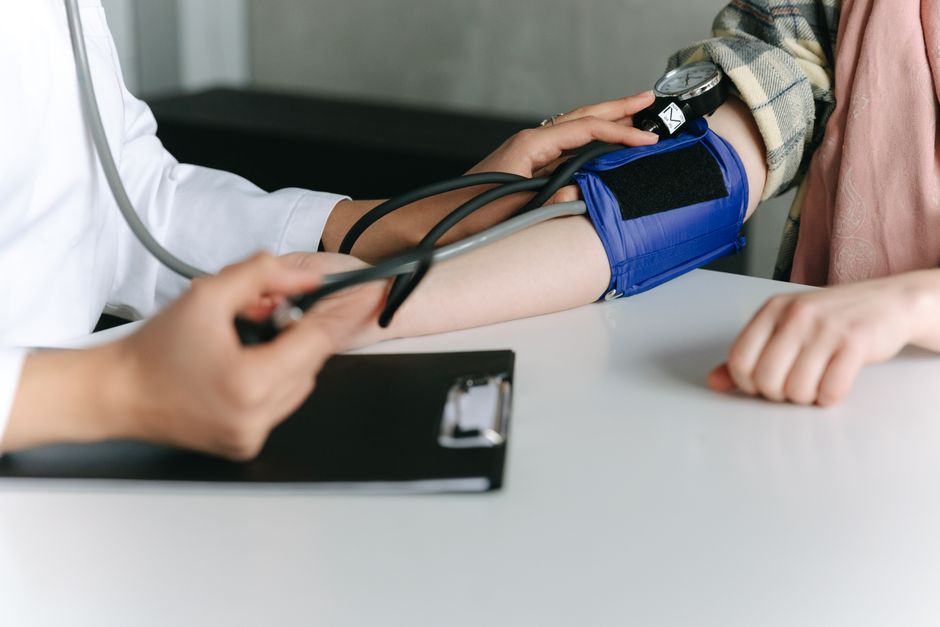
Taking blood pressure the right way comes down to a few specific habits: sit quietly for five minutes first, keep your back supported and both feet flat on the floor, rest your arm at heart level on a table, and wrap the cuff around your bare upper arm. Avoid caffeine, exercise, and smoking for at least 30 minutes beforehand, and don’t talk during the reading. Most people get the most accurate numbers by taking two or three readings one minute apart and averaging them.
Those steps sound small. They change your numbers more than most people expect. A single reading taken the wrong way can look 10 to 20 points higher than your true blood pressure — enough to make a normal reading look like a problem, or hide one that needs attention.
Why Does Arm Position and Posture Change Your Reading?
Blood pressure is the force of blood pushing against your artery walls, and gravity directly affects how hard your heart has to work to push blood upward. If your arm hangs at your side during a reading, the cuff sits below heart level. Blood has to travel upward against gravity, so the reading comes out higher than it should.
The reverse is also true. If your arm is held above heart level, the reading comes out falsely low. Research published in JAMA Internal Medicine found that common arm positions — like resting the arm on your lap or letting it dangle — produced readings that were meaningfully higher than when the arm was supported at heart level. The difference was large enough to potentially change whether someone was labeled as having high blood pressure.
Posture matters for the same reason. Crossing your legs, tensing your arm, or sitting without back support all nudge the numbers up. Your back should rest against the chair. Your feet should be flat on the floor. Your arm should rest on a table so the cuff is level with your heart.
How Do You Take Blood Pressure The Right Way at Home?
Home readings are often more reliable than office readings because they reflect your typical state rather than a single moment in a clinical setting. Some people have what clinicians call white coat hypertension — blood pressure that rises in a medical office but is normal elsewhere. Others have the opposite pattern, called masked hypertension, where office readings look fine but home readings run high. Home monitoring can catch both.
Here is the sequence that follows standard clinical guidance:
- Avoid caffeine, exercise, and tobacco for at least 30 minutes before measuring.
- Empty your bladder first. A full bladder can raise readings.
- Sit quietly for five minutes. Don’t scroll your phone or answer texts.
- Keep your back supported and both feet flat on the floor. Don’t cross your legs.
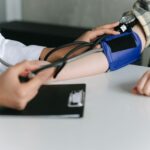
- Rest your bare upper arm on a table so the cuff is at heart level.
- Wrap the cuff snugly around your upper arm, directly on the skin — not over a sleeve.
- Stay still and silent during the reading. Talking can push numbers up.
- Take two or three readings, one minute apart, and record all of them.
Do this at the same times each day — typically morning and evening — for consistency. Write the numbers down or use a log. A single reading tells you very little. A pattern over days and weeks tells you a lot.
Which Cuff Size Do You Need?
A cuff that is too small will give you a falsely high reading. A cuff that is too large tends to give a falsely low one, though the error is usually smaller. This is one of the most common mistakes people make at home, and it’s easy to fix.
Cuff sizing is based on the circumference of your upper arm, measured at the midpoint between your shoulder and elbow. Most home monitors come with a standard adult cuff that fits a mid-range arm circumference. If your arm is larger or smaller than average, you may need to order a different size. The cuff bladder — the inflatable part inside the fabric — should wrap around roughly 80 percent of your arm’s circumference.
If you’re not sure, measure your upper arm with a soft tape measure and check the manufacturer’s size chart before you buy. Getting this right matters more than most people realize.
Wrist and Finger Monitors: Are They Accurate?
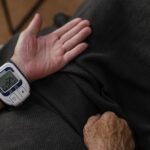
Upper-arm monitors are the standard for home use. Wrist monitors can work, but they are far more sensitive to position — the wrist must be held exactly at heart level, which is hard to do consistently without support. Finger monitors and phone apps that claim to measure blood pressure are not reliable for diagnosis or monitoring. No major clinical guideline recommends them.
If you use a wrist monitor, bring it to a medical appointment and compare it against the office reading. That gives you a sense of how far off it runs for you personally.
What Do the Numbers Mean?
Blood pressure is written as two numbers. The top number, systolic pressure, is the force when your heart beats. The bottom number, diastolic pressure, is the force between beats, when your heart rests.
For most adults, normal blood pressure is below 120/80 mm Hg. The table below reflects categories used in major clinical guidelines.
| Category | Systolic (mm Hg) | Diastolic (mm Hg) |
|---|---|---|
| Normal | Less than 120 | Less than 80 |
| Elevated | 120–129 | Less than 80 |
| Stage 1 hypertension | 130–139 | 80–89 |
| Stage 2 hypertension | 140 or higher | 90 or higher |
A single high reading does not mean you have high blood pressure. Diagnosis typically requires multiple elevated readings on separate occasions. If your home readings are consistently in the hypertension range, that information is worth bringing to a clinician.
What Raises Blood Pressure During a Reading?
Many things can push a reading up temporarily, and knowing them helps you avoid false alarms.
- Caffeine narrows blood vessels and can raise pressure for up to several hours.
- Nicotine has a similar effect and can raise readings for 30 minutes or more after use.
- A full bladder causes discomfort that activates the sympathetic nervous system.
- Talking during the measurement raises readings by a measurable amount.
- Cold temperatures constrict blood vessels and can push numbers up.
- Stress or anxiety about the reading itself can raise it — a real effect, not imagination.
One non-obvious point: the cuff itself can cause a temporary spike. The squeezing sensation triggers a mild stress response in some people. That’s another reason to take multiple readings and average them rather than trusting the first one.
When Should You Check Your Blood Pressure?
Morning and evening are the two standard windows. Take readings before medications, before meals, and before caffeine if possible. Morning readings are often taken within an hour of waking, before you start your day. Evening readings are typically taken before bed.
How often you check depends on your situation. Someone with diagnosed hypertension may check daily. Someone with normal readings and no risk factors may check less often. Your clinician can tell you what frequency makes sense for you.
If you feel dizzy, faint, or have symptoms that concern you, check your blood pressure and seek medical advice if the reading is very high or very low along with symptoms. Don’t try to diagnose yourself from a single number.
Does It Matter Which Arm You Use?
Yes. Blood pressure can differ between arms, and a consistent difference may be clinically meaningful. Guidelines generally recommend using the arm with the higher reading for ongoing monitoring, and checking both arms at least once to establish which one that is.
A small difference between arms is common and usually not concerning. A large and consistent difference is worth mentioning to a clinician, because it can sometimes point to a vascular issue.
Frequently Asked Questions
How long should I sit before taking my blood pressure?
Sit quietly for at least five minutes before the first reading. This allows your heart rate and blood pressure to settle after activity or stress.
Should I take my blood pressure on my bare arm or over clothing?
Place the cuff directly on your bare upper arm. Clothing can add thickness that interferes with the cuff’s fit and the accuracy of the reading.
Is it normal for my blood pressure to be different in each arm?
A small difference between arms is common and usually not a concern. A large or consistent difference should be mentioned to a clinician.
Can I take my blood pressure right after drinking coffee?
No. Caffeine can raise blood pressure for hours, so wait at least 30 minutes — ideally longer — before measuring.
Getting an accurate blood pressure reading is not complicated, but it does require attention to a few details that are easy to overlook. Arm position, cuff size, and quiet rest matter more than most people expect. Take the reading seriously, record it consistently, and bring your log to your next appointment. That log gives your clinician far more useful information than a single number taken in a hurry.
