
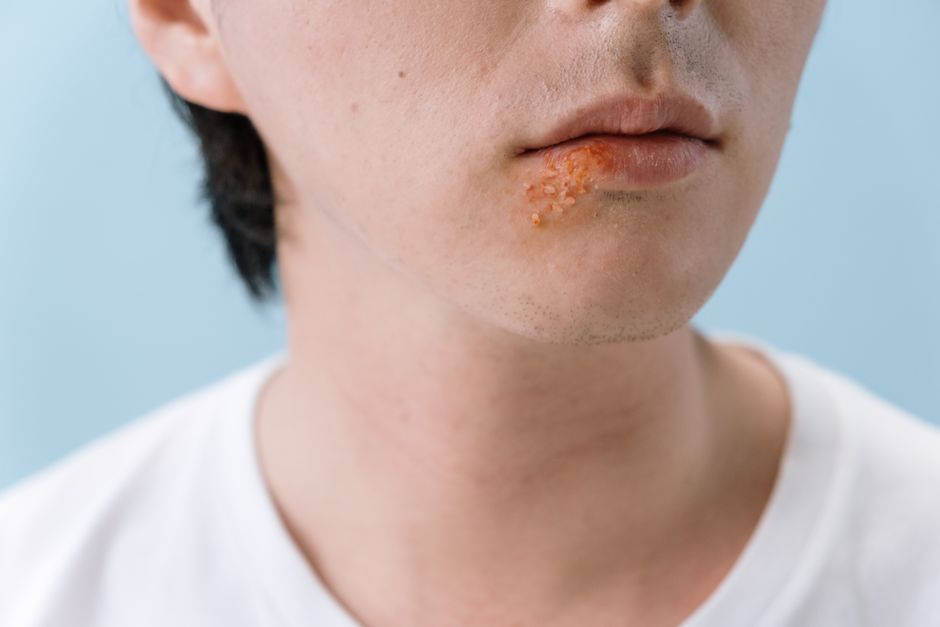
Herpes spreads through direct skin-to-skin contact with an infected area. The virus enters the body through tiny breaks in the skin or through mucous membranes like the mouth, genitals, or eyes. Most people get herpes from someone who has no visible sores and does not know they have the virus.
How Do You Get Herpes Transmission Explained Through Direct Contact?
Herpes simplex virus (HSV) requires direct contact to move from one person to another. This means touching, kissing, or sexual contact with an area that carries the virus. The virus does not travel through the air like a cold virus does.
There are two main types. HSV-1 typically causes oral herpes or cold sores around the mouth. HSV-2 usually causes genital herpes. But both types can infect either location. The CDC reports that about 48% of people aged 14 to 49 in the United States have HSV-1, and about 12% have HSV-2.
The virus lives in nerve cells and can travel to the skin surface at any time. When it reaches the skin, even without visible symptoms, it can pass to another person. This is called asymptomatic shedding. Research published in the Journal of the American Medical Association found that most genital herpes transmissions happen during these silent periods.
Can You Get Herpes from a Toilet Seat or Towel?
No. This is one of the most persistent myths about herpes transmission. The virus cannot survive long on dry surfaces like toilet seats, towels, or bedding. It needs a warm, moist environment and direct skin contact to survive.
The herpes virus dies quickly once it leaves the human body. Studies show that on dry surfaces, the virus becomes inactive within minutes. On wet surfaces like a damp towel, it may survive a little longer but still cannot infect through casual contact.
You also cannot get herpes from sharing a drinking glass or using the same fork. The virus does not live in saliva the way a cold or flu virus does. It requires direct skin-to-skin contact with the infected area itself.
What Are the Risk Factors for Herpes Transmission?
Some situations make transmission more likely. Understanding these can help you make informed decisions about reducing risk.
| Risk Factor | Why It Increases Risk |
|---|---|
| Active outbreak with visible sores | Viral load is highest during outbreaks. Sores contain large amounts of active virus. |
| New infection in the past 6 months | The body sheds the virus more frequently during the first year. Transmission risk is highest then. |
| Weakened immune system | Conditions like HIV or medications that suppress immunity can cause more frequent shedding. |
| Not using condoms or antivirals | Condoms reduce transmission risk by about 50%. Daily antivirals reduce it by about 50% as well. |
| Oral sex with someone who has cold sores | This is how HSV-1 increasingly causes genital herpes. Many people do not realize cold sores are herpes. |
Each risk factor compounds with others. For example, someone with a new HSV-2 infection who does not use condoms or antivirals has a much higher chance of passing the virus to a partner than someone who has had the virus for years and uses both prevention methods.





Does How Do You Get Herpes Transmission Explained Differ Between HSV-1 and HSV-2?
The transmission route is the same for both types. Both require direct skin-to-skin contact with an infected area. But there are important differences in where each type tends to infect and how often it sheds.
HSV-1 prefers the oral area. Most people get it in childhood from a kiss from a parent or relative. The World Health Organization estimates that 67% of people under 50 worldwide have HSV-1. Once someone has oral HSV-1, they can pass it to a partner’s genitals through oral sex.
HSV-2 almost always infects the genital area. It sheds more frequently than HSV-1 does on the genitals. Some studies suggest that HSV-2 sheds on about 10% to 20% of days, while HSV-1 on the genitals sheds on about 5% of days. This means genital HSV-2 is somewhat easier to pass on than genital HSV-1.
One non-obvious detail: having an existing HSV-1 infection actually lowers your risk of getting HSV-2. The body produces some cross-protective antibodies. But this protection is not complete. You can still get HSV-2 even if you already have HSV-1.
What Actually Works to Reduce Transmission Risk?
Research supports two main strategies that work. Using both together gives the best protection.
Condoms reduce transmission risk significantly. A study published in the Annals of Internal Medicine followed couples where one partner had genital herpes and the other did not. Those who used condoms 100% of the time had about a 50% lower risk of transmission compared to those who never used them. Condoms work because they cover the skin areas that shed the virus most often.
Daily antiviral medication is the second proven strategy. Drugs like valacyclovir (Valtrex) and acyclovir reduce viral shedding by about 80%. A landmark study in the New England Journal of Medicine found that daily valacyclovir reduced transmission of symptomatic HSV-2 by 75% in heterosexual couples. The reduction in overall transmission including asymptomatic cases was about 50%.
Avoiding sex during active outbreaks is also important. The viral load is highest when sores are present. But remember that most transmission happens without visible symptoms. So avoiding sex only during outbreaks is not enough on its own.
- Use condoms consistently for all sexual contact
- Take daily antiviral medication if you have genital herpes
- Avoid sex during active outbreaks
- Talk openly with partners about herpes status
- Get tested if you have symptoms or have been exposed
What Common Misconceptions About Herpes Transmission Should You Ignore?
Many viral health claims about herpes are not supported by evidence. Here are the most common ones that are wrong.
Myth: You can only get herpes from someone with visible sores. This is false. Most people who have herpes do not know it. The virus sheds from normal-looking skin. The CDC states that most genital herpes transmissions occur when the infected person has no symptoms.
Myth: Herpes means you are promiscuous or dirty. This is a harmful stigma with no basis in fact. HSV-1 is so common that most people get it in childhood from a family member. HSV-2 is a common infection that can happen after one sexual encounter with an infected person. It has nothing to do with cleanliness or character.
Myth: You cannot get herpes if you use a condom. Condoms reduce risk but do not eliminate it. The virus can be on skin not covered by a condom. For men, the base of the penis and the scrotum are not covered. For women, the labia and surrounding skin are not covered.
Myth: Herpes causes serious health problems for most people. For most healthy adults, herpes causes mild symptoms. Outbreaks become less frequent over time. Serious complications are rare and usually occur in people with severely weakened immune systems or in newborns exposed during birth.
Myth: Once you have herpes you cannot have a normal sex life. Millions of people with herpes have healthy, active sex lives. They use prevention strategies, communicate with partners, and manage outbreaks. The virus does not define your relationships or your health.
Frequently Asked Questions
Can you get herpes from kissing?
Yes. Kissing someone with an active cold sore or with asymptomatic shedding of HSV-1 can transmit the virus. This is how most people get oral herpes.
How long after exposure do herpes symptoms appear?
Symptoms usually appear 2 to 12 days after exposure. The first outbreak is often the most severe and can include flu-like symptoms along with sores.
Can you get herpes from a blood transfusion?
No. Herpes is not transmitted through blood. It requires direct skin-to-skin contact with an infected area.
Is herpes curable?
No cure exists as of 2026. But antiviral medications effectively manage symptoms and reduce transmission risk. The virus stays in the body for life.
