
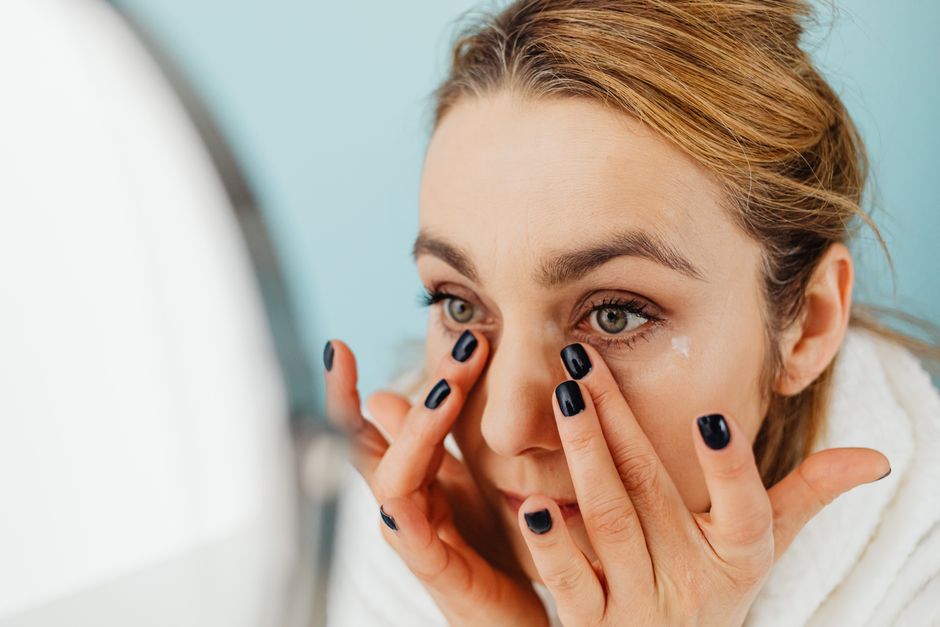
Sunken eyes happen when the tissue around the eye loses volume, or when the bone underneath changes shape, so the eye sits deeper in the socket than it used to. It is usually a change in the surrounding structures, not the eyeball itself. Some people are simply born with a deeper-set eye shape. For others, it develops over time, and the cause is often something ordinary like aging, dehydration, or lost sleep.
Why Do Your Eyes Look Sunken In?
The eye sits in a bony cup called the orbit. That cup holds fat pads that cushion the eye and give the area its fullness. When those fat pads shrink or shift, the skin over them sinks inward. That is the basic mechanism behind most sunken eyes.
There are two main layers to understand. The first is volume: fat, muscle, and skin. The second is the bone. Both can change, and both can make the eye look deeper than it is.
This is why sunken eyes and dark circles are not the same thing, even though people often use the terms together. Dark circles are mostly a color problem — pigment, visible blood vessels, or thin skin. Sunken eyes are a shape and volume problem. You can have one without the other, and many people have both at once.
One detail that surprises people: the eyeball itself rarely moves deeper into the socket with age. What changes is everything around it. The rim of the bone can thin and recede, and the soft tissue above and below the eye deflates. The eye stays put while its frame changes.
Is It Aging, Genetics, or Something Else?
Aging is the most common cause. Starting in the thirties and continuing through life, the fat pads around the eye gradually shrink. The skin also thins and loses elasticity. The result is a hollowed look that tends to deepen slowly over years, not weeks.
Genetics matter just as much. Some people inherit a face with less soft tissue around the eyes or a naturally deeper orbit. If a parent has this eye shape, it often runs in the family. In that case it may be present from childhood and stay stable.
Other causes are worth knowing because they point to something fixable or something that needs medical attention.
- Dehydration — when the body is low on fluid, skin looks flatter and less plump, and the area under the eyes shows it quickly.
- Sleep loss — poor sleep can make the skin look dull and the area darker and more hollow.
- Weight loss — losing a lot of weight, especially quickly, reduces facial fat including around the eyes.
- Nutrition gaps — low iron or other deficiencies can change how the skin looks, though this is not the same as true fat loss.
- Smoking — it damages skin and blood vessels over time.
- Sun exposure — breaks down collagen and elastin in the skin.
- Illness — some medical conditions cause facial fat loss or fluid shifts.
Notice that most of these are lifestyle or natural change. Very few point to a serious disease on their own.
When Are Sunken Eyes a Sign of Dehydration?
Dehydration is one of the clearest and most reversible causes. When the body loses more fluid than it takes in, the skin loses some of its internal fullness, and the eyes can look sunken within hours.
The key is context. Sunken eyes from dehydration almost never happen alone. There are usually other signs, and those signs are what matter most.
- Thirst and a dry mouth
- Dark yellow urine, or urinating much less than usual
- Fatigue, dizziness, or lightheadedness
- Dry skin
- Headache
In serious cases — especially in infants, young children, and older adults — dehydration can be a medical emergency. Warning signs include confusion, rapid heartbeat, very little urine, and no tears when crying in a child. If you see these, seek medical care right away rather than trying to fix it at home.
For mild dehydration in a healthy adult, drinking fluids usually restores the look of the eyes within a day or so. If sunken eyes persist despite normal fluid intake, dehydration is probably not the cause.





Could It Be a Medical Condition?
Most sunken eyes are not a sign of disease. Still, a few conditions can cause it, and it helps to know the difference between a cosmetic change and a medical one.
Certain conditions cause loss of facial fat. Some autoimmune and inflammatory diseases can lead to fat loss in the face, including around the eyes. Thyroid problems can also change the appearance of the eyes and the tissue around them. In these cases, the eye change comes with other symptoms — fatigue, weight change, joint pain, or skin changes — not in isolation.
Nutritional deficiencies can play a role too. Low iron is a common one, and it can affect skin appearance along with causing tiredness and pale skin. This is worth checking with a doctor rather than guessing, because supplementing without a confirmed deficiency is not helpful and can be harmful.
Here is where caution matters. You cannot diagnose any of these from a mirror. If sunken eyes appear suddenly, come with other symptoms, or are getting worse quickly, that is a reason to see a clinician. Slow changes over years, with no other symptoms, are far more likely to be ordinary aging or genetics.
What Actually Helps Sunken Eyes?
What helps depends entirely on the cause. This is the part where honesty matters, because a lot of products promise more than the evidence supports.
If the cause is dehydration, drinking enough fluid is the fix. If it is sleep, better sleep habits can help. If it is weight loss or smoking, those are the levers to address. These are straightforward and well supported.
For aging or genetics, the picture is different. No cream has been shown to restore lost fat. Some ingredients, like retinoids, have evidence for improving skin texture and fine lines over time, but that is a skin-quality effect, not a volume effect. They will not refill a hollowed socket.
Procedures exist that aim to restore volume, such as injectable fillers and, in some cases, surgery. These are performed by clinicians, and results vary by practitioner, product, and individual. They carry real risks, including lumps, migration of filler, and, rarely, serious complications from filler placed near the eye. Anyone considering them should discuss risks and realistic outcomes with a qualified medical professional. This is a case where the evidence supports that these options exist, not that they are right for everyone.
Simple habits support the skin generally:
- Stay hydrated through the day
- Get consistent sleep
- Protect the face from sun with a broad-spectrum sunscreen
- Avoid smoking
- Eat a varied diet with enough iron and protein
None of these will reverse a genetic eye shape. They support overall skin health, which is a different goal.
Do Home Remedies and Eye Creams Really Work?
Most do not, at least not for the reason people buy them. Cold compresses and cucumber slices can reduce puffiness and feel soothing, but they do not add volume. Any improvement is temporary and mostly about reduced swelling, not a change in the socket.
Eye creams fall into two groups. Some moisturize and improve the look of the skin surface. Others contain active ingredients with some evidence for fine lines, like retinoids. Neither group has been shown to rebuild the fat pads that create the sunken look.
Be skeptical of claims that a product “restores volume” or “fills hollows.” No topical cream has been shown to do that. If a product promises this, the claim is not supported by evidence.
There is one more myth worth clearing up. Drinking more water than your body needs does not plump the face or erase sunken eyes. Once you are adequately hydrated, extra fluid does not add volume to the face. It just passes through.
When Should You See a Doctor?
See a clinician if sunken eyes come on suddenly, get worse quickly, or appear alongside other symptoms. Those symptoms include unexplained weight loss, fatigue that does not improve with rest, changes in thyroid-related signs like feeling unusually cold or hot, or any change in vision.
Also seek care if you have signs of significant dehydration — confusion, very little urine, a rapid heartbeat, or dizziness on standing. In infants and older adults, these signs can develop faster and are more serious.
If the change is gradual, matches your family’s eye shape, and comes with no other symptoms, it is most likely a normal part of aging or simply how you are built. That is not a medical problem. It is a cosmetic one, and whether to treat it is a personal choice.
Frequently Asked Questions
Why do my eyes look sunken in all of a sudden?
Sudden sunken eyes usually point to dehydration, a recent illness, or rapid weight loss rather than aging. If it appears quickly with other symptoms like dizziness or confusion, seek medical care.
Can dehydration cause sunken eyes?
Yes, dehydration is one of the most common reversible causes, and it can make the eyes look sunken within hours. Drinking fluids typically restores the look within a day in a healthy adult.
Do eye creams fix sunken eyes?
No. No topical cream has been shown to rebuild the fat pads that create the sunken look, though some improve skin texture and fine lines.
Are sunken eyes a sign of a serious illness?
Most of the time they are not, and are caused by aging, genetics, or dehydration. They can be a sign of a medical condition when they appear suddenly or come with other symptoms, so see a doctor if that happens.
