
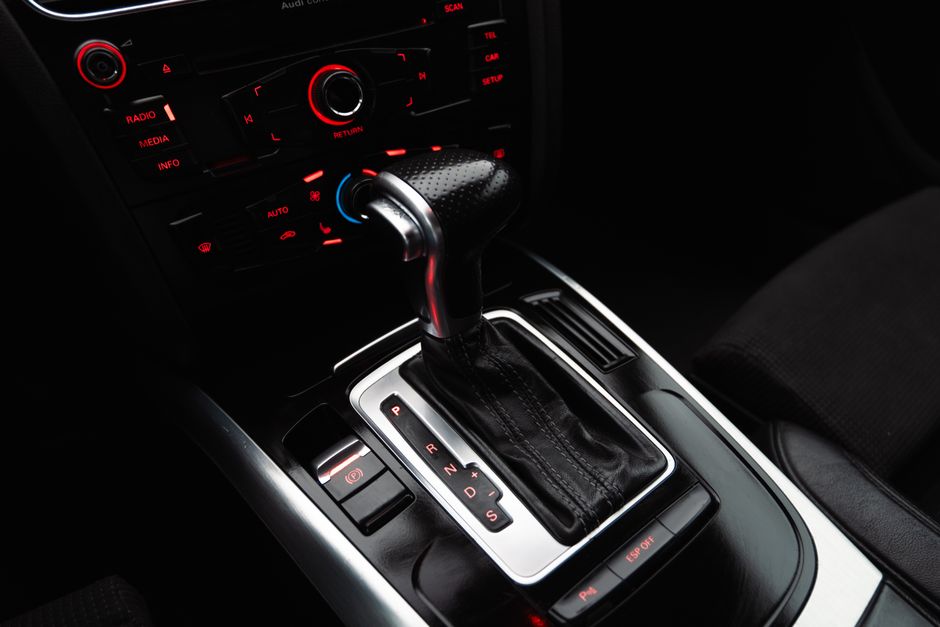
An automatic transmission does not shift faster because you want it to. It shifts according to programming inside the transmission control module, and that programming balances smoothness, fuel economy, emissions, and durability ahead of speed. The most reliable way to get faster shifts is not a driving trick. It is changing what the computer is allowed to do, either through the drive mode you select, the software calibration, or the hardware itself. Everything else people try on the road is mostly theater.
What Actually Controls Shift Speed In An Automatic?
The transmission control module, usually called the TCM, decides when to shift and how fast. It reads throttle position, engine speed, vehicle speed, and load, then commands a set of solenoid valves inside the valve body. Those valves direct hydraulic pressure to clutches and bands that engage or release gears.
Shift speed comes down to how quickly hydraulic pressure can apply one clutch while releasing another. That handoff is called the shift event. Engineers deliberately slow it down. A fast, hard clutch engagement sends a shock through the driveline, and drivers feel it as a jerk. So most factory programming trades shift speed for smoothness.
This is the part many people miss: your transmission is not slow because it is weak. It is slow because it was told to be gentle. That distinction matters, because it tells you where to look for a real fix.
Does Sport Mode Really Make Shifts Faster?
Yes, and it is the easiest change you can make. Sport mode raises the engine speed at which the transmission upshifts and downshifts, holds lower gears longer, and in many vehicles increases the hydraulic pressure used during the shift. Higher line pressure means the clutches apply faster.
How much faster depends entirely on the vehicle. Some manufacturers program a noticeably firmer, quicker shift in sport mode. Others mostly change the shift points and leave the feel similar. There is no universal number, and anyone quoting one is guessing.
What sport mode will not do is fix a transmission that is already shifting poorly because of a mechanical problem. If shifts are delayed, slipping, or flaring, that is a symptom, not a setting.
Can Driving Technique Change Shift Speed?
Modestly, yes. The TCM watches how you drive and adapts. Press the accelerator more firmly and the transmission holds gears longer and shifts under more load. Some transmissions also learn your habits over time and adjust their baseline behavior.
What does not work is the folklore. Lifting off the throttle right before a shift, for example, usually does the opposite of what people expect. It signals the computer that load has dropped, which can soften the shift rather than sharpen it.
Manual gear selection helps in a specific way. If your car has paddle shifters or a manual gate, you control when the shift happens. You do not control how fast the clutches engage, though. The hydraulic event is still the computer’s job.





Does A Transmission Tune Or Software Change Help?
This is where the largest gains are available, and also where the risk lives. Aftermarket transmission tuning rewrites the shift tables and raises line pressure. Independent shops and enthusiasts report meaningfully quicker, firmer shifts after a reputable tune.
The honest position: the evidence here is practical and anecdotal, not clinical. There are no large controlled studies on aftermarket transmission calibrations, because there is no reason for anyone to fund them. What exists is a large body of shop experience and owner reporting.
The risks are real. Higher line pressure increases wear on clutches, seals, and the valve body. A tune that is too aggressive can shorten transmission life. It can also void your powertrain warranty, since manufacturers can detect a modified calibration. If your car is under warranty, that is worth weighing carefully before you do anything.
Can You Make An Automatic Transmission Shift Faster With Hardware?
Hardware changes do work, and they work for a straightforward reason. A shift kit, for example, modifies the valve body so hydraulic fluid flows faster and pressure builds quicker. That directly attacks the physical bottleneck.
A higher-stall torque converter changes when the engine reaches its power band, which can make the car feel quicker even though the shift itself is not faster. These are different things, and marketing often blurs them.
Hardware work is not a DIY project for most people. It requires dropping the transmission pan or removing the unit entirely, and a mistake can destroy the transmission. This is a job for a shop that has done it before on your specific model.
What Does Not Work
Several popular ideas do not hold up.
- Revving in neutral before a shift. This does nothing for shift speed and puts unnecessary wear on the transmission.
- Aftermarket “chip” plug-in modules. Many only alter throttle response, which changes how the car feels, not how fast the transmission shifts.
- Flooring the accelerator at every stop. This changes shift points, not shift speed, and it costs fuel and adds wear.
- Transmission fluid additives marketed for faster shifts. No clinical or engineering evidence supports these claims for shift speed.
The pattern is consistent. Anything that does not change hydraulic pressure or the calibration is not changing shift speed. It is changing how the car feels to you.
When Slow Shifts Mean Something Is Wrong
A transmission that has always shifted gently is one thing. A transmission that has started shifting slowly is another. If the change came on gradually or suddenly, that points to a mechanical or electronic issue rather than programming.
Warning signs worth taking seriously include delayed engagement when you shift from park into drive, a flare where engine speed rises between gears without the car accelerating, slipping under load, or a burning smell. Any of these warrant a professional diagnosis. Continuing to drive on a failing transmission usually makes the repair more expensive.
Low or degraded transmission fluid is one common cause of slow, harsh, or delayed shifts. Fluid level and condition checks are part of routine maintenance for a reason. If you are not sure when your transmission fluid was last serviced, that is a reasonable place to start before spending money on anything else.
What Actually Works, In Order
If you want faster shifts and you want to do it sensibly, the order matters.
- Check that the transmission is healthy first. No setting or tune fixes a mechanical fault.
- Use sport mode if your car has it. It is free and reversible.
- Adapt your driving to the transmission’s logic rather than fighting it.
- Consider a professional transmission tune only if you accept the warranty and wear trade-offs.
- Consider hardware changes only through a shop experienced with your model.
None of this turns an automatic into a dual-clutch gearbox. A conventional automatic with a torque converter has a fundamentally different design, and no amount of tuning changes that. What tuning can do is remove the deliberate softness the factory built in. For most drivers, that is the real answer to the question.
Frequently Asked Questions
Does sport mode make an automatic shift faster?
In many vehicles, yes. Sport mode typically raises shift points and increases hydraulic line pressure, which applies the clutches more quickly. How much difference you feel depends on how the manufacturer programmed it.
Can a transmission tune damage my car?
It can increase wear on clutches, seals, and the valve body, and it can void your powertrain warranty. A reputable tune from an experienced shop is lower risk than an aggressive one, but the trade-off is real.
Why is my automatic transmission shifting slowly all of a sudden?
A sudden change usually points to a mechanical or electronic problem rather than programming. Low or degraded fluid, a failing solenoid, or internal wear are common causes and should be diagnosed by a professional.
Do transmission fluid additives make shifts faster?
No clinical or engineering evidence supports additives for faster shift speed. Some products may address specific friction or seal issues, but they are not a shift-speed fix.
