
Close one eye and look straight ahead. Everything you can still see — the blurry shapes at the edges, the movement of a car pulling up beside you — is side vision. It is the part of your sight that does not come from looking directly at something, and it covers far more of your visual world than the sharp center does.
Side vision, also called peripheral vision, is what you see outside the very center of your gaze. It is handled mostly by the outer parts of the retina, the light-sensing tissue at the back of the eye. It is lower in detail and color than central vision, but it is fast, wide, and built to catch motion. That combination is why it matters so much for driving, walking, and sport.
What Is Side Vision and How Does It Work?
Your eye works a bit like a camera, but with a key difference. A camera spreads detail evenly across the whole picture. The human eye does not. It concentrates its sharpest sensing in a tiny central spot and uses the rest of the retina for everything else.
The center of the retina is called the macula, and the very center of that is the fovea. This small area is packed with cone cells. Cones handle fine detail and color, and they need good light to work well. When you read, thread a needle, or recognize a face, you are pointing your fovea at it.
The outer retina is different. It has far more rod cells, which are sensitive to dim light and to movement. Rods do not see color well and do not resolve fine detail. So the edges of your vision are blurrier and more grayscale, but they are also more sensitive in low light and quicker to notice something moving.
This is why you can often sense a person walking up behind you before you can tell who they are. Your side vision flagged the motion. Then you turn your head and your central vision does the identifying.
How Wide Is Your Field of Vision?
For a person with two healthy eyes, the total field of vision spans about 180 degrees from left to right. Each individual eye sees roughly 150 to 160 degrees on its own, and the two fields overlap in the middle. That overlap is what gives you depth perception.
Central vision, by contrast, is remarkably small. The area where you see sharp detail covers only a few degrees. Everything else in that 180-degree span is side vision.
It helps to think of your sight as two systems working together:
- Central vision — sharp, colorful, detail-rich, but narrow. Used for reading, recognizing faces, and fine tasks.
- Side vision — blurrier, less colorful, but wide and motion-sensitive. Used for spatial awareness, navigation, and spotting danger.
Neither system is “better.” They do different jobs. Losing one changes how you function in ways the other cannot fully replace.
Why Is Peripheral Vision Important for Daily Life?
Side vision is what keeps you oriented in space. Without it, the world narrows to a small window, and moving through it becomes risky.
Driving is the clearest example. When you keep your eyes on the road ahead, you rely on side vision to notice a car in the next lane, a pedestrian stepping off a curb, or a cyclist approaching from the side. A driver with reduced peripheral vision may not see these things until it is too late to react.
Walking is similar. Side vision helps you avoid obstacles, judge doorways, and keep your balance. It also plays a role in how steady you feel. People with reduced side vision often report feeling less stable, especially in busy or dim environments.
Sport depends on it too. Catching a ball, tracking a teammate, or reacting to an opponent all rely on seeing motion outside your central focus. This is part of why some athletes train peripheral awareness, though the evidence on how much that training transfers to performance is limited.
There is one non-obvious point worth knowing. Side vision is not just a wider version of central vision. It is processed differently in the brain, and it feeds into systems that control balance, posture, and quick reactions. That is why losing it can affect more than just what you see.





What Causes Loss of Side Vision?
Losing side vision is usually a sign of a problem somewhere in the eye or the visual pathway to the brain. The pattern of loss often points to the cause, which is why eye doctors test the visual field carefully.
Some conditions that can affect peripheral vision include:
- Glaucoma — a group of eye diseases that damage the optic nerve, often starting with side vision loss before central vision is affected.
- Stroke — can cause loss of one side of the visual field in both eyes, depending on where in the brain the damage occurred.
- Retinitis pigmentosa — a group of inherited conditions that often begin by affecting night vision and peripheral vision.
- Detached retina — can cause a shadow or curtain-like loss of vision, often starting at the edge.
- Brain tumors or other lesions — can press on visual pathways and cause field loss.
Glaucoma is worth highlighting because it is common and often silent at first. It typically damages side vision before central vision, so people may not notice anything is wrong until the disease is advanced. This is one reason regular eye exams matter, especially after age 40.
Not all side vision loss is permanent or dangerous. Migraines, for example, can cause temporary visual changes, including blind spots or shimmering patterns, that usually resolve. But any sudden change in vision should be treated as urgent and checked by a professional.
How Is Peripheral Vision Tested?
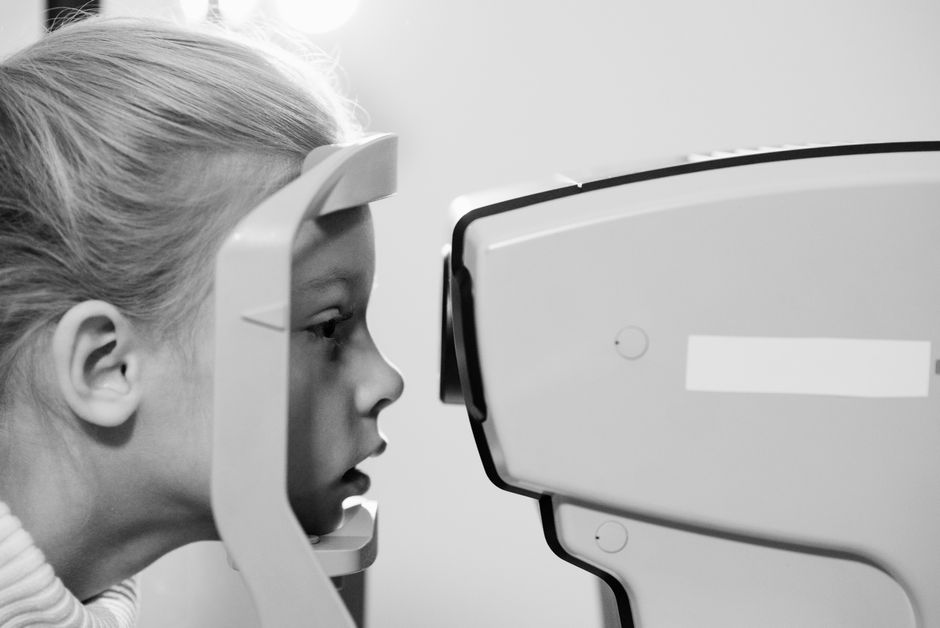
Eye doctors test side vision using a procedure called perimetry, or visual field testing. You look straight ahead at a fixed point while small lights appear at different spots in your side vision. You press a button each time you see one. The results map out where you can and cannot see.
There are a few common versions:
- Confrontation testing — a quick bedside check where the doctor moves a hand or object into your side vision while you look straight ahead.
- Automated perimetry — a more detailed computer-based test that maps your full field of vision.
- Goldmann perimetry — a manual test often used when specific patterns of loss need to be mapped.
These tests are painless. They do require you to stay focused, which can be tiring. Results help doctors detect conditions like glaucoma early and track whether a disease is getting worse over time.
Can You Improve or Train Side Vision?
This is where honest answers matter. For healthy people, there is no strong evidence that you can meaningfully expand the physical limits of your peripheral vision through training. The size of your visual field is set by the structure of your eye and brain.
What training may improve is how well you use the side vision you already have. Some research suggests that certain tasks can sharpen attention to peripheral cues, and some athletes and drivers use drills for this. But the evidence is mixed, and results vary. It is not the same as widening your field.
For people who have lost side vision due to a condition like stroke, there are rehabilitation approaches. These may include scanning training, where a person learns to systematically move their eyes to compensate for the missing area. Some clinicians also use prisms or other aids. These approaches can help with daily function, but they do not restore lost vision. The evidence for how well they work varies by method and by person.
What does not work: there is no proven supplement, exercise, or device that regrows or restores peripheral vision lost to optic nerve damage or brain injury. Claims otherwise should be treated with caution.
When Should You Be Concerned About Side Vision Changes?
Any sudden change in your vision is a reason to seek care quickly. That includes losing side vision, seeing a shadow or curtain across part of your view, or noticing new blind spots.
Gradual changes are trickier because they are easy to miss. Side vision loss from glaucoma, for instance, often develops so slowly that people adapt without realizing it. Signs that something may be wrong include bumping into things on one side, difficulty seeing in dim light, or trouble noticing cars approaching from the side.
Regular eye exams are the most reliable way to catch problems early. For adults, many eye care professionals recommend a full exam every one to two years starting around age 40, though the right schedule depends on your risk factors. If you have a family history of glaucoma, diabetes, or other conditions that affect vision, your doctor may recommend more frequent checks.
Side vision is easy to take for granted because it works quietly in the background. But it shapes how you move through the world every day. Protecting it starts with paying attention to changes and getting regular checks, especially as you get older.
Frequently Asked Questions
What is side vision in simple terms?
Side vision is everything you can see outside the very center of your gaze. It is handled mostly by the outer retina and is better at catching motion than at showing fine detail.
How many degrees is normal peripheral vision?
For a person with two healthy eyes, the total field of vision spans about 180 degrees. Each eye on its own sees roughly 150 to 160 degrees.
Can you improve your peripheral vision?
There is no strong evidence that healthy people can expand the physical limits of their side vision through training. Some drills may improve how well you notice peripheral cues, but results vary.
What causes loss of side vision?
Common causes include glaucoma, stroke, retinitis pigmentosa, and detached retina. Because the pattern of loss often points to the cause, any sudden change should be checked by an eye doctor.
