
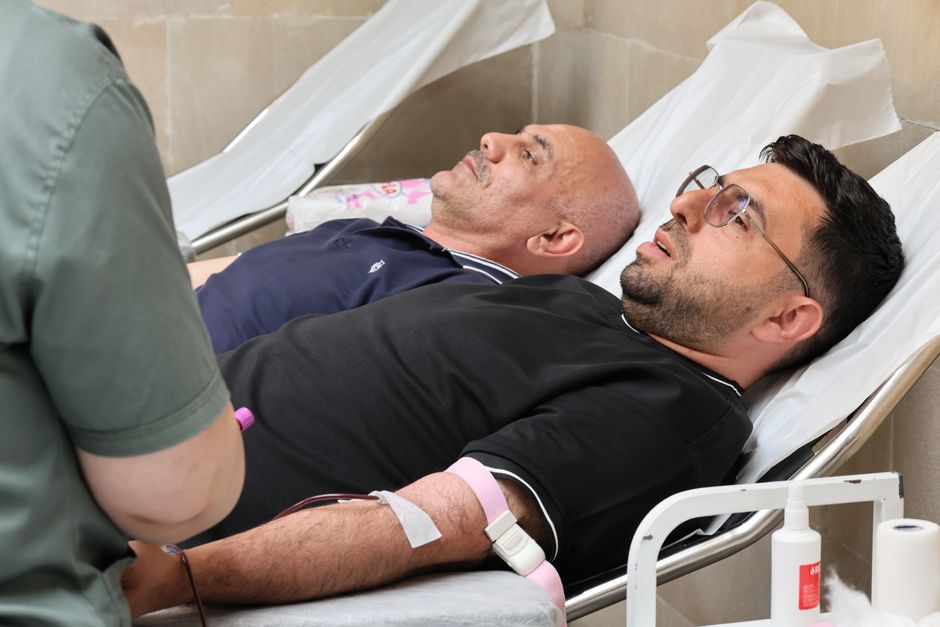
When you donate blood, that bag of red liquid does not go straight to a hospital shelf. It starts a carefully tracked journey through testing, processing, storage, and distribution. Hospitals depend on this system every single day, and it works because every step is regulated and documented. The entire process, from the moment the needle comes out of your arm to the moment a patient receives the transfusion, usually takes 24 to 48 hours for standard red blood cells.
What Happens To Blood Immediately After Donation?
The process begins at the collection site. Whether you donate at a fixed center or a mobile blood drive, the phlebotomist seals your bag and attaches a unique barcode label. That barcode is the unit’s identity for the rest of its life.
Each bag contains about 450 milliliters of whole blood, plus an anticoagulant solution that keeps it from clotting. The bag is then placed in a cooler with other donations from the same session. Mobile drives pack these coolers into transport vehicles and ship them to a central processing laboratory, often the same night.
Time matters here. Whole blood can only sit at room temperature for a limited window before it must be processed or refrigerated. This is why blood banks run on tight schedules, especially during large drives.
How Is Donated Blood Tested For Safety?
Every single donation undergoes the same battery of tests. There are no shortcuts and no exceptions. The testing laboratory screens for several infectious diseases, including HIV, hepatitis B, hepatitis C, and syphilis. In some regions, additional testing covers West Nile virus and Zika virus.
These tests are highly sensitive, which means they catch infections very early. But that sensitivity comes with a trade-off. A small number of donations produce false positives, and those units are discarded even though they are actually safe. Blood banks accept this because the cost of a false negative is far higher.
Testing also includes blood type determination. The laboratory confirms whether the unit is type A, B, AB, or O, and whether it is Rh positive or negative. This information must be accurate because a mismatched transfusion can trigger a severe, sometimes fatal, immune reaction.
If any test comes back positive, the unit is destroyed. The donor is notified and permanently deferred from donating again in most cases. This process protects both the donor and the patients who would receive the blood.
How Is Whole Blood Separated Into Components?
Most donated blood is not used as whole blood. Instead, it is separated into components so that each patient receives only what they need. A single donation can help multiple people.
The separation happens in a centrifuge. The bag spins at high speed, and the heavier red blood cells settle to the bottom while the lighter plasma rises to the top. Between them sits a thin layer called the buffy coat, which contains platelets and white blood cells.
The components are then squeezed into separate sterile bags using a mechanical press. This produces three main products:
- Red blood cells — used for anemia, surgery, and trauma
- Platelets — used for cancer patients and people with bleeding disorders
- Plasma — used for burn victims and clotting factor replacement
Some centers also collect a fourth component, cryoprecipitate, from the plasma. This is rich in clotting proteins and is used for specific bleeding conditions.
Each component has its own storage requirements and shelf life. Red blood cells last about 42 days refrigerated. Platelets last only five to seven days and must be kept at room temperature with constant agitation. Plasma can be frozen and stored for up to one year.




How Is Donated Blood Stored And Transported?
Storage is where the logistics get serious. Each blood component demands a different environment, and a failure in any of them destroys the product.
Red blood cells are stored in refrigerators held at 1 to 6 degrees Celsius. They are suspended in a nutrient solution that extends their life beyond the basic 35-day limit of plain whole blood. The 42-day shelf life is standard across most of the United States.
Platelets are the most fragile. They must be stored at 20 to 24 degrees Celsius on agitators that keep them gently moving. This motion prevents the platelets from clumping together and becoming useless. Because they cannot be refrigerated, they are also at higher risk for bacterial growth, which is why their shelf life is so short.
Plasma is frozen solid within hours of collection. It is stored at minus 18 degrees Celsius or colder and can remain viable for a full year. Some facilities store it at minus 65 degrees for even longer.
Transport happens in specialized containers that maintain these temperatures. Blood banks use validated coolers with temperature monitors that record the conditions throughout the journey. If a shipment gets too warm or too cold, the entire box may be discarded.
How Do Hospitals Request Blood From The Blood Bank?
Hospitals do not keep unlimited blood on hand. They maintain an inventory based on their typical usage, and they order from the regional blood center to restock. The relationship is continuous and data-driven.
When a patient needs a transfusion, the hospital’s laboratory checks the blood type on file. For elective procedures, the blood is ordered in advance. For emergencies, the hospital uses its own stock and places a replacement order with the blood center.
This is where the concept of a blood type crossmatch comes in. The hospital laboratory takes a sample of the patient’s blood and mixes it with the donor unit to confirm compatibility. This test catches rare antibodies that standard blood typing would miss. It takes about 30 to 45 minutes to complete.
For massive trauma cases, there is no time for a crossmatch. Hospitals release emergency release blood, usually type O negative, which is safe for any patient. The formal testing happens after the transfusion begins.
How Does Blood Get From The Blood Bank To The Patient?
The final leg of the journey is short but heavily controlled. Once the blood bank releases a unit, it is placed in a labeled cooler or transport bag. A courier, often a hospital staff member, carries it to the patient’s location.
Before the unit leaves the blood bank, a nurse or technician must verify it against the patient’s identification. This is a two-person check in most facilities. They confirm the patient’s name, date of birth, and medical record number against the blood bag label. They also check that the blood type matches.
The transfusion itself must start within a specific time frame after the unit is removed from storage. Red blood cells must be hung within 30 minutes of leaving the refrigerator. The infusion must be completed within four hours. These limits reduce the risk of bacterial growth in the warm environment.
During the transfusion, the patient is monitored for signs of a reaction. Fever, chills, and hives are the most common signs. Severe reactions, such as anaphylaxis or acute lung injury, are rare but require immediate intervention.
Frequently Asked Questions
How long does donated blood last before it expires?
Red blood cells last up to 42 days when refrigerated. Platelets last five to seven days at room temperature, and frozen plasma lasts up to one year.
Why is type O negative blood so important?
Type O negative blood lacks A, B, and Rh antigens, so it does not trigger an immune reaction in most recipients. It is used for emergency transfusions when there is no time to test the patient’s blood type.
Can a hospital use blood from any donor for any patient?
No. The donor and recipient must have compatible blood types. Giving mismatched blood can cause a serious immune reaction that destroys the transfused cells.
Is donated blood ever wasted?
Yes. Units expire, shipments fail temperature checks, and some donations test positive for infections. Blood banks work to minimize waste, but some loss is unavoidable in a system that prioritizes safety.
