
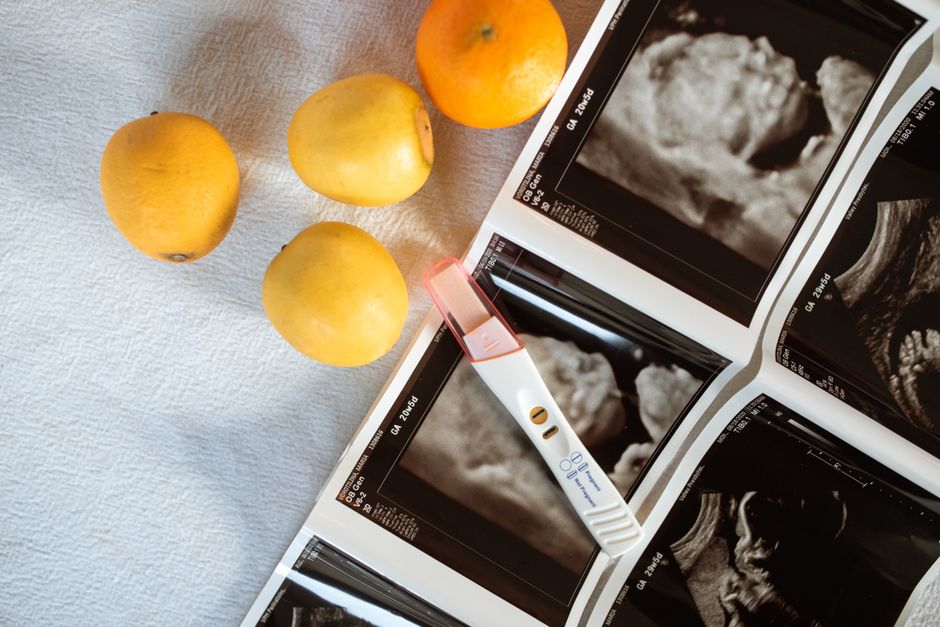
A dollar store pregnancy test works the same way as a drugstore brand. Both detect human chorionic gonadotropin (hCG) in urine, the hormone the body produces after a fertilized egg implants in the uterus. The FDA regulates home pregnancy tests as medical devices, so even the cheapest version sold in the US has to meet the same basic accuracy standard as the expensive ones.
That does not mean every dollar test is identical to every premium test. There are real differences in sensitivity, design, and how easy they are to read. But the core chemistry is not where the money goes. Here is what the research and the regulations actually show.
How Does a Dollar Store Pregnancy Test Actually Work?
Home pregnancy tests use a technology called lateral flow immunoassay. A strip inside the test contains antibodies that bind to hCG. When urine passes through the strip, any hCG in the sample attaches to those antibodies and creates a visible line or symbol.
The reaction is the same whether the test costs a dollar or twenty. What changes between products is the amount of hCG needed to trigger a visible result, known as the sensitivity threshold, and the quality of the materials and instructions.
Most home tests are designed to detect hCG at concentrations around 20 to 25 milli-international units per milliliter (mIU/mL), a range that reflects the levels typically present in early pregnancy. A test that detects at a lower concentration is more sensitive and can pick up a pregnancy slightly sooner. A test that needs a higher concentration may miss a very early pregnancy.
This is the detail most people miss: the dollar figure tells you almost nothing about the sensitivity. A cheap test with a 20 mIU/mL threshold is more sensitive than an expensive test with a 50 mIU/mL threshold. You have to read the label, not the price tag.
Are Dollar Store Pregnancy Tests as Accurate as Brand-Name Tests?
In the US, the FDA classifies home pregnancy tests as Class II medical devices. That means manufacturers must show the test performs to a defined standard before it can be sold. A test cannot legally be marketed as a pregnancy test without meeting that bar.
Accuracy claims on packaging usually refer to how often the test correctly identifies hCG when it is present and correctly shows negative when it is not. These figures come from the manufacturer’s own validation studies, and they are generally high for tests cleared by the FDA. The catch is that those numbers describe performance under ideal conditions, not necessarily how the test behaves in your bathroom on the day you use it.
Some studies have compared inexpensive tests with premium brands and found similar detection performance when the sensitivity thresholds were comparable. Other research has found more variability in how clearly cheap tests display results, especially faint lines. The evidence is mixed on whether any specific budget brand matches any specific premium brand, and results vary by product and batch.
What is well established: a dollar store test that carries an FDA clearance and states a clear hCG sensitivity is a legitimate test, not a novelty item. What is not established: that every cheap test on every shelf performs identically to every expensive one.
What Are the Real Differences Between Cheap and Expensive Tests?
Price differences usually come down to a few practical factors rather than the underlying science.
- Sensitivity threshold. Some tests detect hCG at lower concentrations than others. This affects how early in a pregnancy a test can turn positive.
- Design and readability. Digital tests show the words “pregnant” or “not pregnant,” which removes the guesswork of interpreting a faint line. Strip and cassette tests require you to judge whether a second line appeared.
- Instructions and handling. Clear instructions and a well-designed collection method reduce user error, which is a real source of false results.
- Overage and lot quality. Expired or improperly stored tests can perform worse regardless of price.
None of these are reasons to distrust a dollar test automatically. They are reasons to read the box, check the expiration date, and follow the directions exactly.


What Causes False Results on Any Pregnancy Test?
False results happen with cheap and expensive tests alike. User error is the most common cause.
Testing too early is the leading reason for a false negative. After implantation, hCG levels rise, but it takes time for the concentration in urine to reach a test’s detection threshold. Testing before that point can produce a negative even in an early pregnancy. A negative result taken very early is not proof of anything.
Other causes of misleading results include:
- Reading the test after the recommended time window, when evaporation lines can look like faint positives.
- Using a test past its expiration date or one stored in heat or damp conditions.
- Diluted urine from drinking a lot of fluid before testing.
- Certain medical conditions and, rarely, medications that can interfere with hCG detection. Fertility treatments containing hCG can cause a false positive, which is why clinicians advise waiting a set time after a trigger shot before testing.
If a result does not match what you expect, the standard advice is to wait a few days and test again with first-morning urine, which is more concentrated.
When Should You Trust a Dollar Store Test Result?
A positive result on any home pregnancy test, including a dollar store version, is generally reliable and should be confirmed with a healthcare provider. False positives are uncommon outside of specific situations like recent hCG fertility treatment or certain rare medical conditions.
A negative result is less definitive, especially if you tested early. If your period is late and the test is negative, waiting a few days and retesting is reasonable. Persistent negative tests alongside a missed period are a reason to see a clinician rather than to keep buying tests.
Home tests confirm the presence of hCG. They cannot tell you whether a pregnancy is progressing normally, where it is located, or whether there are complications. Those questions require a clinical evaluation, including blood tests and ultrasound where appropriate.
Do You Need a Blood Test Instead?
Blood tests measure hCG with more precision than urine tests and can detect it at lower concentrations. They are used in clinical settings to track early pregnancy and to monitor certain conditions.
For routine home use, a urine test is the standard first step. A blood test is not something you can do yourself, and it is not necessary to confirm every pregnancy at home. If a clinician needs to check hCG levels over time, they will order a quantitative blood test, which measures the exact concentration rather than just positive or negative.
The practical takeaway is that a dollar store urine test is a reasonable screening tool. It is not a substitute for medical care.
What Should You Check Before Buying a Cheap Test?
Look at the package before you buy. The label should state that it is an FDA-cleared home pregnancy test and should list the hCG sensitivity if the manufacturer provides it. Check the expiration date. Make sure the instructions are included and legible.
Buying several inexpensive tests is often more useful than buying one expensive one, because retesting over a few days gives you more information than a single early result. That is a practical advantage of low-cost tests that has nothing to do with accuracy.
Store tests at room temperature and away from moisture. Follow the timing instructions precisely, and read the result only within the window the manufacturer specifies.
Frequently Asked Questions
Are dollar store pregnancy tests accurate?
Yes, FDA-cleared dollar store tests detect hCG the same way brand-name tests do and are regulated to the same device standard. Accuracy depends more on sensitivity, timing, and correct use than on price.
How early can a dollar store pregnancy test detect pregnancy?
It depends on the test’s hCG sensitivity threshold, which is usually printed on the box. Most home tests are designed to detect hCG around 20 to 25 mIU/mL, but testing too early can produce a false negative on any test.
Can a cheap pregnancy test give a false positive?
False positives are uncommon but possible with any test. Recent hCG fertility treatment, certain medical conditions, and reading results outside the recommended time window can all cause a misleading positive.
Should I confirm a dollar store test result with a doctor?
Yes, a positive result should be confirmed by a healthcare provider. A clinician can verify the pregnancy and assess early progress in ways a home urine test cannot.
