
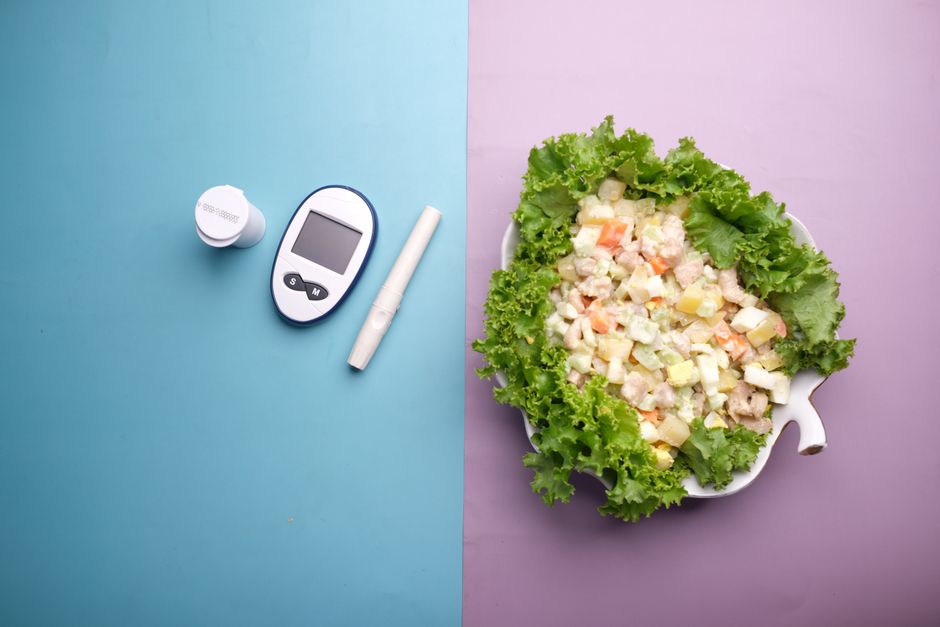
You may have heard that eating fat with carbs can slow down sugar absorption. The idea has some truth to it, but the full picture is more complex. Fat can slow how quickly your stomach empties, which means sugar enters your bloodstream more gradually. However, this does not mean adding fat to a high-carb meal makes it healthy or that it protects you from blood sugar spikes. The science shows a real effect, but it comes with important trade-offs.
How Fat Affects Blood Sugar After a Meal
When you eat carbohydrates, your body breaks them down into glucose. That glucose enters your bloodstream, and your pancreas releases insulin to help move it into your cells. The speed of this process depends on how fast your stomach empties its contents into the small intestine.
Fat slows down gastric emptying. This is a well-established physiological effect. When fat is present in a meal, the stomach holds onto the food longer. As a result, glucose from the carbs enters your bloodstream more slowly. This can produce a lower and flatter blood sugar curve in the first hour or two after eating.
Research consistently shows this effect. Studies comparing meals with the same carbohydrate content but different fat content have found that higher-fat meals produce a delayed and reduced glucose peak. Some research suggests that adding fat to a meal can reduce the early blood sugar response by a meaningful amount.
But the story does not end there. The delayed absorption can create a different problem later. Blood sugar may stay elevated for a longer period overall, even if the peak is lower. Some studies indicate that adding fat to carbohydrates can keep blood sugar higher at the two-hour and three-hour marks compared to carbs alone.
What the Research Actually Shows
Several studies have looked at how fat and carbohydrates interact in the body. One area of research focuses on meals with white bread or rice, which are high in refined carbs. Adding butter, oil, or cheese to these meals has been shown to blunt the initial glucose rise.
Some research published in peer-reviewed journals has examined this effect in people with type 2 diabetes. The findings are not uniform. Some studies show that fat reduces the early glucose spike. Others show that the overall glucose response, measured over several hours, is not improved and may even be worse.
This matters because blood sugar control is not just about the peak. It is about the total exposure of your body to glucose over time. A meal that produces a lower peak but a longer tail of elevated glucose may not be better for your metabolic health.
The evidence is mixed on whether the fat-with-carbs strategy is genuinely helpful. The effect on early glucose is real. The effect on overall glucose control is less clear and may depend on the type of fat, the type of carbohydrate, and your individual metabolic status.
Why This Matters for People With Diabetes or Prediabetes
For people with diabetes or prediabetes, blood sugar management is a daily concern. The idea that adding fat to carbs could “protect” against spikes sounds appealing. But the reality is more nuanced.
Slower absorption can help in some situations. For example, if you are going to eat a small serving of fruit or a piece of bread, adding a source of fat like nuts or avocado may help prevent a rapid rise in glucose. This is a common recommendation from some diabetes educators and dietitians.
However, this should not be used as a license to eat large amounts of refined carbohydrates. Adding cheese to a large serving of white pasta does not make the pasta healthy. The fat may blunt the early spike, but the total carbohydrate load still matters. Your body still has to process all that glucose, just over a longer period.
There is another concern. Regular consumption of high-fat, high-carb meals may contribute to insulin resistance over time. Some research suggests that the combination of fat and carbohydrate in the same meal can be more detrimental to metabolic health than either nutrient alone. This is an area of active research, and the evidence is not conclusive, but it is worth taking seriously.





Practical Tips for Managing Blood Sugar With Meals
If your goal is to manage blood sugar, there are more reliable strategies than adding fat to carbs. These approaches are supported by stronger evidence.
- Eat protein and fiber with carbs. Protein and fiber also slow digestion and can help stabilize blood sugar. Unlike fat, they add nutritional value without the extra calories and potential metabolic downsides.
- Choose whole grains over refined grains. Whole grains contain fiber and other nutrients that slow glucose absorption. The effect is built into the food itself, so you do not need to add anything.
- Watch portion sizes. The total amount of carbohydrate in a meal matters more than what you eat alongside it. A smaller portion of carbs will produce a smaller glucose response regardless of what else is on the plate.
- Move after meals. Light physical activity, like a 10-15 minute walk after eating, can help your muscles take up glucose from the blood. This is a well-established effect.
- Consider the order of foods. Some research suggests that eating protein and vegetables before carbohydrates can reduce the post-meal glucose rise. This is an emerging area, but the early evidence is promising.
These strategies are not mutually exclusive. You can combine them. But if you are choosing one change to make, reducing refined carbohydrate portions and adding fiber or protein is likely to have a bigger impact than adding fat.
Does the Type of Fat Matter?
Not all fats are the same when it comes to blood sugar. Saturated fats, like those in butter and fatty meats, may behave differently than unsaturated fats, like those in olive oil, nuts, and avocados.
Some research suggests that unsaturated fats may have a more favorable effect on insulin sensitivity. Monounsaturated fats, in particular, have been studied for their potential benefits in blood sugar management. However, the evidence is not strong enough to make definitive recommendations about which fat to add to carbs.
There is also the question of calories. Fat is the most calorie-dense nutrient, providing 9 calories per gram compared to 4 calories per gram for carbohydrates and protein. Adding significant amounts of fat to meals can lead to weight gain over time. Weight gain is one of the strongest risk factors for developing type 2 diabetes and for worsening blood sugar control in people who already have it.
So even if adding fat to carbs helps blunt a glucose spike in the short term, the long-term effects of regular high-fat, high-carb meals may work against your metabolic health.
What About the Glycemic Index?
The glycemic index (GI) is a measure of how quickly a carbohydrate-containing food raises blood sugar. Foods with a high GI, like white bread and sugary drinks, produce rapid spikes. Foods with a low GI, like lentils and most vegetables, produce slower, smaller rises.
Adding fat to a high-GI food can lower its glycemic response. This is the mechanism behind some of the research on fat and carbs. In effect, the fat converts a high-GI meal into something that behaves more like a medium-GI meal in terms of early glucose response.
But the glycemic index only captures the first two hours after eating. It does not capture the full picture of glucose metabolism. Some researchers have argued that the glycemic load, which accounts for both the GI and the amount of carbohydrate, is a more useful measure. Others have pointed out that individual responses to the same food vary widely.
The practical takeaway is simple. The GI of a food is not fixed. It changes based on what you eat with it, how you prepare it, and your own metabolism. Adding fat is one way to change it, but not necessarily the best way.
The Bottom Line on Fat and Carbs
Eating fat with carbs can slow down sugar absorption and reduce the early blood sugar spike. This is a real physiological effect supported by research.
However, this does not mean the strategy is good for your health. The delayed absorption may extend the time your blood sugar stays elevated. The extra calories from fat can contribute to weight gain. And the combination of high fat with high carbs may not be ideal for long-term metabolic health.
If you are managing blood sugar, the most evidence-based approach is to focus on the quality and quantity of carbohydrates you eat, include protein and fiber in your meals, and stay physically active. Adding fat to carbs is not a reliable strategy for blood sugar control. It is a modification that changes the timing of glucose absorption, not a solution to the underlying challenge of carbohydrate metabolism.
Frequently Asked Questions
Does eating fat with carbs lower blood sugar?
Fat can lower the early blood sugar peak by slowing stomach emptying, but it may keep blood sugar elevated for longer overall. The total effect on blood sugar control is not clearly beneficial.
Is it good to eat fat with carbs for diabetes?
For people with diabetes, adding fat to carbs is not a recommended strategy for blood sugar management. The evidence is mixed, and the extra calories and potential long-term effects on insulin sensitivity are concerns.
What slows down sugar absorption better than fat?
Fiber and protein also slow sugar absorption and provide more nutritional benefit than fat. Choosing whole grains and eating vegetables with meals are evidence-based ways to manage blood sugar.
Why does fat with carbs cause a delayed spike?
Fat slows gastric emptying, which delays the release of glucose into the bloodstream. This produces a lower peak but can extend the time blood sugar stays elevated.
