
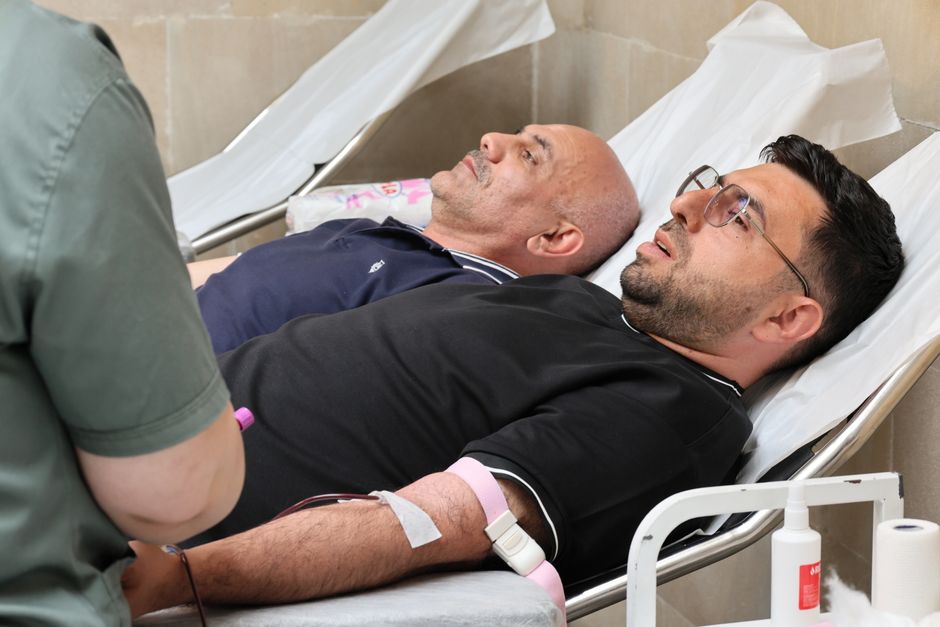
In the United States, you generally do not get paid for donating whole blood. The Food and Drug Administration (FDA) requires that blood be collected from volunteer donors, and most blood centers operate on that model. You may, however, receive compensation for certain other procedures, such as plasma donation or platelet donation through specific programs. The rules depend on what is being collected and where you live.
This is one of those topics where the details matter more than the headline. “Donating blood” covers several different procedures, and the payment rules are not the same for all of them. Understanding the difference helps you know what to expect before you make an appointment.
Do You Get Money For Donating Blood in the US?
No. Whole blood donation in the US is built on a volunteer model. The FDA’s guidance calls for blood establishments to collect whole blood from volunteer, unpaid donors. This is not just a policy preference — it is tied to the safety of the blood supply.
The reasoning is straightforward. If donors are paid, there is a concern that people might give blood when it is not safe for them to do so — for example, if they are unwell or giving too frequently to earn money. Volunteer donation reduces that incentive. Countries that pay for blood, or that have historically done so, have grappled with higher rates of transfusion-transmitted infection. That is why the volunteer system is widely regarded as the safer standard.
So when you donate whole blood at the American Red Cross or a community blood center, you will not receive cash. You may receive a small token — a T-shirt, a snack, a coupon, or entry into a drawing. These are considered gifts, not payment.
There is one important exception to keep in mind. Some blood centers offer what are sometimes called “donor rewards” or points programs. These are generally structured so they do not constitute direct payment for the blood itself. The line between a gift and payment is something regulators watch closely.
Can You Get Paid for Plasma or Platelets?
Yes, in many cases. Plasma donation is the clearest example. Plasma is the liquid part of blood, and it is used to make therapies for people with immune disorders, bleeding disorders, and other conditions. Plasma collection centers — separate from volunteer blood centers — commonly pay donors.
This is a genuinely different activity from whole blood donation. Plasma can be donated more frequently than whole blood because the body replaces plasma relatively quickly. The FDA allows plasma donation as often as every 28 days at licensed centers, though individual centers set their own schedules within those limits.
Platelet donation is a middle case. Some centers offer compensation or rewards for platelet donations because the procedure takes longer — often around two hours — and donors are harder to find. Whether you are paid depends on the specific center and program.
Here is a point many people miss: the payment rules are not about the value of your blood. They are about how the product is regulated and used. Plasma collected at a paid center typically goes into manufacturing medicines, not directly into a patient’s vein. Whole blood from a volunteer goes straight to hospitals for transfusion.
Why Doesn’t the US Pay for Whole Blood?
The volunteer system is a deliberate safety choice, not an accident. The FDA’s position is that paying donors for whole blood creates risks that outweigh the benefits.
The core concern is donor honesty. Paid donors may be more likely to conceal risk factors — recent illness, travel to areas with infectious disease, or behaviors that could transmit infection — in order to qualify for payment. Volunteer donors have less incentive to hide that information.
There is also the matter of donor health. Whole blood donation removes red blood cells, and the body needs time to replace them. The FDA sets a minimum interval between whole blood donations of 8 weeks (56 days). A paid system could tempt donors to give more often than is safe for them.
Research on blood safety has generally supported the volunteer model. Countries that rely on volunteer donors tend to have lower rates of transfusion-transmitted infections than those that pay. That said, the evidence is not perfectly clean — many factors affect blood safety, and the volunteer model is one part of a larger system that includes testing and screening.




What About Selling Blood Versus Donating It?
In the US, you cannot legally sell your whole blood for transfusion. The distinction between “selling” and “donating” is not just about money — it is about the regulatory framework.
Plasma and other components collected at licensed centers can be compensated because they are treated as a source material for manufacturing. Whole blood for transfusion is held to the volunteer standard.
This creates a confusing landscape for people searching for ways to earn money from blood. You will find plenty of online claims about “paid blood donation.” Most of these refer to plasma centers, not whole blood. Some refer to research studies, which are a separate category entirely.
Can You Get Paid to Donate Blood for Research?
Yes, sometimes. Clinical research studies that need blood samples often compensate participants for their time and inconvenience. This is not the same as donating blood for transfusion.
Research compensation is typically modest and is meant to cover time and travel, not to purchase blood as a product. The amounts vary widely by study. If you are considering a research study, read the consent form carefully — it will explain what is being collected and what compensation is offered.
Be cautious of any program that promises large sums for blood. Legitimate research compensation is usually small. Large payments for whole blood are a red flag.
What Are the Rules Around Blood Donation Frequency?
The FDA sets minimum intervals to protect donors. For whole blood, the minimum interval is 8 weeks (56 days). For plasma, it is 28 days at licensed centers. For platelets, the interval is shorter — typically 7 days — because platelets are replaced more quickly, though there are limits on how many times per year you can donate.
These intervals exist for your safety, not to limit your generosity. Giving too often can lead to anemia and fatigue. Blood centers check your hemoglobin before each donation for this reason.
If you are considering plasma donation for payment, be aware that frequent donation can affect your protein levels and immune function. Centers monitor donors for this. The compensation is real, but so is the commitment.
Is There Any Situation Where You Get Paid for Whole Blood?
There are narrow exceptions. In some cases, a person may be compensated for donating blood for a specific patient — for example, a directed donation to a family member. These arrangements are uncommon and are handled case by case.
Some states have their own rules, but the federal volunteer standard generally governs whole blood collection for transfusion. If you are unsure about a specific program, ask the blood center directly what the compensation is and what it covers.
The bottom line: if someone offers you cash for whole blood in the US, ask questions. It is likely a plasma program, a research study, or something that does not fit the standard volunteer model.
Frequently Asked Questions
Do you get paid for donating blood at the Red Cross?
No. The American Red Cross collects whole blood from volunteer donors and does not pay cash for donations. You may receive a small gift or recognition item, but not payment.
How much do plasma centers pay per donation?
Payment varies widely by center and location, and there is no single national rate. Some centers pay a flat fee per visit, while others use a scale that increases with frequency; check with a specific center for its current rates.
Can you sell your blood in the US?
You cannot legally sell whole blood for transfusion in the US. You can be compensated for plasma donation at licensed centers, which is a different procedure and product.
Is donating blood for money safe?
Plasma donation at licensed centers is regulated and generally considered safe for healthy adults, though it carries risks like dehydration and lowered protein levels with frequent donation. Whole blood donation for payment is not permitted in the US, so the question of safety there is largely theoretical.
