
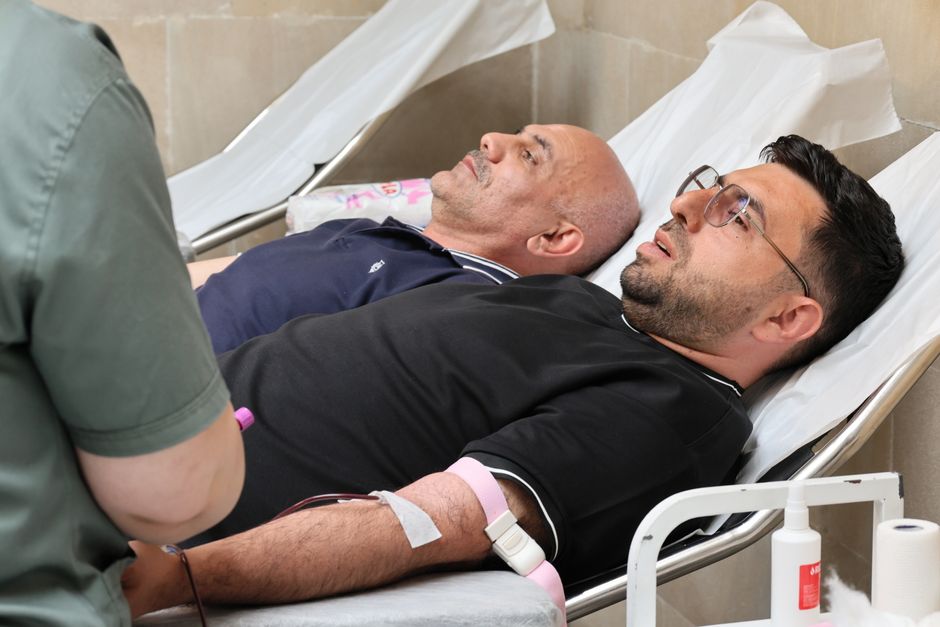
You give a pint of blood, and you walk out with a cookie, a juice box, and a sticker that says you saved a life. But do you get anything for donating blood beyond the free snack? The honest answer is yes — and the benefits fall into three categories: a small free health check, a few long-term health associations that research has explored, and the personal satisfaction of helping someone. What you do not get is money, unless you donate plasma at a paid collection center.
That short answer matters because the internet is full of bigger promises. Some websites claim regular donation “detoxes” your blood, prevents heart attacks, or burns hundreds of calories. Some of those ideas have real research behind them. Others do not. This guide separates the two, explains what your body actually does after a donation, and covers who should not donate.
Do You Get Anything For Donating Blood?
You get a free mini health screening every time you donate, and that is the most concrete thing you walk away with.
Before the needle ever goes in, staff check your hemoglobin or hematocrit, blood pressure, pulse, and temperature. Your blood is also tested afterward for several infectious diseases, including HIV, hepatitis B, hepatitis C, and syphilis. If something flags, the collection center contacts you. In that sense, a donation doubles as a rough checkup you did not have to schedule.
It is not a substitute for a physical. The screening is designed to protect the recipient, not to diagnose you. A normal result does not rule out disease, and the testing does not cover cholesterol, blood sugar, thyroid function, or cancer screening. The American Red Cross and other major blood centers make this clear to donors.
The other guaranteed return is non-medical. Donated blood is genuinely scarce and genuinely needed. One donation can be separated into red cells, plasma, and platelets, so a single pint may help more than one patient. That is a real benefit, though it is a benefit to someone else.
Does Donating Blood Burn Calories or Help You Lose Weight?
Donating blood does burn calories, but the amount is too small to matter for weight loss.
Your body spends energy replacing the plasma volume, red blood cells, and other components you gave away. Estimates of that cost vary, and no major medical organization treats blood donation as a weight-management tool. Even generous estimates land in the range of a light snack. Eating one cookie afterward can erase the entire effect.
Weight loss requires a sustained calorie deficit over time. A single donation every eight weeks, or every 16 weeks for red cell donations under some collection schedules, cannot create that. Anyone promoting blood donation as a diet strategy is stretching a small physiological fact into a claim it cannot support.
Can Donating Blood Lower Iron Levels?
Yes. Removing red blood cells removes iron, and this is the best-documented biological effect of donation.
Each red blood cell carries hemoglobin, and hemoglobin contains iron. When you donate a unit of whole blood, you lose a meaningful amount of iron along with it. Your body then pulls iron from storage to rebuild. For most healthy adults, that process is uneventful. For people who donate often, it can lead to iron deficiency.
This is why regular donors are sometimes advised to take iron supplements or to space out donations. Research has found that frequent whole blood donors, particularly women who menstruate, are at higher risk of low iron stores even when their hemoglobin still looks acceptable on a screening test. Hemoglobin can stay normal while stored iron quietly drops.
If you donate frequently and feel unusually tired, short of breath, or foggy, that is worth mentioning to a doctor. Do not start iron supplements on your own, because iron can be harmful in excess and the right dose depends on your labs.




Does Donating Blood Have Heart Health Benefits?
Some research has linked regular blood donation to lower cardiovascular risk, but the evidence is mixed and the effect is not proven.
The theory involves iron. Excess iron in the body can promote oxidative stress, and oxidative stress is involved in atherosclerosis, the process that narrows arteries. If donation lowers iron stores, the reasoning goes, it might reduce that stress. Some observational studies have reported lower rates of heart attack or cardiovascular events among regular donors.
Observational studies cannot prove cause and effect. People who donate blood tend to be healthier in the first place — they have to pass a screening to donate at all. That alone could explain why donors look healthier than non-donors in the data. Some studies have not found the benefit at all.
No major cardiology organization recommends blood donation as a way to prevent heart disease. If you donate, do it to help patients. Treat any heart benefit as an unproven possibility, not a reason to donate.
What Actually Happens to Your Body After You Donate?
Your body replaces what you lost, but not all at once. The timeline is well established.
- Plasma volume: replaced within about 24 to 48 hours, which is why you are told to drink extra fluids.
- Red blood cells: fully replaced in roughly four to six weeks.
- Iron: takes longer to restore, sometimes several months, especially if you donate again before stores recover.
This staggered recovery is why donation centers enforce minimum intervals between donations. The waiting period protects you, not just the supply. Donating again before your red cells and iron recover is what pushes frequent donors into deficiency.
In the short term, you may feel lightheaded, tired, or a little cold for a few hours. Most people feel normal by the next day. Fainting is uncommon but does happen, which is why you are asked to sit and eat before leaving.
Is There Any Downside to Donating Blood?
For most healthy adults, the risks are minor and short-lived. The main ones are bruising at the needle site, lightheadedness, and fatigue.
The more meaningful risk is iron depletion with repeated donation, which is why screening matters. A small number of people faint during or shortly after donating. Serious complications are rare.
Some people should not donate at all, and this is where you should follow your collection center’s guidance rather than general advice. You may be deferred if you:
- Have low hemoglobin or low iron
- Have an active infection or are feeling unwell
- Are pregnant
- Have certain infections, cancers, or heart conditions
- Take medications that affect blood or bleeding
- Have recently traveled to areas with specific disease risks
Eligibility rules change over time and vary by country and center. If you are unsure whether you qualify, ask the center directly. Do not rely on a general article, including this one, to clear you.
Do You Get Paid to Donate Blood?
In the United States, you generally do not get paid for whole blood or red cell donations. You can be paid for plasma donation at licensed collection centers.
Whole blood donation is almost always voluntary. Donors receive snacks, drinks, and sometimes small perks like t-shirts or gift cards from community drives, but not cash. Plasma collection works differently. Plasma takes longer to donate and can be given more often, so many centers compensate donors.
If money is your main motivation, plasma is the route where payment is standard. If your goal is to help patients directly, whole blood and platelet donation are the more common paths. Either way, the health screening and the personal benefit are the same.
Frequently Asked Questions
Do you get anything for donating blood besides a snack?
Yes. You get a free mini health screening that includes hemoglobin, blood pressure, pulse, and temperature, plus testing for several infectious diseases. You also get the personal benefit of helping patients who need transfusions.
Does donating blood burn enough calories to help with weight loss?
It burns some calories as your body replaces what you lost, but the amount is too small to support weight loss on its own. No major medical organization treats donation as a weight-management method.
Can donating blood lower your iron too much?
It can, especially with frequent donations. Each donation removes iron, and regular donors — particularly women who menstruate — are at higher risk of low iron stores even when hemoglobin still looks normal.
Do you get paid for donating blood in the US?
Whole blood and red cell donations are generally unpaid in the United States. Plasma donation at licensed centers is the main type where donors are commonly compensated.
