
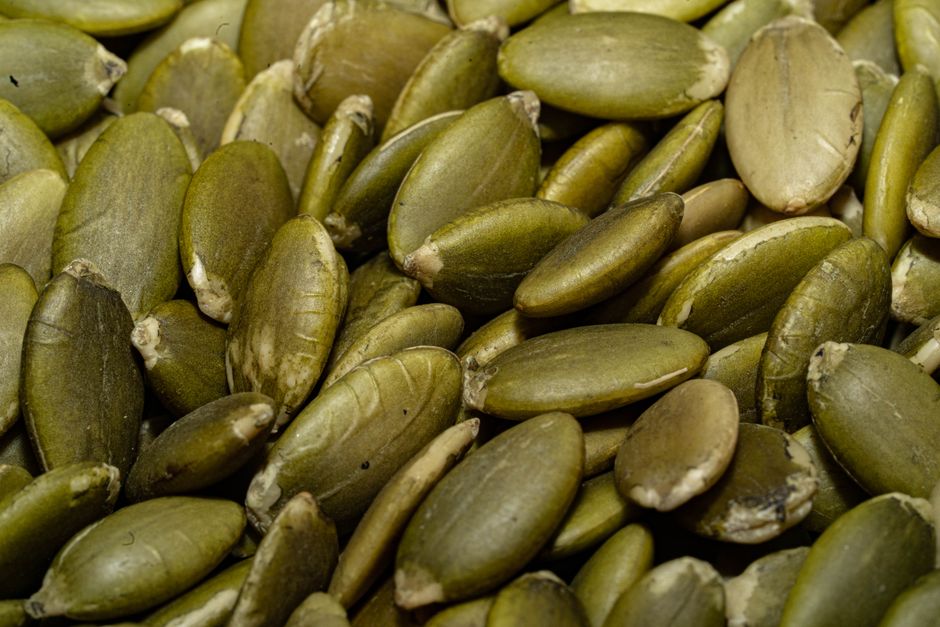
Yes, you can eat the whole pumpkin seed, shell and all. The green seed inside the white outer hull is what most people think of as a pumpkin seed, but the entire seed is edible and many people around the world eat it that way. The white shell is not only safe to eat but contains fiber and nutrients that the inner seed lacks. Whether you should eat them whole depends on texture preference and how your digestive system handles extra fiber.
What Is the Difference Between Whole Pumpkin Seeds and Shelled Seeds?
Whole pumpkin seeds are the seed in its natural state with the outer white hull intact. What you usually see in stores labeled as “pepitas” are the shelled inner seed. Pepitas are green and flat. Whole seeds look like small white tear drops with a pointed tip.
The texture is the biggest difference. Whole seeds are chewy and crunchy. The shell has a tough, fibrous texture. Pepitas are softer and easier to chew. Many people find whole seeds harder to eat in large amounts because of the hull.
Nutritionally, the shell adds fiber. A one-ounce serving of whole pumpkin seeds has about 5 grams of fiber. The same amount of shelled pepitas has about 2 grams. The shell also contains more zinc and magnesium by weight, though the difference is small.
Most of the fat and protein is in the inner seed. Both forms are good sources of healthy fats, protein, and minerals. The choice comes down to what you prefer to eat and how much fiber your body handles well.
Do You Eat The Whole Pumpkin Seed for Maximum Nutrition?
Eating the whole pumpkin seed gives you more fiber than eating just the inner seed. This is the main nutritional advantage. Fiber helps digestion, keeps you full longer, and supports stable blood sugar.
The shell also contains more zinc than the inner seed. Zinc supports immune function and wound healing. A 2023 study in the Journal of Food Science and Technology found that the hull of pumpkin seeds contains higher concentrations of zinc and magnesium than the kernel.
But the difference is not huge. You get solid nutrition from both forms. If you already eat a high-fiber diet with plenty of vegetables, whole grains, and legumes, the extra fiber from the shell may not matter much. If you struggle to get enough fiber, whole pumpkin seeds are an easy way to add some.
The inner seed contains most of the protein and healthy fats. Whole seeds have slightly less protein per ounce because the shell takes up some of the weight. The protein difference is small — about 7 grams for whole seeds versus 8 grams for pepitas per ounce.
Are There Any Risks to Eating Whole Pumpkin Seeds?
The main risk is digestive discomfort. The shell is high in insoluble fiber. This type of fiber does not dissolve in water. It adds bulk to stool and helps things move through the digestive tract. For most people, that is a good thing.
But if you are not used to high-fiber foods, eating a lot of whole pumpkin seeds at once can cause bloating, gas, or cramping. This is not dangerous. It is just your digestive system adjusting. Start with a small handful and see how you feel.
Another concern is the texture. The shell can be tough. People with dental issues, braces, or sensitive teeth may find whole seeds uncomfortable to chew. The shell can also get stuck between teeth.
There is no evidence that whole pumpkin seeds are toxic or harmful in any way. The shells are completely safe to eat. Some older claims that the shells contain a compound that blocks nutrient absorption have not been supported by research. As of 2026, no clinical study has found any risk from eating whole pumpkin seeds in normal amounts.


How Do Whole Pumpkin Seeds Compare to Pepitas?
| Nutrient (per 1 ounce) | Whole Pumpkin Seeds | Shelled Pepitas |
|---|---|---|
| Calories | 126 | 163 |
| Protein | 7 g | 8 g |
| Fiber | 5 g | 2 g |
| Fat | 10 g | 14 g |
| Zinc | 2.2 mg | 2.0 mg |
| Magnesium | 150 mg | 130 mg |
The table shows that whole seeds have fewer calories and less fat. This is because the shell replaces some of the seed weight. The fiber difference is the most notable. Whole seeds give you more than double the fiber.
Pepitas are more calorie-dense because they are mostly fat and protein. If you are watching calories, whole seeds give you more volume for fewer calories. If you want more fat and protein per bite, pepitas are the better choice.
What Is the Best Way to Eat Whole Pumpkin Seeds?
You can eat them raw or roasted. Roasting changes the texture. The shell becomes crunchier and easier to chew. Roasting also brings out a nutty flavor. Many people who dislike raw whole seeds enjoy them roasted.
To roast whole pumpkin seeds at home, rinse them to remove any pumpkin pulp. Spread them on a baking sheet. Toss with a small amount of oil and salt. Roast at 350°F for 10 to 15 minutes. Stir halfway through. Let them cool before eating.
You can also add whole pumpkin seeds to foods where the texture blends in. Sprinkle them on salads. Mix them into granola. Add them to oatmeal or yogurt. Grind them in a food processor and use the powder in smoothies or baked goods.
Some people soak whole pumpkin seeds before eating them. Soaking softens the shell slightly and may make digestion easier. Soak them in salted water for 8 to 12 hours, then rinse and dry them. This is not necessary but can help if you find the texture too tough.
Common Misconceptions About Eating Whole Pumpkin Seeds
One common myth is that the shell is indigestible. This is not true. The shell is mostly fiber, which the human body does not digest in the small intestine. But fiber moves through the digestive tract and is broken down by bacteria in the colon. Your body does process it. You just do not absorb calories from it.
Another myth is that whole pumpkin seeds cause appendicitis. This claim comes from the idea that small, hard seeds can get trapped in the appendix. The CDC reports that only about 1% of appendicitis cases are caused by foreign objects, and seeds are rarely involved. There is no evidence that pumpkin seeds specifically cause this problem.
Some people claim that eating the shell gives you more protein. This is wrong. The shell is mostly fiber, not protein. Almost all the protein is in the inner seed. If you want more protein, eat pepitas not whole seeds.
A third misconception is that you must remove the shell to get the nutrients. The shell contains fiber and minerals. You get more of some nutrients by eating the whole seed. You do not lose anything by leaving the shell on.
Frequently Asked Questions
Can you digest whole pumpkin seeds?
Your body does not digest the shell fully, but the fiber moves through your system and feeds gut bacteria. The inner seed is digested normally.
Are whole pumpkin seeds better for weight loss?
Whole seeds have fewer calories per ounce and more fiber, which can help you feel full longer. Pepitas are more calorie-dense per bite.
Do whole pumpkin seeds cause constipation?
The fiber in whole seeds usually helps prevent constipation. If you eat too many at once without enough water, they could cause temporary bloating.
Should you soak pumpkin seeds before eating them?
Soaking softens the shell and may make digestion easier for some people. It is not required for safety or nutrition.
