
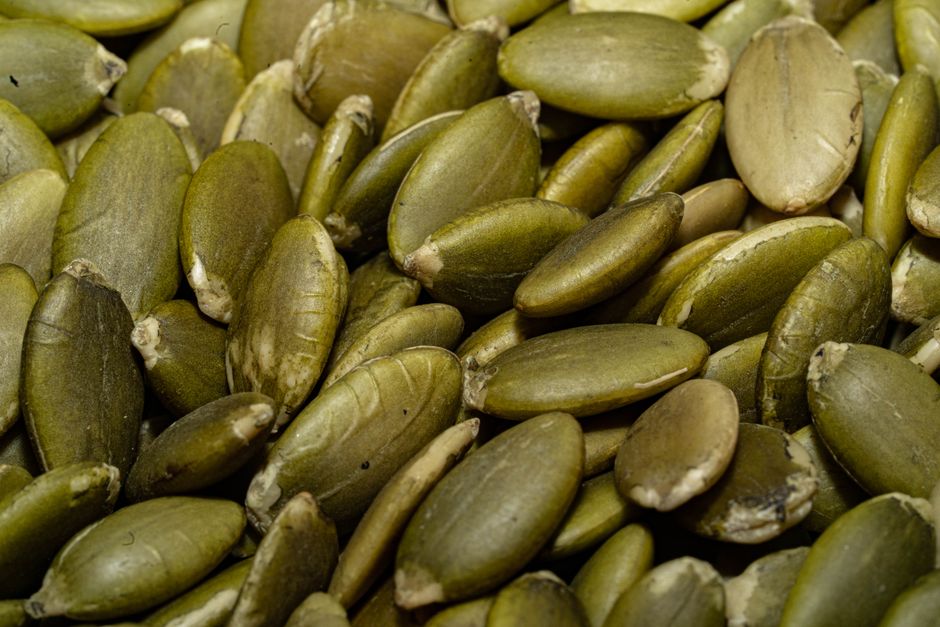
Yes, you can eat pumpkin seeds whole, shell and all. The entire seed is edible, and many people around the world eat them that way. The green seed inside is what most Americans think of as a pumpkin seed, but the white outer shell is also perfectly safe to eat. Whether you should eat them whole depends on your preference and a few practical considerations about texture and digestion.
What Is the Difference Between Pepitas and Whole Pumpkin Seeds?
This is where most confusion starts. In the grocery store you will see two products labeled as pumpkin seeds. One is the whole seed with the white or cream-colored outer hull still attached. The other is the green inner seed with the hull removed.
The green seed without the hull is called a pepita. Pepitas come from specific varieties of pumpkins that naturally have hull-less seeds. You can eat pepitas straight out of the bag. No shell to deal with. No tough outer layer.
Whole pumpkin seeds still have the hull on. That hull is fibrous and chewy. Some people find it unpleasant. Others enjoy the crunch. Both forms are nutritious. The choice is personal and not about health.
Do You Eat Pumpkin Seeds Whole or Shelled?
You can eat pumpkin seeds either way. There is no right answer. The whole seed with the shell is edible from the moment you open the package. You do not need to remove anything.
That said, the shell is tough. It requires more chewing than the inner seed. Some people find it hard to digest. If you have digestive issues like diverticulitis, you may want to avoid the shells. The sharp edges of the hull can sometimes irritate the digestive tract in sensitive individuals.
Most people in the United States eat shelled pepitas. In other parts of the world, especially Mexico and parts of Europe, eating the whole seed is common. Roasting the whole seeds with salt or spices softens the hull slightly and improves the flavor.
What Does the Research Say About Eating Pumpkin Seeds Whole?
The research on pumpkin seeds focuses on the seed itself, not the hull. Most studies use the whole seed ground into a powder or the oil extracted from the seed. This means the health benefits attributed to pumpkin seeds generally apply whether you eat them shelled or whole.
Pumpkin seeds are rich in magnesium, zinc, and healthy fats. A one-ounce serving of whole pumpkin seeds provides about 150 calories and roughly 5 grams of protein. The shell adds fiber. One study published in the journal Nutrients found that pumpkin seed consumption was linked to improved heart health markers, including lower blood pressure in some populations.
The fiber in the shell is the main nutritional difference between whole and shelled seeds. The shell contains insoluble fiber, which helps with regularity and digestion. If you eat only pepitas, you miss that fiber. But you also get a more concentrated source of protein and fat per bite since the shell is mostly fiber with fewer nutrients.

Are There Any Risks to Eating Pumpkin Seeds Whole?
For most people, eating whole pumpkin seeds is safe. The risks are minimal. The main concern is the texture and how your body handles the fibrous shell.
Some people report that whole pumpkin seeds cause bloating or gas. This is usually because the hull is tough to break down. Chewing thoroughly helps. If you swallow large pieces without chewing, they may pass through your system undigested. That is not dangerous, but it can cause discomfort.
There is a common worry that the shell can cause appendicitis. This is not supported by medical evidence. The American College of Gastroenterology states that seeds do not cause appendicitis. The idea comes from old medical theories that were disproven decades ago.
One real risk is choking. Whole pumpkin seeds are small and hard. Children under four years old should not eat them whole. Adults should chew carefully, especially if eating a handful quickly.
How Should You Eat Whole Pumpkin Seeds?
If you decide to eat whole pumpkin seeds, preparation matters. Raw whole seeds are very hard. Roasting softens the hull and makes them easier to chew and digest.
To roast whole pumpkin seeds at home, rinse them to remove pumpkin pulp. Spread them on a baking sheet. Toss with a small amount of oil and salt. Roast at 300 degrees Fahrenheit for about 30 to 40 minutes. Stir halfway through. Let them cool completely before eating.
You can also buy pre-roasted whole pumpkin seeds at most grocery stores. Look for dry roasted varieties without added sugar. Flavored versions with spices like chili or garlic are also available and add variety.
| Form | Texture | Fiber Content | Best For |
|---|---|---|---|
| Whole raw seeds | Very hard, chewy | High | Roasting at home |
| Whole roasted seeds | Crunchy, slightly softened | High | Snacking, salads |
| Shelled pepitas | Soft, tender | Low | Eating raw, baking, smoothies |
| Ground pumpkin seeds | Powdery | Depends on form | Adding to oatmeal, yogurt |
Common Misconceptions About Eating Pumpkin Seeds Whole
One of the most persistent myths is that the shell is inedible. This is not true. The shell is edible. It is just tougher than the inner seed. Many cultures have eaten whole pumpkin seeds for centuries without issue.
Another misconception is that you need to soak pumpkin seeds before eating them. Soaking can help soften the hull, but it is not necessary. Roasting does the same thing more effectively. Soaking raw seeds can also reduce phytic acid, which some people believe improves mineral absorption. The evidence for this in a practical diet is weak. Most people get plenty of minerals from other foods.
A third myth is that whole pumpkin seeds have more nutrients than shelled seeds. The shell is mostly fiber. It contains some minerals, but the green seed inside is where most of the zinc, magnesium, and healthy fats are. Eating the shell adds fiber, not a significant nutrient boost.
Some people claim that eating pumpkin seeds whole helps with parasite removal. This is widely claimed but strong evidence is limited. Traditional medicine in some cultures uses pumpkin seeds for this purpose, but modern research does not confirm consistent effectiveness. If you suspect a parasitic infection, see a doctor.
What to Avoid When Eating Pumpkin Seeds
Avoid eating whole pumpkin seeds that are stale or rancid. The high fat content in seeds makes them go bad over time. Rancid seeds taste bitter and can cause stomach upset. Store whole pumpkin seeds in an airtight container in a cool, dark place. The refrigerator extends their shelf life significantly.
Do not eat pumpkin seeds that are still covered in pumpkin pulp unless you roast them first. The raw pulp can harbor bacteria. Rinse the seeds thoroughly before roasting.
Avoid overeating. A serving size is about one ounce, which is roughly a quarter cup. Eating several handfuls in one sitting can lead to digestive discomfort due to the high fiber and fat content. Start with a small amount if you are not used to eating whole seeds.
Watch out for added salt. Many commercial roasted pumpkin seeds are heavily salted. A single ounce can contain 200 to 400 milligrams of sodium. If you are watching your salt intake, look for unsalted or lightly salted versions.
Frequently Asked Questions
Can you eat the shell of a pumpkin seed?
Yes, the shell is edible. It is fibrous and chewy but safe to eat. Roasting softens the shell and makes it easier to chew.
Are whole pumpkin seeds better for you than shelled?
Whole seeds have more fiber from the shell. Shelled seeds have more protein and fat per bite. Both are nutritious, and neither is clearly better.
Do pumpkin seeds cause appendicitis?
No. This is a myth that has been disproven. Medical organizations confirm that seeds do not cause appendicitis.
How many whole pumpkin seeds should you eat per day?
A standard serving is one ounce, about a quarter cup. This provides a good balance of nutrients without overloading on fiber or calories.
