
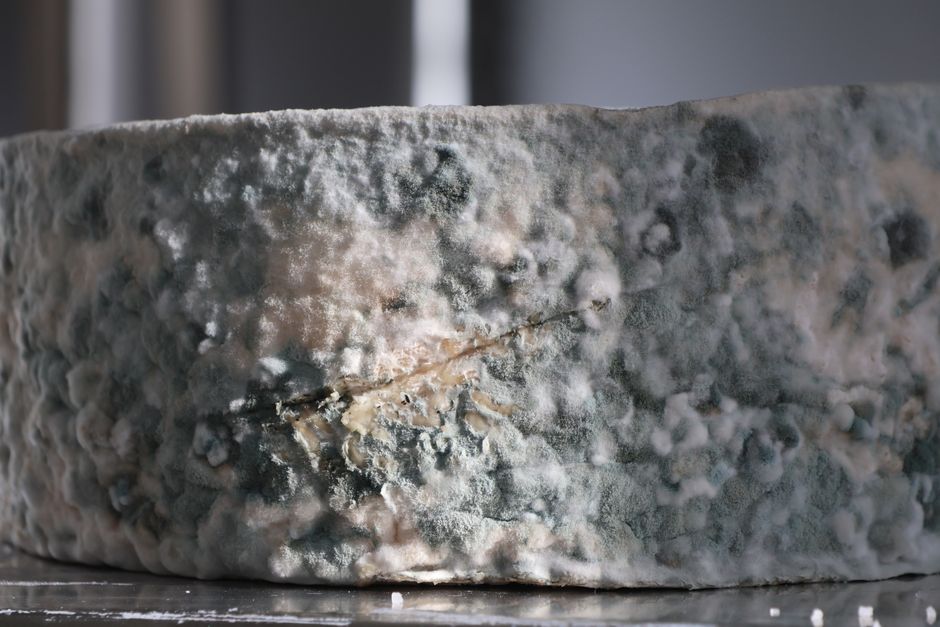
Finding mold on a block of cheese is a common kitchen moment. You might be tempted to cut it off and eat the rest. For some cheeses that is perfectly fine. For others, it is not safe at all. The answer depends on the type of cheese and the type of mold. Hard cheeses can usually be saved. Soft cheeses should be thrown away. Here is the truth about eating moldy cheese and how to tell the difference.
Can You Eat Moldy Cheese?
The short answer is: it depends on the cheese. Hard cheeses like cheddar, Parmesan, and Swiss can be salvaged by cutting away the moldy part. Soft cheeses like mozzarella, ricotta, and cream cheese must be discarded entirely.
The reason comes down to how mold grows. On hard cheese, mold does not penetrate deeply into the interior. On soft cheese, mold spreads easily through the moisture. Eating mold from soft cheese can make you sick because the mold may produce toxins that cause food poisoning symptoms.
Why Mold Grows on Cheese
Mold is a type of fungus that lives almost everywhere. It needs moisture, oxygen, and food to grow. Cheese provides all three. The surface of cheese has enough moisture for mold spores to land and multiply.
Not all mold on cheese is bad. Some cheeses are made with mold on purpose. Blue cheese contains Penicillium roqueforti. Brie and Camembert use Penicillium camemberti. These are safe to eat and give the cheese its signature flavor and texture.
The problem is when unwanted mold lands on cheese. That mold can be any number of wild fungi. You cannot tell by looking at it whether it is harmless or dangerous. Color does not help either. White, green, blue, black, or pink mold can all be problematic.
Hard Cheese Can Be Saved
Hard cheeses have low moisture content. This makes it harder for mold to spread below the surface. The USDA food safety guidance says you can cut away the moldy part of hard cheese and eat the rest.
To do this safely, cut at least one inch around and below the mold spot. Do not let your knife touch the mold and then touch the clean cheese. Use a clean knife and cut away more than you think is necessary. The visible mold is only part of the problem. The root threads can extend further than you can see.
This applies to cheeses like:
- Cheddar
- Parmesan
- Swiss
- Colby
- Monterey Jack
If the cheese is hard but has mold covering a large portion of the surface, throw it away. The one-inch rule works for small spots. If a quarter of the block is moldy, the entire cheese is compromised.
Soft Cheese Must Be Thrown Away
Soft cheeses contain more moisture. Mold spreads through them quickly and easily. Cutting off the visible mold does not remove the invisible roots that have traveled through the cheese.
These cheeses must go directly into the trash:
- Mozzarella
- Ricotta
- Cottage cheese
- Cream cheese
- Brie
- Camembert
- Crumbled feta
- Shredded cheese of any kind
Shredded cheese is especially risky. The shredding process exposes more surface area. Mold can grow throughout the bag even if you only see it on a few pieces. The same rule applies to sliced cheese. Throw it away.
Soft cheese with mold on the surface may look like you can just scrape it off. You cannot. The mold has already spread through the entire product even if you cannot see it.
What Happens If You Eat Moldy Cheese?
Eating moldy cheese does not always make you sick. Many people accidentally eat a small amount and experience no symptoms at all. Your stomach acid can destroy many types of mold before they cause problems.
But some molds produce mycotoxins. These are toxic compounds that can cause food poisoning. Symptoms include nausea, vomiting, diarrhea, and stomach cramps. These symptoms usually appear within a few hours of eating the contaminated food.
People with weakened immune systems, pregnant women, and older adults face higher risks. For these groups, even a small amount of moldy cheese can cause a more serious infection. If you belong to one of these groups, do not take any chances with moldy cheese.
If you ate moldy cheese and feel fine, you are likely in the clear. If you develop symptoms, stay hydrated and monitor how you feel. Seek medical attention if symptoms are severe or last more than a day.
How to Tell If Cheese Has Gone Bad
Mold is not the only sign that cheese has spoiled. Cheese can also harbor harmful bacteria that cause no visible changes. Trust your senses.
Smell is the first indicator. Cheese naturally has a strong odor, especially aged varieties. But a sudden change in smell is a warning sign. If the cheese smells like ammonia, it has started to spoil. This happens when the cheese is breaking down beyond its intended state.
Texture changes are also important. Slime on the surface of hard cheese means bacteria are growing. This is different from the natural rind. If the cheese feels sticky or tacky, throw it away.
Unusual colors that appear over time are another red flag. Blue cheese naturally has blue veins throughout. But a patch of green or black fuzz on the surface of any cheese is unwanted mold.
How to Store Cheese to Prevent Mold
Proper storage extends the life of cheese and reduces the chance of mold growth. The main enemies of cheese are air and moisture imbalance.
Wrap cheese in wax paper or parchment paper first. Then place it in a loosely closed plastic bag or container. This allows the cheese to breathe while preventing it from drying out. Tight plastic wrap traps moisture and encourages mold growth.
Store cheese in the warmest part of the refrigerator, such as the vegetable drawer or a dedicated cheese drawer. The back of the fridge is too cold and can alter the texture. The door is too warm and fluctuates too much.
Keep different cheeses separate. Mold spores from one cheese can land on another. If one cheese develops mold, check all nearby cheeses for signs of contamination.
Buy smaller amounts of cheese that you will eat within a few weeks. A large block that sits in the fridge for months is more likely to develop mold than a small piece you finish quickly.
Is It Safe to Eat Cheese With Natural Mold?
Some cheeses are intentionally made with mold. These include blue cheese, Brie, Camembert, and Gorgonzola. The mold used in these cheeses is safe to eat.
But there is a difference between the intended mold and spoilage mold. Blue cheese can develop unwanted mold on the outside even though the blue veins inside are safe. If you see white or gray fuzz on the outside of a blue cheese that was not there before, it is spoiled.
For aged cheeses with natural rinds, like some Gouda or Gruyère, the rind is not mold. It is a dried, hardened surface that develops during the aging process. This is safe to eat, though some people prefer to cut it off.
If you are not sure whether a cheese has natural mold or spoilage mold, ask yourself when it appeared. If the mold was there when you bought it, it is probably intentional. If it appeared during storage in your fridge, it is spoilage.
Frequently Asked Questions
Can you cut mold off hard cheese and eat it?
Yes, for hard cheeses like cheddar or Parmesan, cut at least one inch around and below the mold spot. Make sure your knife does not touch the mold and then the clean cheese.
Can you eat moldy soft cheese if you cut the mold off?
No, throw away soft cheeses like mozzarella, ricotta, and cream cheese if they have mold. The mold spreads through the moisture in soft cheese even when you cannot see it.
What happens if you accidentally eat moldy cheese?
Many people experience no symptoms at all. Some may develop nausea, vomiting, or diarrhea within a few hours. Seek medical attention if symptoms are severe or last more than a day.
Is all mold on cheese dangerous?
No, some cheeses are made with safe, intentional mold like blue cheese and Brie. Unwanted mold that grows during storage is the type you need to avoid.
