
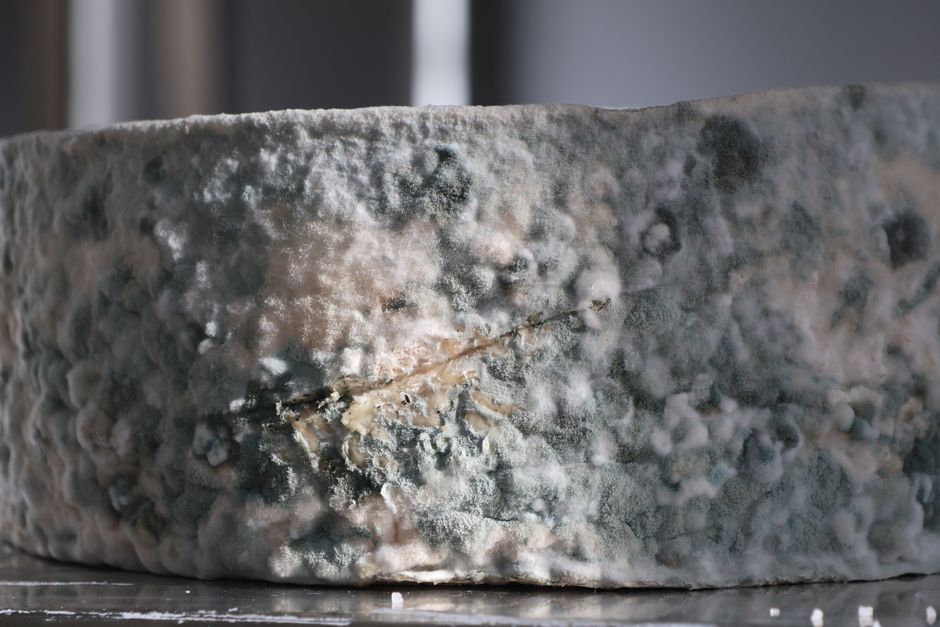
Moldy cheese is not always unsafe to eat, but you need to know which mold is which. Hard cheeses like Parmesan and cheddar can be salvaged by cutting off the moldy part with a one-inch margin. Soft cheeses like brie, cottage cheese, and shredded cheese should be thrown away entirely. The key difference is how deep mold can grow into the cheese.
What Happens When Mold Grows on Cheese?
Mold is a fungus that spreads through tiny threads called hyphae. On hard cheese, these threads cannot push deep into the dense structure. They stay mostly on the surface. On soft cheese, the threads spread easily through the moist, open texture.
The visible spots you see on cheese are just the reproductive part of the mold — like the tip of an iceberg. The actual root system may extend much farther. This is why cutting off just the visible mold is only safe for hard cheeses.
Some molds produce mycotoxins, which are toxic compounds that can make you sick. The USDA and FDA both state that certain mycotoxins can cause nausea, vomiting, and long-term health issues with repeated exposure. But not every mold produces mycotoxins, and the type of cheese matters a lot.
Which Cheeses Can You Safely Cut Mold From?
Hard and semi-hard cheeses are generally safe to salvage. This includes Parmesan, Romano, cheddar, Colby, Swiss, and Gruyère. The USDA recommends cutting at least one inch around and below the mold spot. Keep the knife clean so it does not touch the mold and then the rest of the cheese.
After cutting, re-cover the cheese with fresh wrap. Do not just put the old wrap back on — it may have mold spores on it. The remaining cheese should be safe to eat if you followed the one-inch rule.
Here is a quick reference for common cheese types:
| Cheese Type | Examples | Action |
|---|---|---|
| Hard | Parmesan, Romano, aged cheddar | Cut 1 inch around mold, safe to eat |
| Semi-hard | Swiss, Gouda, provolone | Cut 1 inch around mold, safe to eat |
| Soft | Brie, Camembert, cream cheese | Discard entirely |
| Crumbled or shredded | Feta, blue cheese crumbles | Discard entirely |
| Blue-veined | Roquefort, Gorgonzola, Stilton | Only safe if mold is intended type |
Is Moldy Cheese Safe To Eat When It Is Soft or Shredded?
No. Soft cheeses like brie, goat cheese, cottage cheese, and ricotta should be thrown away if you see mold. The mold threads can spread throughout the entire container even if only a small spot is visible. The same rule applies to shredded, crumbled, or sliced cheese — the increased surface area means mold spreads faster and deeper.
Research published in the Journal of Food Protection found that mold can penetrate soft cheese up to two centimeters below the visible surface within just a few days. By the time you see mold on soft cheese, the whole product is likely contaminated.
Cream cheese is especially risky. It is high in moisture and low in acidity, which allows mold to grow rapidly. If you see mold on cream cheese, discard it immediately. Do not try to scoop out the moldy part.

What About Blue Cheese — Is the Mold Safe?
Blue cheese is a special case. The blue veins in cheeses like Roquefort, Gorgonzola, and Stilton come from Penicillium roqueforti, a specific mold that is safe to eat. This mold is added intentionally during production. It is not the same as the random mold that grows on your cheese at home.
If you see white, green, or fuzzy mold growing on the surface of blue cheese, that is not the intended mold. That is contamination. The USDA advises cutting off the contaminated surface area by at least one inch, just like with hard cheese. If the surface mold has spread widely, throw the whole piece away.
Some people report allergic reactions to blue cheese mold. This is real but rare. If you have a known mold allergy, it is wise to avoid blue-veined cheeses entirely. The CDC notes that people with weakened immune systems should also be cautious with blue cheese.
What Are the Risks of Eating Moldy Cheese?
The most common risk is food poisoning from bacteria that may have grown alongside the mold. Mold itself does not always cause immediate illness, but it often signals that the cheese has been stored improperly or too long. Bacteria like Listeria and Salmonella can grow in the same conditions that allow mold to thrive.
Mycotoxins are a separate concern. Aflatoxins, produced by certain Aspergillus molds, are known carcinogens. However, aflatoxin contamination in cheese is uncommon in the United States because of strict dairy regulations. The FDA monitors cheese imports and domestic production for mycotoxin levels.
Allergic reactions are possible. Inhaling mold spores from cheese can trigger respiratory symptoms in sensitive people. This is more likely if you sniff the cheese right after unwrapping it. The American Academy of Allergy, Asthma & Immunology advises people with mold allergies to avoid sniffing aged cheeses.
How Should You Store Cheese to Prevent Mold?
Proper storage reduces mold growth significantly. Wrap hard cheese in wax paper or parchment paper first, then loosely in plastic wrap. This lets the cheese breathe while keeping it from drying out. Do not seal it airtight — that traps moisture and encourages mold.
Soft cheese should stay in its original packaging until opened. After opening, re-wrap it tightly in plastic wrap or store it in a clean container. Use soft cheese within one week of opening.
Keep cheese in the warmest part of the refrigerator, usually the cheese drawer or the top shelf. The back of the fridge is too cold and can alter the texture. The door is too warm because of frequent opening. The ideal temperature for cheese storage is between 35°F and 45°F.
- Always use clean utensils when cutting cheese
- Do not touch cheese with bare hands if you plan to store leftovers
- Replace the wrapping after each use
- Keep different cheese types separate to avoid cross-contamination
- Write the purchase date on the package and use within two to three weeks for hard cheese
Common Misconceptions About Moldy Cheese
A widespread myth is that you can just microwave moldy cheese to kill the mold. Microwave heat can kill the mold spores, but it does not remove the mycotoxins. The toxins remain even after heating. Do not rely on heat to make moldy cheese safe.
Another myth is that if the cheese smells fine, it is safe. Mold can grow without producing a strong odor. Some dangerous molds have little to no smell. Visual inspection is more reliable than smell.
Some people believe that all cheese mold is the same as the mold used in blue cheese production. This is false. The mold on your week-old cheddar is wild mold from the environment. It is not the controlled, tested strain used in cheesemaking. Do not treat random mold as safe just because you like blue cheese.
Frequently Asked Questions
Can I eat cheese if I cut off the mold?
Yes, but only if it is a hard or semi-hard cheese and you cut at least one inch around the mold. Soft and shredded cheeses must be thrown away.
What happens if I accidentally eat moldy cheese?
Most people will have no symptoms or only mild stomach upset. If you develop difficulty breathing, severe nausea, or signs of an allergic reaction, seek medical attention.
Is it safe to eat blue cheese with white mold on the outside?
No, white fuzzy mold on the surface of blue cheese is contamination. Cut off at least one inch of the affected area or discard the cheese if the mold is widespread.
Can I freeze cheese to stop mold from growing?
Freezing stops mold growth but does not kill existing mold. Freeze cheese only if it is fresh and mold-free. Thawed cheese will have a different texture and is best used for cooking.
