
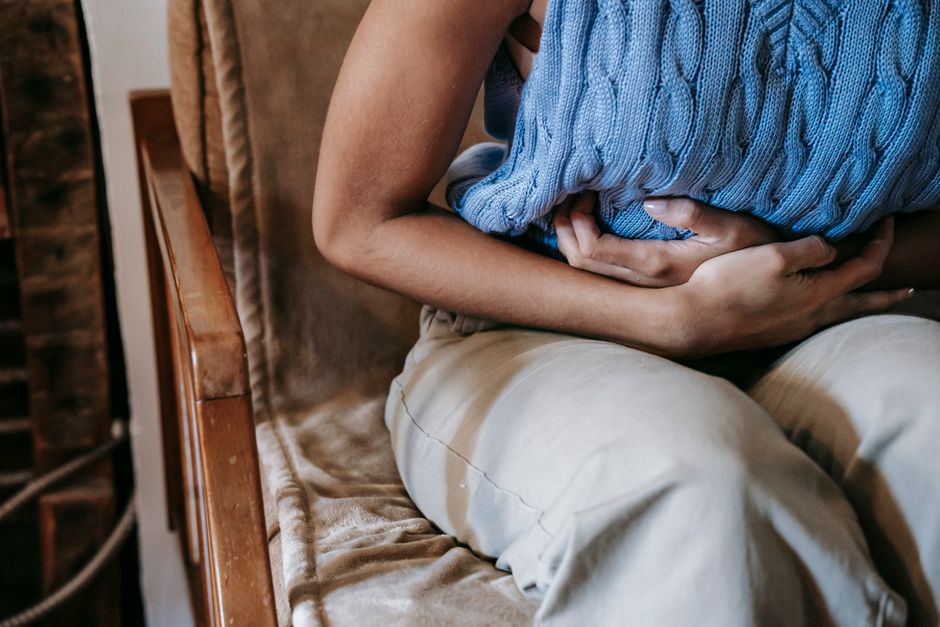
Yes, bloating before a period is real, and it is one of the most commonly reported symptoms of premenstrual syndrome. It usually shows up in the days before bleeding starts and eases once your period is underway. The cause is not “water weight” in some vague sense — it is a measurable shift in how your body handles fluid and how your gut moves.
Why Does Bloating Happen Before a Period?
Bloating before a period comes from two things happening at once: your body retains more fluid, and your digestive tract slows down. Both are driven by the hormonal changes of the menstrual cycle.
After ovulation, levels of the hormone progesterone rise. Progesterone relaxes smooth muscle throughout the body, including the muscle in the walls of the intestines. When those muscles work more slowly, food and gas move through the gut at a slower pace. That can leave you feeling full, tight, and swollen.
At the same time, shifting levels of estrogen and progesterone affect how the kidneys handle sodium and water. The body holds onto more sodium, and water follows sodium. This is why some people notice puffiness in the belly, hands, and feet in the second half of the cycle.
One point that often gets lost: the sensation of bloating and the physical presence of extra fluid are not always the same thing. Some research using imaging has found that many people who feel bloated do not actually have more gas or fluid in the abdomen than usual. The feeling appears to come partly from how the gut nerves sense normal contents. That does not make the bloating any less real. It just means the experience is more complex than a simple “gas buildup.”
When Does Period Bloating Usually Start and Stop?
For most people, bloating begins in the days after ovulation and builds toward the start of the period. It commonly peaks in the day or two right before bleeding begins.
Once menstruation starts and hormone levels drop, the bloating usually fades over the first few days of the period. Many people feel noticeably less bloated by the time bleeding is winding down.
The exact timing varies a lot from person to person. Cycle length, hormone patterns, and individual sensitivity all play a role. If your bloating follows a predictable pattern tied to your cycle, that is a strong sign it is hormonally driven rather than a separate digestive problem.
How Can You Tell Period Bloating From Other Bloating?
Timing is the main clue. Bloating that tracks with your cycle — showing up in the same phase each month and easing when your period starts — is very likely hormonal.
Other features that point toward a cycle-related cause include:
- It comes with other premenstrual symptoms like breast tenderness, mood changes, or food cravings.
- It shows up in the second half of the cycle, not randomly.
- It resolves on its own within a few days of bleeding starting.
Bloating that is constant, gets worse over time, or comes with weight loss, blood in the stool, vomiting, or severe pain is not typical of the menstrual cycle. Those patterns need medical evaluation. This is a real distinction, not a reason to worry — most bloating is not dangerous. But persistent or worsening symptoms should be checked.





What Actually Helps With Period Bloating?
There is no single fix that works for everyone, and the evidence for many popular remedies is limited. A few approaches have more support than others.
Reducing salt intake may help, because sodium drives fluid retention. Cutting back on very salty processed foods in the days before your period is a reasonable step, though it will not eliminate bloating on its own.
Regular physical activity is often recommended and is generally well tolerated. Movement can help move gas through the gut and may ease the sensation of fullness. The evidence for exercise specifically reducing premenstrual bloating is not strong, but the overall benefits are well established.
Some clinicians recommend limiting carbonated drinks and very gas-producing foods during the premenstrual window. This is common practice rather than a strongly proven strategy, and it helps some people more than others.
For more persistent premenstrual symptoms, some clinicians discuss hormonal approaches such as certain birth control methods that stabilize hormone levels. Whether these help bloating specifically varies, and they carry their own considerations. This is a conversation to have with a clinician rather than something to start on your own.
Be cautious with supplements marketed for bloating or “hormone balance.” Many make claims that no large human trial has confirmed. Marketing language like “supports healthy balance” is not the same as demonstrated benefit.
Does Period Bloating Mean Something Is Wrong?
No. Premenstrual bloating is a normal response to normal hormonal changes. It is uncomfortable, but it is not a sign of disease in most cases.
That said, bloating is a symptom that overlaps with several conditions, and the overlap matters. Irritable bowel syndrome, lactose intolerance, and other digestive issues can all cause bloating. So can gynecologic conditions. When bloating is severe, new, or not tied to your cycle, the cause may be something other than hormones.
A useful rule: if the pattern is predictable and linked to your cycle, it is most likely hormonal. If it is new, persistent, or getting worse, it deserves a medical look. This is especially true after menopause, when new and persistent bloating should always be evaluated rather than assumed to be harmless.
Is There a Link Between Period Bloating and PMS?
Yes. Bloating is one of the core physical symptoms included in the clinical description of premenstrual syndrome. PMS is diagnosed based on symptoms that appear in the days before a period and go away once it starts, and bloating is among the most frequently reported.
A more severe form, called premenstrual dysphoric disorder, centers mainly on mood symptoms but can include physical ones like bloating too. The key feature in both is the timing: symptoms that come and go with the cycle, not symptoms that are always present.
Tracking your symptoms across a couple of cycles can make the pattern clear. That record is also useful if you decide to talk with a clinician, because it shows whether the timing lines up with your cycle.
What Does Not Cause Period Bloating?
A few common beliefs are worth clearing up.
Bloating is not caused by “toxins” building up, and no product “flushes” them out. The body handles waste through the liver, kidneys, and gut on its own.
It is also not simply a matter of drinking too much water. In fact, staying hydrated is generally helpful, and restricting fluids is not a recognized way to reduce premenstrual bloating.
And it is not a sign that you did something wrong with your diet. The hormonal shift happens regardless of what you eat. Diet can influence how severe it feels, but it does not cause it.
Frequently Asked Questions
Can you be bloated before your period?
Yes. Bloating is one of the most common physical symptoms of premenstrual syndrome, driven by hormonal changes after ovulation. It usually eases within the first few days of bleeding.
How many days before your period does bloating start?
It typically begins in the days after ovulation and worsens as the period approaches, often peaking in the day or two before bleeding starts. The exact timing varies from person to person.
Does period bloating mean you are pregnant?
No. Bloating before a period is a normal premenstrual symptom and does not indicate pregnancy. If you have missed a period or other reasons to suspect pregnancy, a test is the reliable way to know.
When should bloating before a period be checked by a doctor?
Seek evaluation if bloating is new, persistent, getting worse, or comes with weight loss, blood in the stool, vomiting, or severe pain. Bloating not tied to your cycle should also be checked.
